

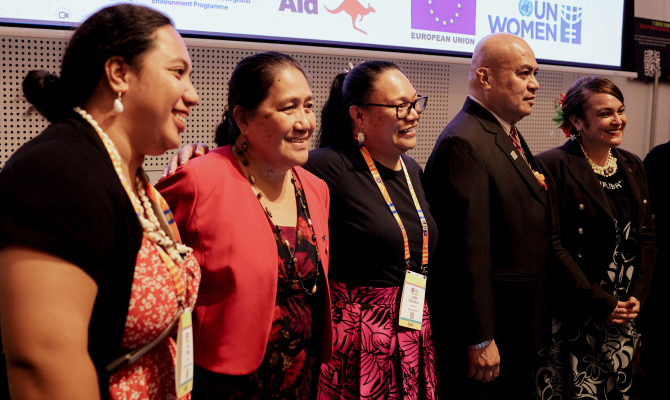
“Climate and violence against women are not separate emergencies.”
With that stark warning, Tuvalu Prime Minister Hon. Feleti Penitala Teo opened one of the most urgent conversations at the Women Deliver 2026 Conference in Melbourne, Australia.
Climate change is the single greatest threat to Pacific Islands security. It is flooding homes, destroying crops, contaminating drinking water, and placing enormous pressure on families and communities. And women are carrying the heaviest burden.
From 27–30 April, more than 6,000 advocates, government leaders, and gender equality experts from 189 countries gathered in Narrm (Melbourne) for Women Deliver 2026, the first time the conference has been hosted by the Oceania Pacific region.
In a session titled “The Climate Crisis We’re Not Talking About,” Pacific leaders made one message unmistakably clear: climate justice and gender justice cannot be separated. The session was hosted by UN Women and the Secretariat of the Pacific Regional Environment Programme (SPREP), supported by the Pacific Partnership to End Violence Against Women and Girls (Pacific Partnership).
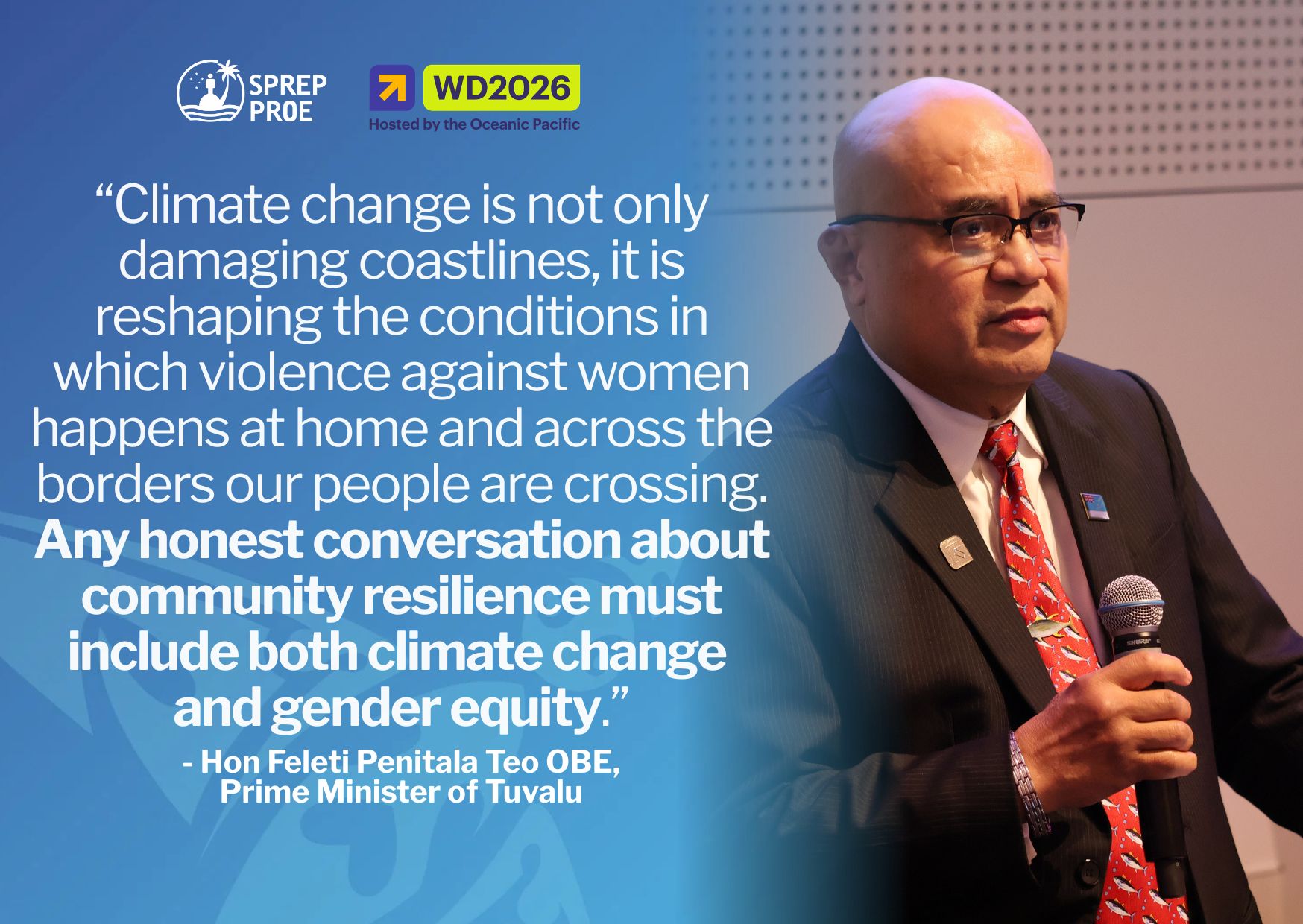
“Climate change arrives as economic anxiety, loss of livelihood, household stress, and disrupted community structures,” Hon. Teo said.
He warned that while the environmental impacts of climate change are well documented, far greater attention and resources are needed to address its social consequences, particularly for women, families and communities.
“People in Tuvalu live every day with the knowledge that their country may not exist for their grandchildren because of sea level rise and climate change,” he said.
“We need to invest seriously in the conditions that empowers women through mobility, not just permit them to move.”
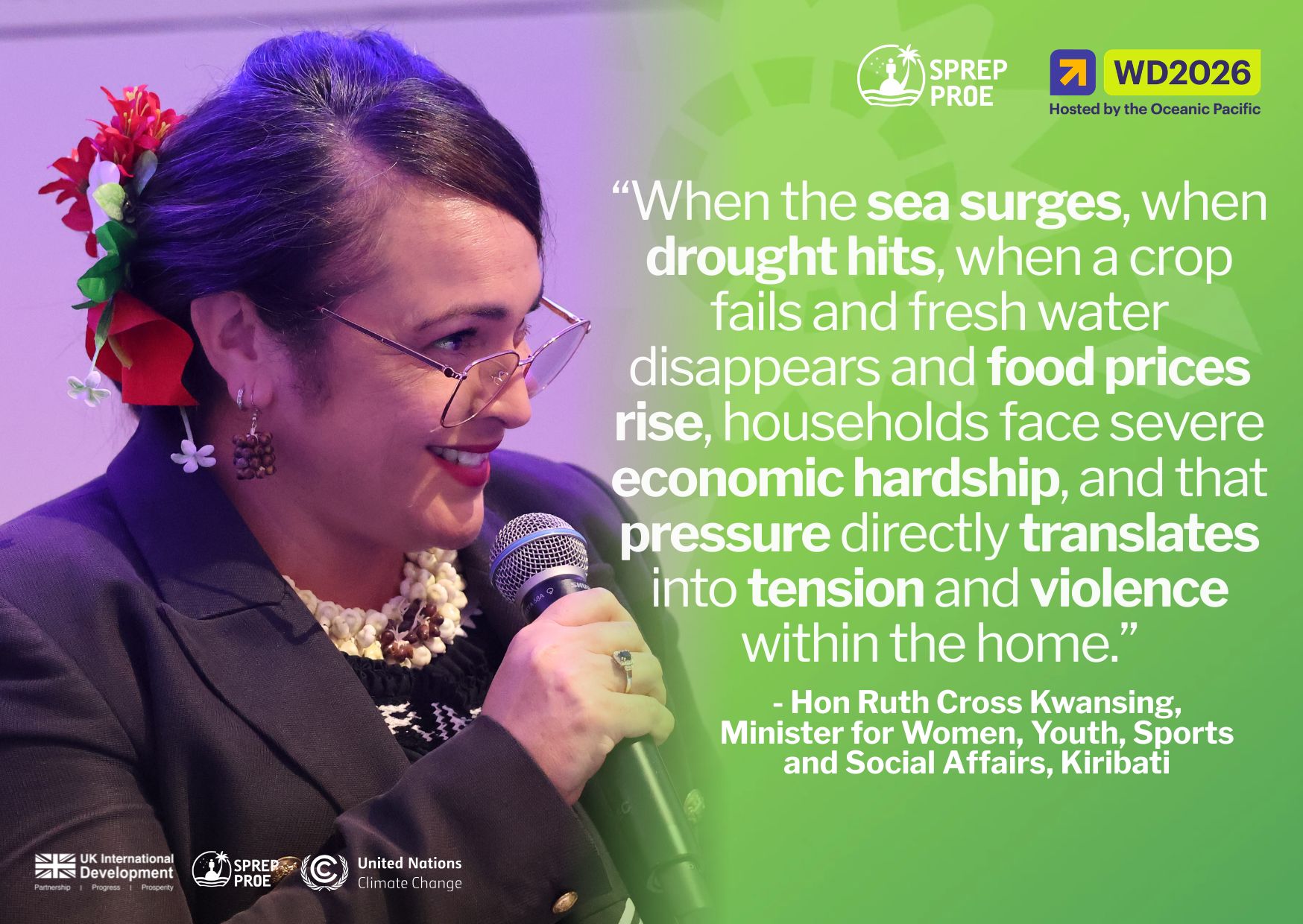
Kiribati Minister for Women, Youth, Sport and Social Affairs Hon. Ruth Cross Kwansing described the realities women face when disaster strikes.
“When the sea floods our homes, when king tides destroy crops, and when wells are salinised by saltwater intrusion, it is women who respond to the crisis,” she said.
Yet despite leading recovery efforts, women remain underrepresented in climate decision-making.
“As long as women are absent from the tables where laws are made, budgets are allocated, and climate negotiations are held, our potential as a nation remains unrealised.”
Hon Ruth emphasised that while climate finance is addressing important elements like infrastructure, coastal protection and renewable energy, the distribution of funding is too narrow and concentrated on technical and physical solutions.
“We are asking for climate finance to broaden its definition of resilience. A resilient community is one where women are safe, prevention systems are funded, and survivors can access the services they need.”
She called for the need to embed Gender-Based Violence within climate financing frameworks and national adaptation plans, “recognising that violence surges in the context of disaster, resource scarcity and the breakdown of community support systems.”
“Provide flexible funding mechanisms for civil society organisations delivering essential work to economically empower women, ensuring that they have the predictable resources needed to sustain their operations in resource-constrained environments,” she said.
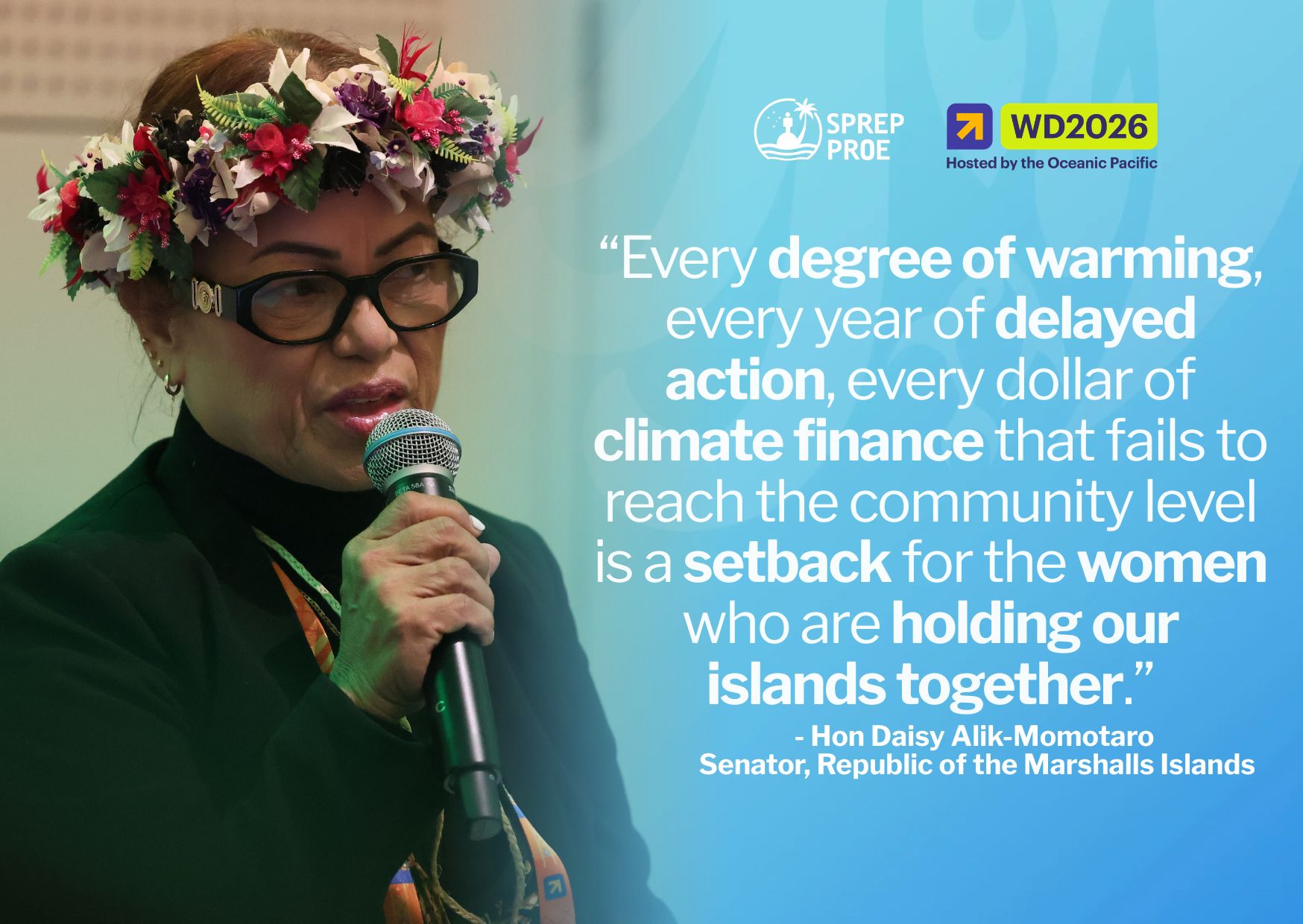
For Senator Daisy Alik-Momotaro of the Republic of the Marshall Islands, the crisis is existential.
“Climate change is our number one security threat,” she said.
“Every year of delayed action is a setback for the women holding our islands together.”
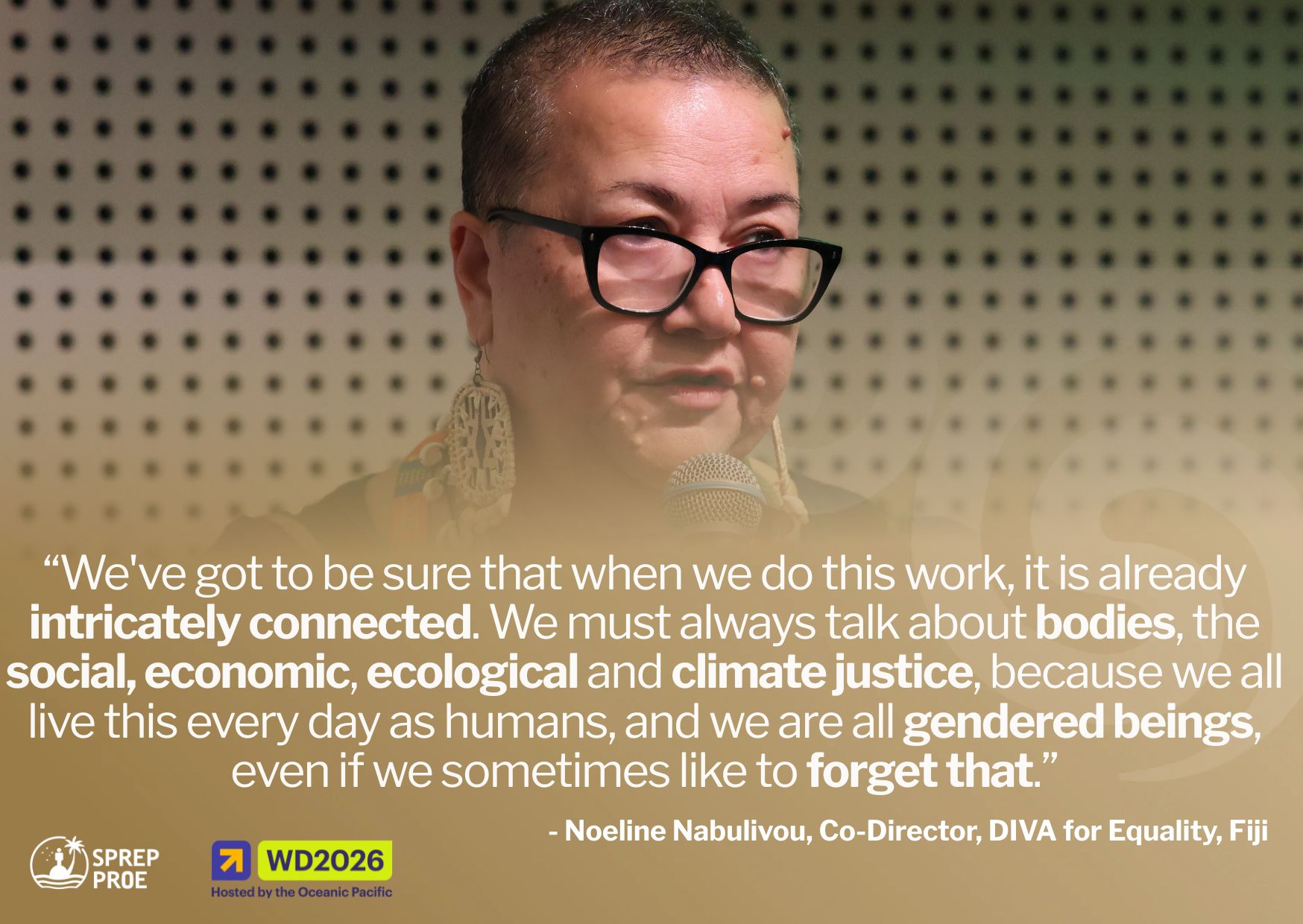
DIVA for Equality co-director Noelene Nabulivou called for a human rights-based approach to climate action, emphasising solidarity across movements and communities.
“Our tent has to be large,” she said. “We have to keep speaking to each other, whoever we are.”
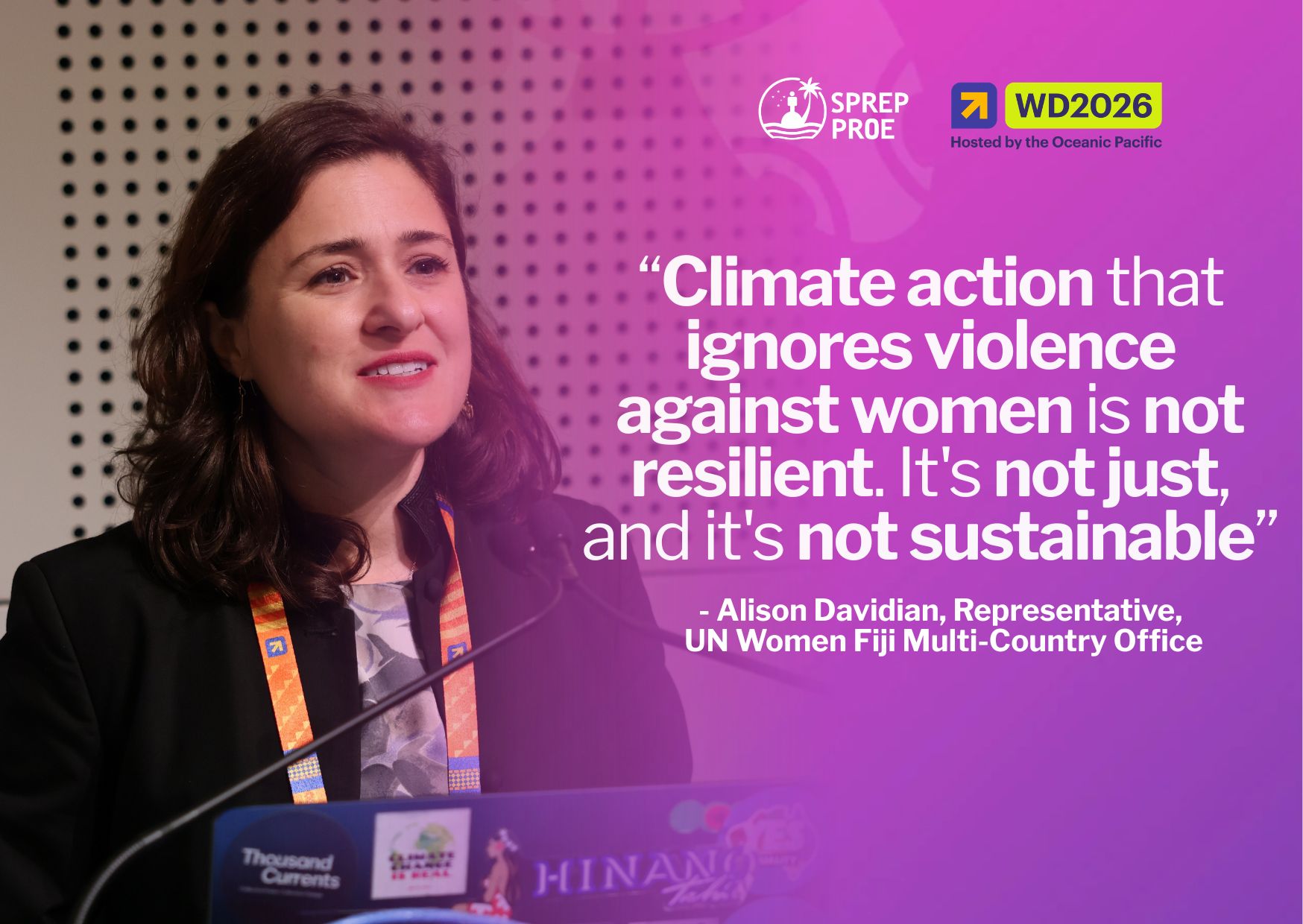
UN Women Fiji Multi-Country Office Representative Alison Davidian brought the panel’s reflections together in one clear message that captured the urgency of the discussion:
“Climate action that ignores violence against women is not just. And it’s not sustainable. We cannot build climate resilient societies on the backs of women who are not safe.”
In bringing these messages to Women Deliver 2026, Pacific leaders ensured that the experiences and solutions emerging from the front lines of the climate crisis were part of the global conversation shaping the road ahead.
“The Climate Crisis We’re Not Talking About” event took place on 28 April 2026 during the Women Deliver Conference, a partnership hosted by UN Women and the Secretariat of the Pacific Regional Environment Programme (SPREP), supported by the Pacific Partnership to End Violence Against Women and Girls (Pacific Partnership). It featured Hon. Feleti Penitala Teo, Prime Minister of Tuvalu, Hon. Ruth Cross Kwansing, Minister for Women, Youth, Sport and Social Affairs of Kiribati, Daisy Alik-Momotaro, Senator, Republic of the Marshall Islands, Ms Noelene Nabulivou, Co-Executive Director, DIVA for Equality and was moderated by: Alison Davidian, Representative, UN Women, Fiji Multi-Country Office.
The Pacific Partnership is primarily funded by the Australian Government Department of Foreign Affairs and Trade, and the European Union in the Pacific and coordinated by UN Women Pacific and Pacific-Community-SPC, in strategic partnership with the Pacific Islands Forum.