

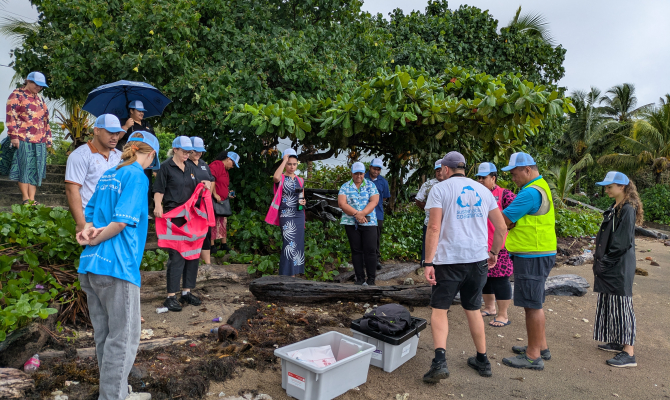
17 June 2026, Apia - On World Oceans Day on 8 June, Samoa reaffirmed its commitment to protecting the Ocean through strengthened marine litter monitoring and improved waste management practices.
The Secretariat of the Pacific Regional Environment Programme (SPREP), in partnership with the Ministry of Natural Resources and Environment (MNRE), the French Embassy in Samoa, and Sustainable Coastlines New Zealand, successfully delivered a two-day Marine Litter Training Workshop from 26-27 May 2026.
The training forms part of the Sustainable Waste Actions in the Pacific – Phase 2 (SWAP2) Project, funded by the Agence française de développement (AFD) and implemented by SPREP across nine Pacific Island countries and territories.
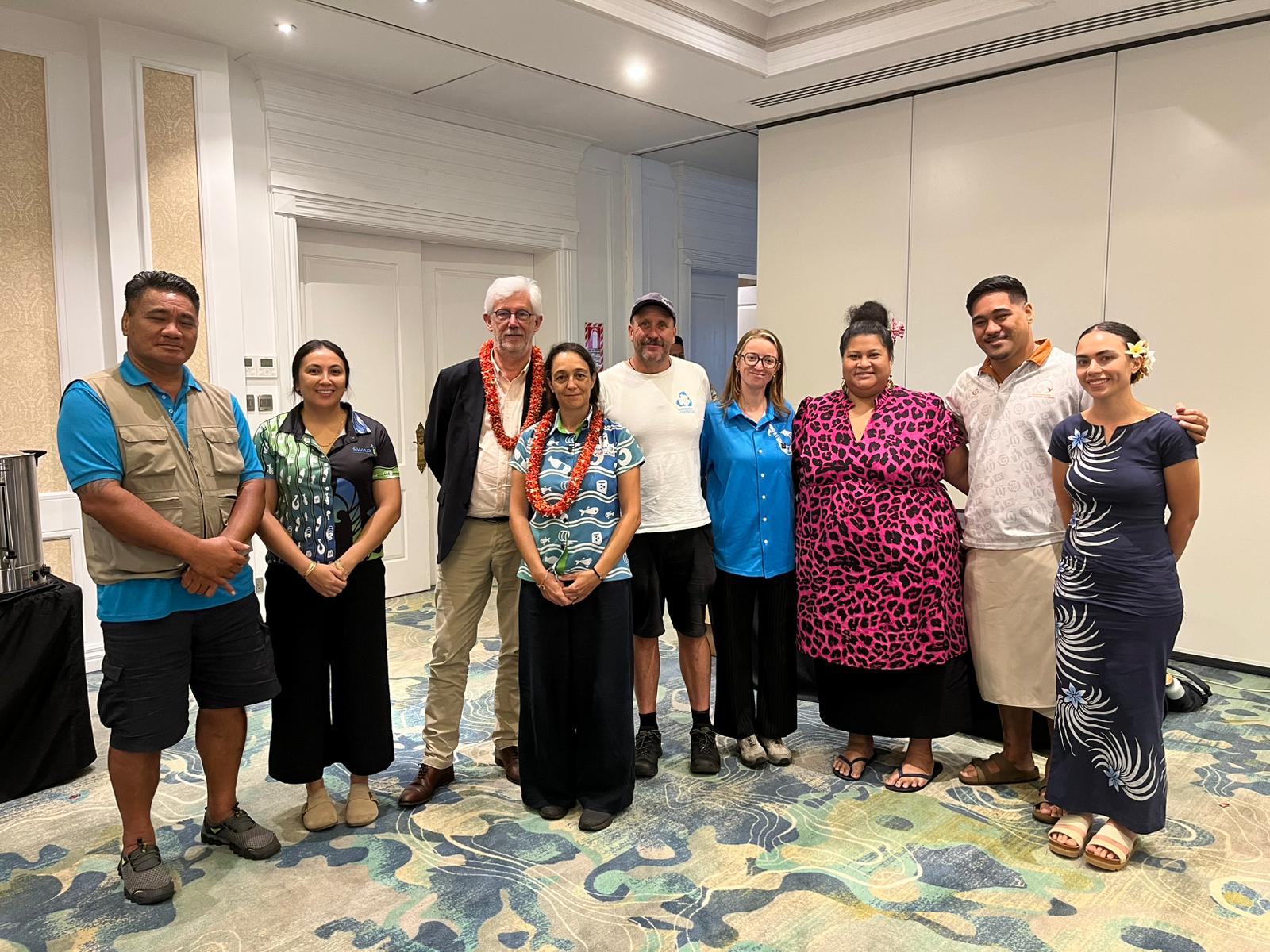
MNRE Chief Executive Officer, Ms. Lealaisalanoa Frances Brown-Reupena highlighted the importance of regional cooperation in addressing marine litter and plastic pollution.
“Marine litter and plastic pollution remain one of the greatest environmental challenges facing our region today,” she said. “As Pacific island nations, our oceans are central to our livelihoods, culture, biodiversity and economic wellbeing. Protecting them is therefore a shared regional responsibility.”
World Oceans Day serves as an important reminder of the critical role oceans play in sustaining Pacific communities. The Pacific Ocean provides a significant source of food security and livelihoods for millions of people across the region, while also supporting cultural traditions, biodiversity, and economic development.
However, increasing levels of marine litter and plastic pollution continue to threaten marine ecosystems and contaminate the food chain, affecting marine species and potentially human health.
French Ambassador to Samoa, His Excellency Guillaume Lemoine, reaffirmed France’s commitment to ocean protection and regional environmental cooperation.
“France is particularly proud to support the SWAP projects through AFD. These initiatives are fully aligned with France’s priorities for ocean conservation in the Pacific and contribute directly to protecting our shared marine environment,” he said.
Reflecting on the training, Ms. Aloma Black, Program Coordinator at Conservation International, highlighted the value of strengthening national and regional capacity for marine litter monitoring:
“The training strengthened my understanding of how to collect and analyse marine litter data, and then how this data can be used to inform long-term prevention actions. Using a standardised approach to surveys and audits across the region will support a more coordinated and effective response to plastic pollution.”
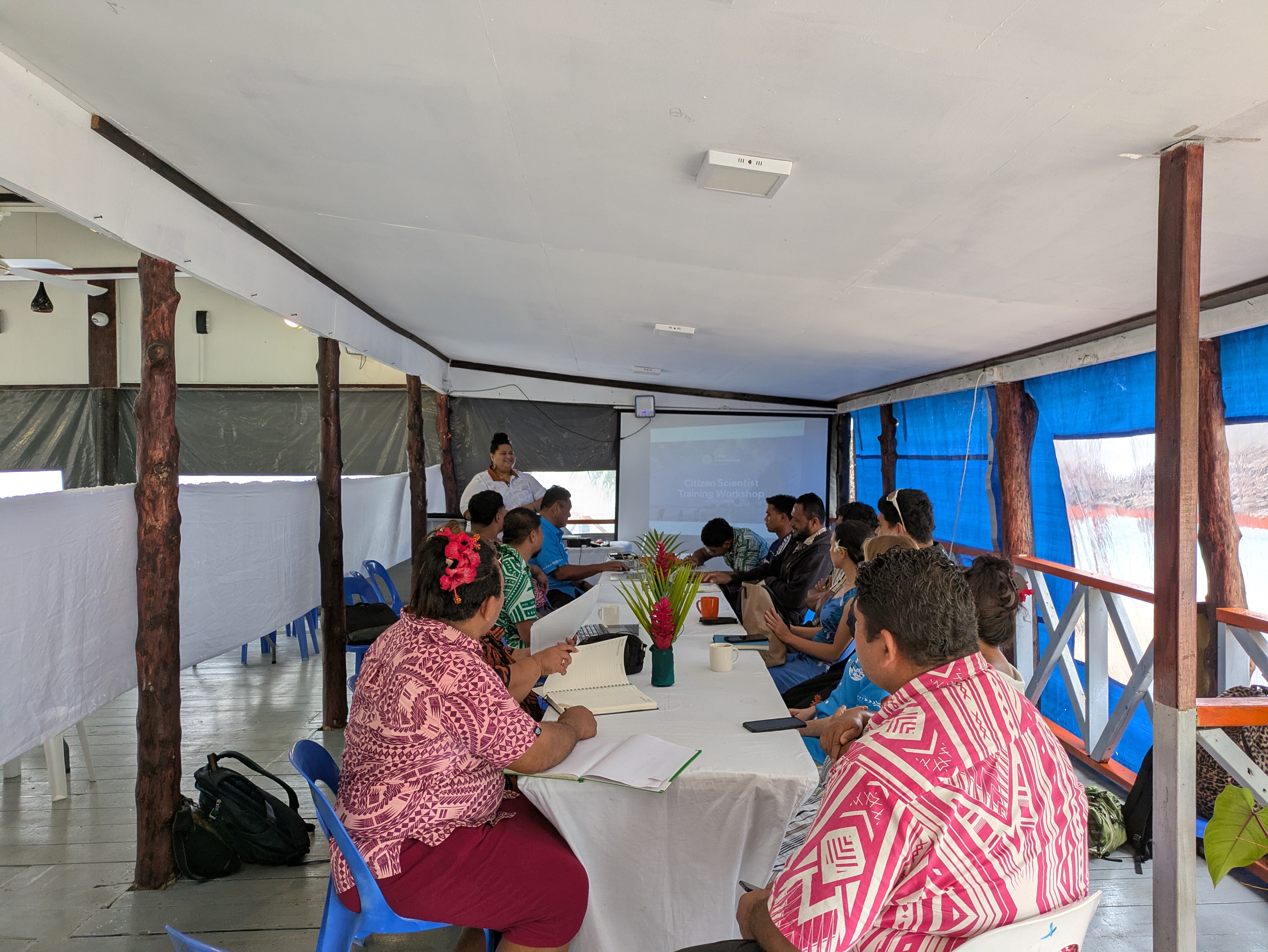
The workshop was delivered by Sustainable Coastlines New Zealand and focused on building national capacity in marine litter monitoring using the internationally recognised Litter Intelligence methodology. Participants received training in beach survey techniques, waste audits, data management, and reporting processes that will support evidence-based decision-making and policy development. It was the fifth marine litter training delivered under SWAP2, following similar activities in Solomon Islands, Vanuatu, Tuvalu and French Polynesia.
Two training sessions were conducted during the workshop. The first session was held at the Sheraton Hotel in Apia for government agencies, civil society organisations, and national stakeholders. The second session was delivered in Lalomanu, providing practical field experience in beach surveys and waste audits.
The training also marks an important milestone for Samoa’s Marine Litter Pilot Project. As part of the project, the Waste Recycling Environment Network (WREN) will conduct beach surveys and waste audits every six months at three selected monitoring sites until July 2028. The data collected will provide valuable information on the composition, sources, and trends of marine litter in Samoa and support the development of targeted waste management policies and interventions. The data collected will also contribute to a regional marine litter database, supporting evidence-based decision-making and strengthening regional efforts to address marine litter and plastic pollution across the Pacific.
In addition, the Samoa Recycling and Waste Management Association (SRWMA) will implement awareness-raising activities targeting schools and young people.
Since marine litter monitoring activities began in Samoa in 2019, 25 beach surveys and waste audits have been completed, involving 1,068 volunteers. Results show that plastic accounts for nearly 49 per cent of all litter recorded. The most common items identified include glass and ceramic fragments, beverage bottles, and food wrappers.
The workshop comes at a time when Samoa is strengthening its efforts to reduce plastic pollution. MNRE recently launched its Policy on the Ban of Single-Use Plastics at all Ministry-organised, funded, and endorsed events.
The policy prohibits the use of items such as plastic straws, cups, plates, cutlery, containers, and bags, while promoting reusable, biodegradable, and traditional alternatives.
In parallel, Samoa continues to advance work on a Container Deposit Legislation (CDL) framework, which aims to encourage the return and recycling of beverage containers through a deposit-refund system. These initiatives build on Samoa’s existing Waste Management Act and previous bans on single-use plastic shopping bags, straws, and polystyrene containers. The Ministry will soon be conducting enforcement of the single-use plastic ban regulation.
Through partnerships between government agencies, communities, civil society organisations, development partners, and regional organisations, Samoa continues to demonstrate leadership in addressing marine litter and promoting sustainable waste management practices.
The SWAP2 Project will continue supporting marine litter monitoring, awareness-raising activities, and waste management initiatives across the Pacific through to 2028.
ABOUT SWAP
SWAP2 contributes to the objectives of the Cleaner Pacific 2025 Strategy by improving waste management infrastructure, strengthening capacity and promoting regional collaboration. With total funding of EUR 4.3 million provided by the Agence française de développement (AFD), the programme supports nine Pacific Island countries and territories: Fiji, Solomon Islands, Kiribati, French Polynesia, Samoa, Tonga, Tuvalu, Vanuatu and Wallis and Futuna.
The Sustainable Waste Actions in the Pacific – Phase 2 (SWAP2) project is funded by the Agence française de développement (AFD) AFD and implemented by the Secretariat of the Pacific Regional Environment Programme (SPREP) SPREP. For more information, please visit SWAP Project Website or contact Ms Julie Pillet, SWAP Project Manager, at juliep@sprep.org