

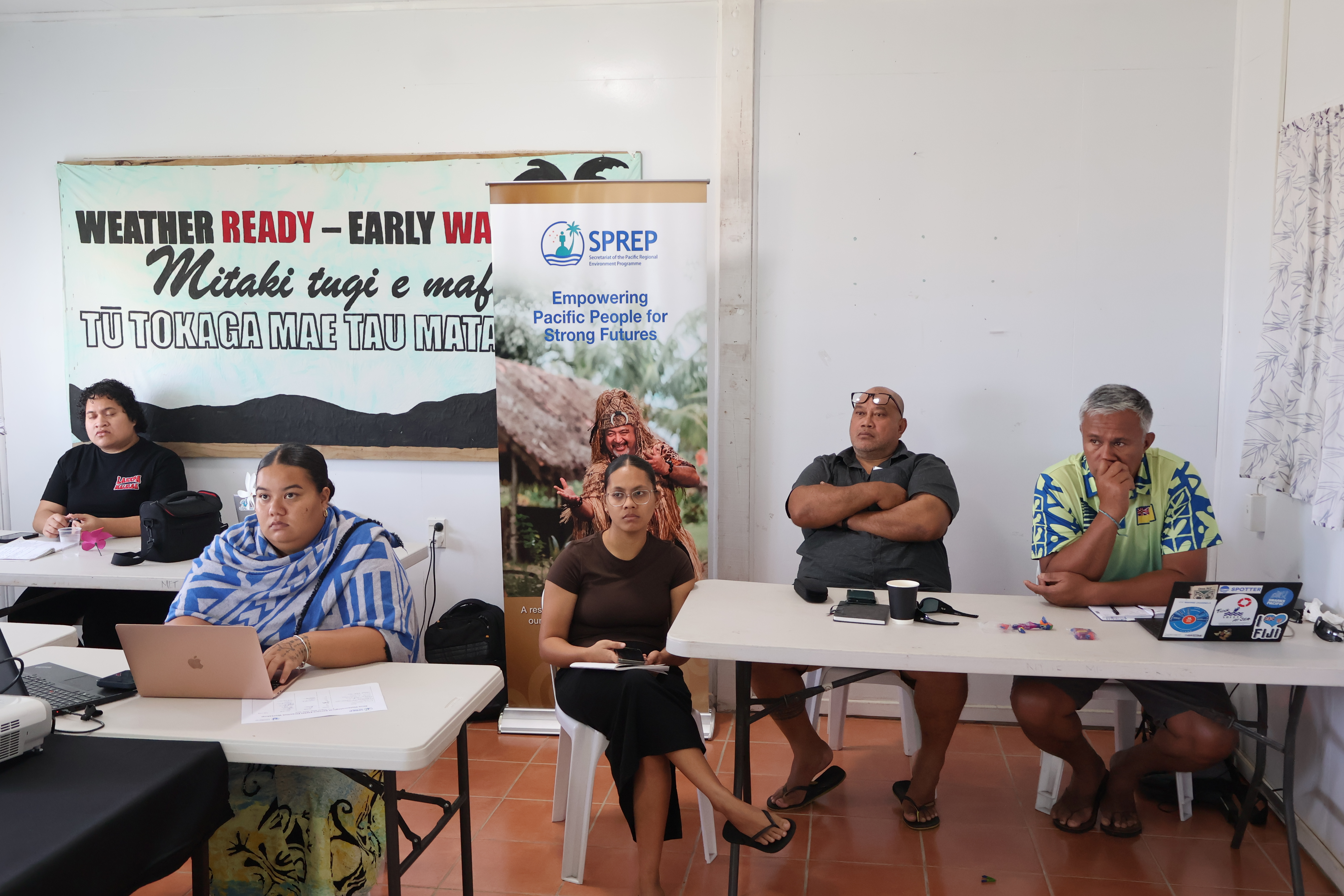
20 August 2026, Alofi – A three-day training was carried out at the Niue Meteorological Service (NMS) to help strengthen the capacity of its Climate Services team to use a range of climate prediction tools and platforms in order to get the best possible climate outlooks and seasonal predictions for Niue.
The training is part of the Secretariat of the Pacific Regional Environment Programme’s (SPREP) ongoing support in building the capacity of Pacific National Meteorological and Hydrological Services, through its Climate Science and Information programme. It was organised and delivered by the Climate and Oceans Support Program in the Pacific Phase 3 (COSPPac3) project, and the Republic of Korea-Pacific Islands Climate Prediction Services (ROK-PI CliPS) project.
Climate officers within the Niue Met Service were given the opportunity to work closely with climate scientists from SPREP to broaden and enhance their knowledge and practical skills in using climate forecasting tools and ways to better communicate this information to decision-makers and communities.
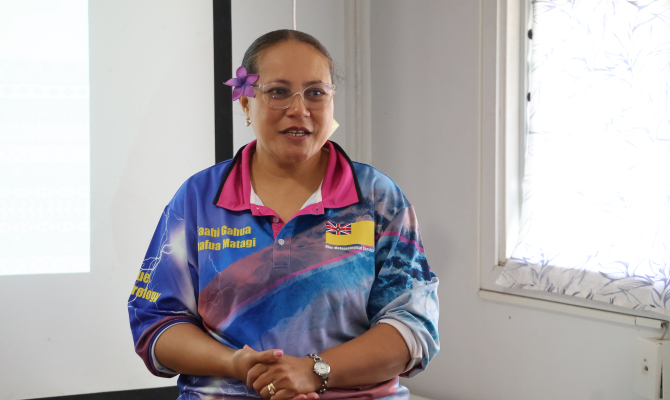
Ms. Lenita Tongiamana, one of the NMS climate officers, shared how the training has helped her to build her understanding of the climate tools which she hopes to put to use for the betterment of Niue.
“The past three days have been a great learning experience for me, especially after returning to the Niue Meteorological Service after being away for several years,” Ms. Tongiamana said.
The workshop has helped refresh me gain a better understanding of the climate tools and that are available and that we can use to get climate information. I hope to apply what I’ve learned from this training to strengthen our climate services and better support the people of Niue,” she added.
Another key focus of the training was to enhance Niue’s preparedness for El Niño and La Niña events, two naturally occurring climate phenomena that can influence rainfall, temperatures, and ocean conditions across the Pacific. This comes at a timely juncture, as the Pacific is currently experiencing an El Niño, which the Niue Meteorological Service confirmed and declared on 18 June 2026.
For Niue, an El Niño event will mean below normal rainfall, an increased risk of tropical cyclone activity. These impacts will be felt across all of Niue, including its agriculture, education, health, tourism, and water sectors.
During the final day of the training, the Niue Met Service and the team from SPREP collaborated to develop a draft of Niue’s first National ENSO Directive, and the climate Standard Operating Procedures (SOP). The Directive and SOP will help strengthen the Niue Met Service’s monitoring of El Niño and La Niña events, communication, collaboration with sectors and stakeholders, collection and reporting on the impacts.
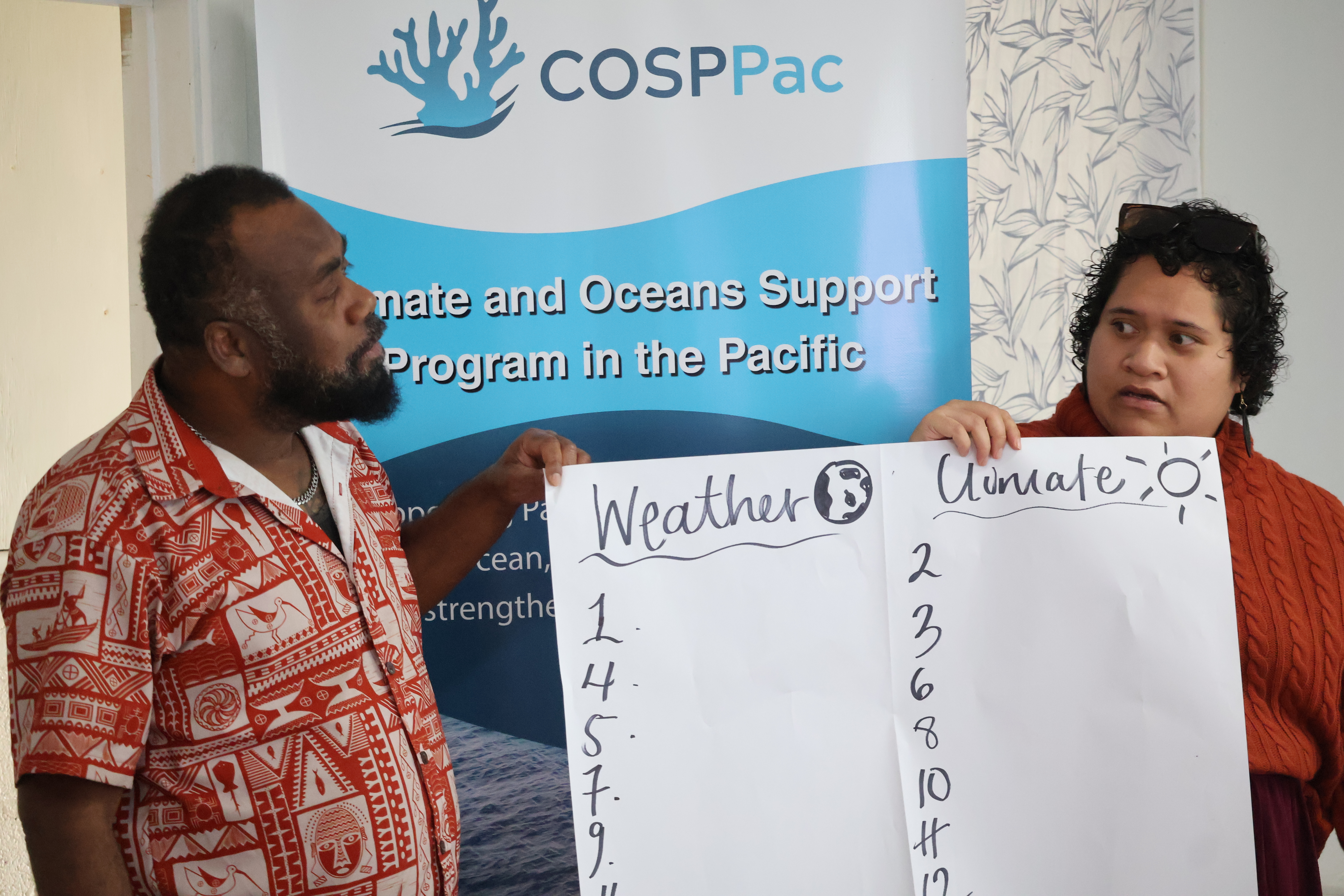
Mr. Philip Malsale, COSPPac3 Senior Climatologist, said, “This training reflects the commitments of regional initiatives such as COSPPac3 and ROK-PI CliPS to support Pacific NMHSs to strengthen technical capacity, access climate information, and develop climate products and that respond to their national stakeholders’ needs.”
The Niue mission will conclude with a two-day National Climate Outlook Forum (NCOF) and ENSO Directive Stakeholder Engagement, where the Niue Met Service and SPREP teams will socialise the Niue ENSO Directive to stakeholders for their input on where their responsibilities lie and how two-way communication will be facilitated to document the impacts of El Niño and La Niña events.
About COSPPac3
The Climate and Oceans Support Programme in the Pacific Phase 3 (COSPPac 3) project is a four-year project funded by the Australian Government Department of Foreign Affairs and Trade (DFAT) and the Government of New Zealand’s Ministry of Foreign Affairs and Trade (MFAT), which aims to support Pacific National Meteorological and Hydrological Services to deliver useful and usable climate and ocean information services to enable all Pacific peoples to remain resilient to the impacts of climate change and disasters. It is jointly implemented by the Australian Bureau of Meteorology (BOM), the Pacific Community (SPC), and the Secretariat of the Pacific Regional Environment Programme.
About ROK-PI CliPS
The Republic of Korea-Pacific Islands Climate Prediction Services Project supports Pacific Island countries by improving access to advanced climate science, reducing scientific isolation, and building forecasting capacity within National Meteorological and Hydrological Services (NMHSs). The project is implemented by the APEC Climate Center (APCC), Seoul National University (SNU) and Secretariat of the Pacific Regional Environment Programme (SPREP) to increase the resilience of the Pacific Islands through enhancing capacity of the utilization and production of high-quality climate prediction information.