

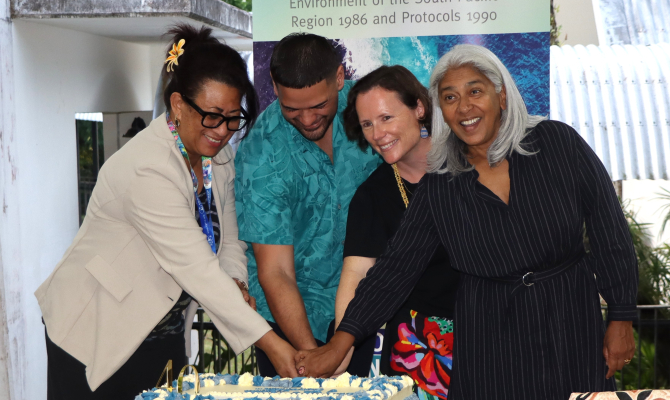
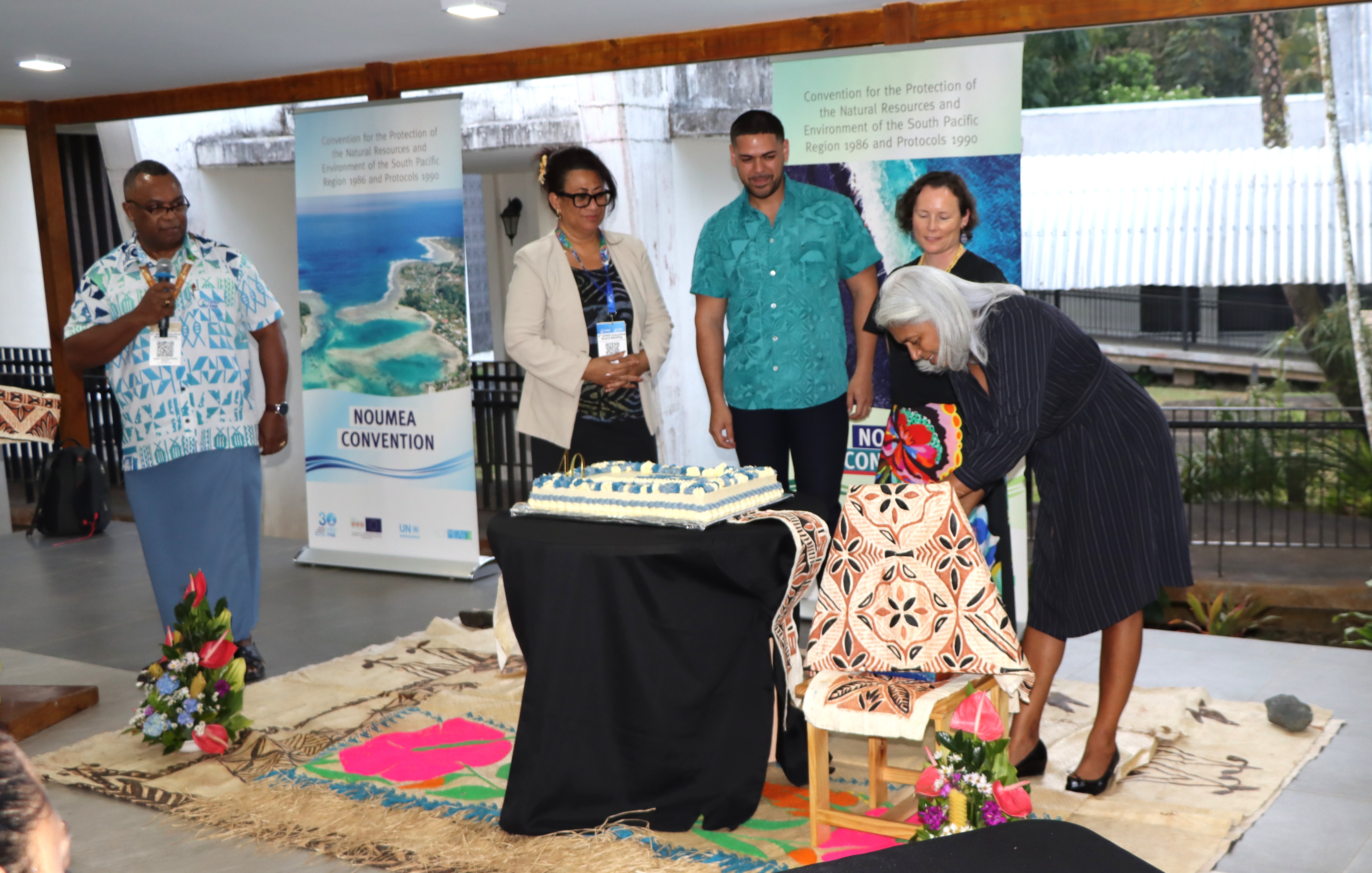
12 August 2026, Apia - The Secretariat of the Pacific Regional Environment Programme (SPREP) today celebrated the 40th anniversary of the Convention for the Protection of the Natural Resources and Environment of the South Pacific Region, better known as the Noumea Convention.
The celebration took place on the margins of the fifth SPREP Executive Board Meeting convened at SPREP headquarters in Apia, Samoa.
Opened for signature in Noumea, New Caledonia on 25 November 1986, the Convention and its two original protocols, the Protocol for the Prevention of Pollution of the South Pacific Region by Dumping and the Protocol on Cooperation in Combating Pollution Emergencies in the South Pacific Region, were the foundation of what is now a comprehensive regional multilateral environmental agreement dedicated to the protection, management and development of the marine and coastal environment of the region.
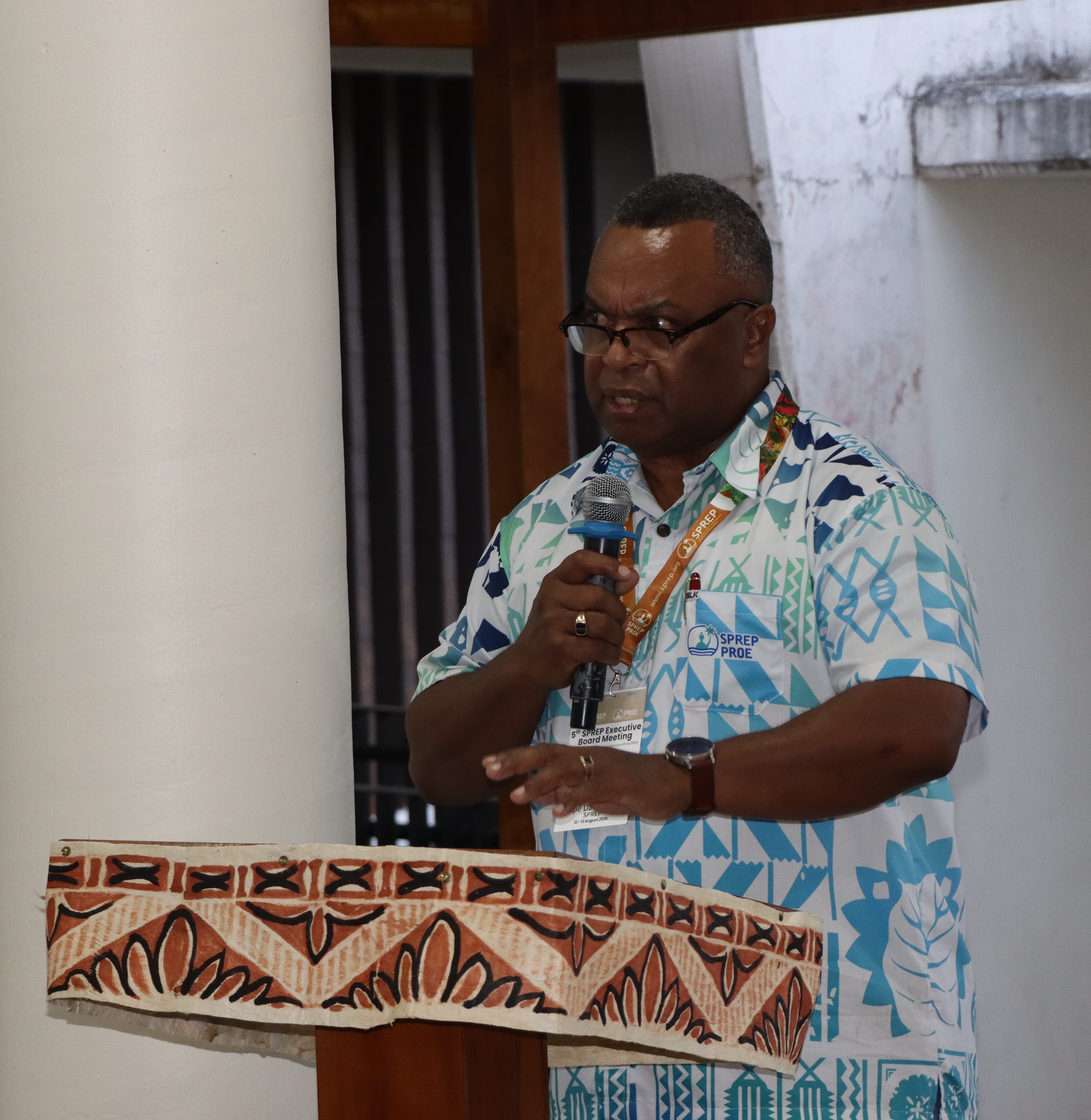
"The Noumea Convention has travelled from a single meeting room in 1986 to every coastline, lagoon and deep sea trench in our region," said Director General of SPREP, Mr Sefanaia Nawadra.
"Forty years on, with Tuvalu recently joined and a new workplan endorsed by the 18th COP, proof is renewed that small Pacific states when they speak with one voice can shape rules for one of the world's largest oceans.”
Today, 12 member countries are contracting parties to the original convention. There has been a growing interest on the Noumea Convention as a potential platform to link and strengthen the oceans, biodiversity and climate change nexus.
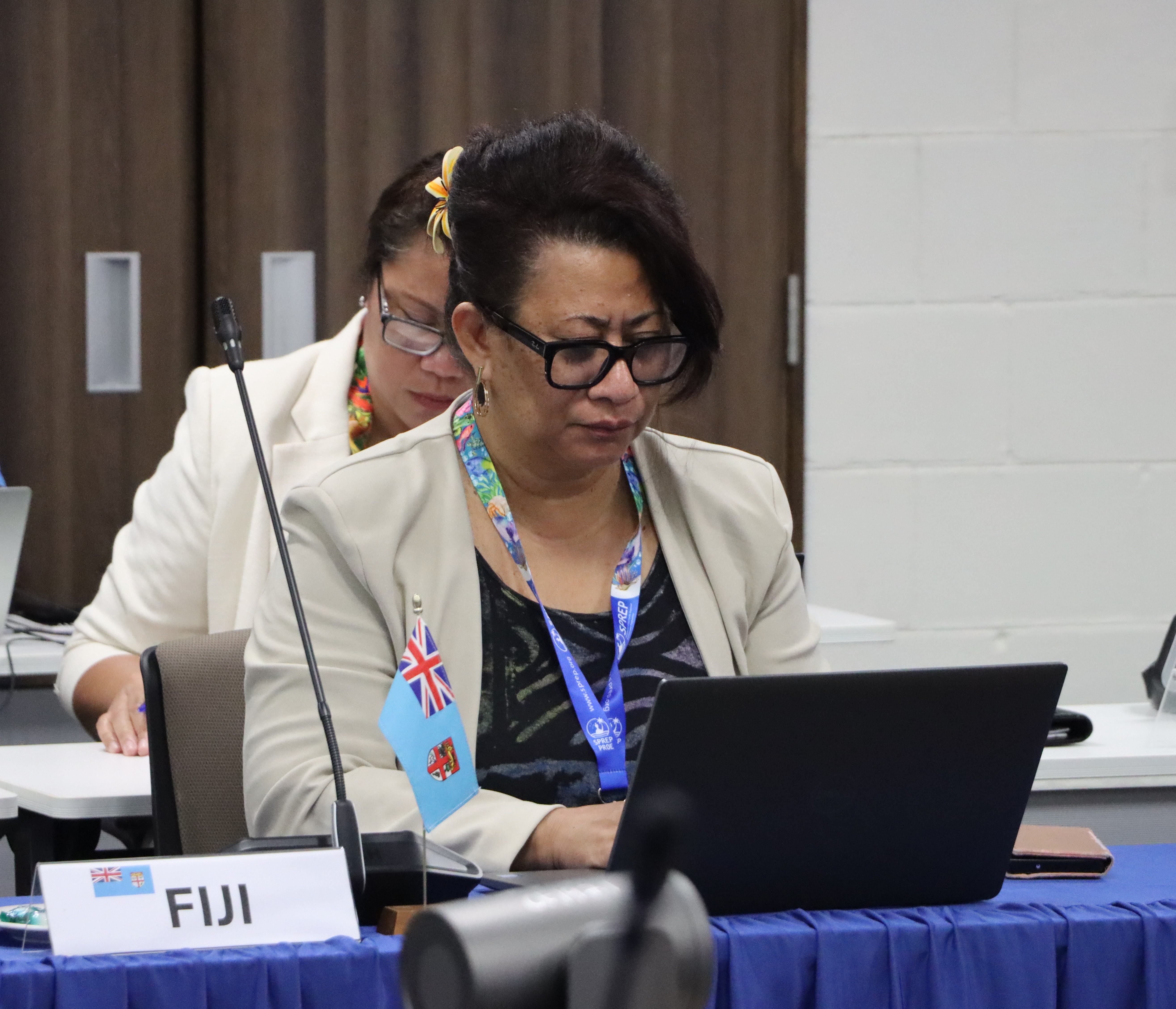
“This occasion allows us to honour the vision and foresight of our forefathers and Pacific leaders whose commitment laid the foundation for a strong regional framework”, said Ms Senivasa Waqairamasi, Director Climate Change, of Fiji who delivered the remarks on behalf of the Contracting Parties.
The ACP MEAs 3 programme, funded by the European Union through the United Nations Environment Programme and implemented in the Pacific by SPREP and UNEP across fifteen Pacific countries, has been one of the enablers of the convention's post-2020 revival, supporting awareness products, capacity building events and cross MEA implementation.

The anniversary programme is a celebration of the convention as a living instrument that has shaped the way the Pacific protects, manages and develops its marine and coastal environment over the past four decades.
Across those four decades the Convention has given the Pacific its legal anchor for ocean cooperation; it has underpinned the regional marine pollution response system that still operates through PACPOL and PACPLAN.
The Noumea Convention continues to be a valuable legal instrument that has informed Pacific positions in emerging issues and global negotiations including the BBNJ Treaty, the Kunming-Montreal Global Biodiversity Framework; and the plastics treaty negotiations.
With the recent advisory opinion by the International Court of Justice on Obligations of States in respect of climate change, the Noumea Convention is even more relevant as a regional treaty that holistically addresses environmental issues including today’s climate and oceans challenges.
Today, the Secretariat continues to support not only the Parties to the Noumea Convention but also non-Party members through building awareness and capacity on the Convention and its Protocols and its application to environmental issues both at the national and regional level given their transboundary nature.
As the convention lives at the national level as much as at the regional level, the strongest evidence of what it delivers for the pacific is the way members are continuing to put it to work in their own countries.
That country level work has gathered real pace since 2025. Tuvalu moved from an expression of intent to formal ratification through the deposit of its Instrument of Ratification to the Secretary General of the Pacific Islands Forum Secretariat as the Depository. Tuvalu officially becomes a party to the Noumea Convention on the 16 August 2026. Vanuatu's interest to accede, while more recent is equally deliberate with the support of SPREP through a dedicated national workshop convened under the New Zealand Ministry of Foreign Affairs and Trade (NZ MFAT) Climate Funding that mapped a clear domestic pathway to accession.
Forty years on from the first meeting, the convention the Pacific wrote together remains the open horizon for what comes next. What marks this anniversary for the Noumea Convention is not the years counted but that the document itself continues to be recognised by each party that ratifies, by each member that accedes, by each national workshop and by each decision of the Conference of the Parties that strengthens the pacific cooperation.
Looking ahead, SPREP and its members have committed to accelerate accession to the 2006 protocols by remaining members and to keep the convention as the regional platform through which the pacific will approach the next global plastic pollution negotiations, the post-2025 biodiversity agenda and the next decade of work on ocean governance.
The Secretariat of the Pacific Regional Environment Programme (SPREP) is the Secretariat for the Noumea Convention through its Legal Services and Governing Bodies Department, with support from the Environmental Governance, the Waste Management and Pollution Control Programmes and the Biodiversity Conservation Programme.
The Convention currently brings together thirteen official Parties, drawn from across SPREP membership: the Cook Islands, the Federated States of Micronesia, Fiji, Kiribati, the Republic of the Marshall Islands, Nauru, Papua New Guinea, Samoa, the Solomon Islands alongside the metropolitan members Australia, New Zealand, France and the United States of America.
The Noumea 40th Anniversary was made possible through the funding support of the New Zealand Ministry of Foreign Affairs
For more information on the Noumea Convention, please visit https://www.sprep.org/convention-secretariat/noumea-convention or contact Ms Kathleen Taituave – Afereti, SPREP’s Environmental Law and Policy Officer at kathleent@sprep.org