

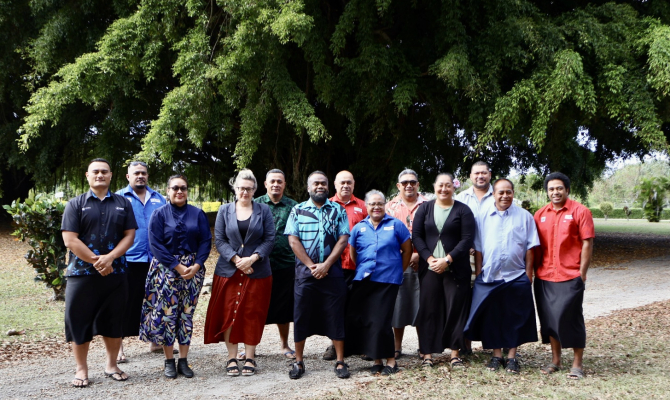
Nuku’alofa, Tonga – Tonga continues to enhance and strengthening its national resilience to slow-onset climate events, with the development of its first National El Niño–Southern Oscillation (ENSO) Directive, which will provide national guidance in a more coordinated mechanism to guide preparedness, coordination, communication and response across sectors to the impacts of El Niño and La Niña events.
Developed during a week-long training led by the Tonga Meteorological Service and facilitated by the Secretariat of the Pacific Regional Environment Programme (SPREP) through the Climate and Oceans Support Program in the Pacific Phase 3 (COSPPac3) project and the Republic of Korea-Pacific Islands Climate Prediction Services (ROK-PI CliPS) project, the ENSO Directive is envisaged to establish support the works of the Tonga National Working Group on Multi-Hazard Early Warning Systems (TNWG-MHEWS) and coordination frameworks, operationalise ENSO Desks within National Meteorological and Hydrological Services (NMHSs), develop communications templates for advisories and media releases, and formalise a framework for post-event assessment and reporting.
During the training, TMS staff received a refresher on the climate science behind climate and climate variability and the El Niño–Southern Oscillation phenomenon before exploring the range of climate prediction tools and models used by meteorological services across the Pacific.
The impact of the training was reflected in the post-workshop evaluation completed by Tonga Meteorological Service staff. Compared to their responses at the beginning of the workshop, participants reported a significant increase in their knowledge and understanding of the Pacific climate system, climate variability, and the drivers of seasonal climate.
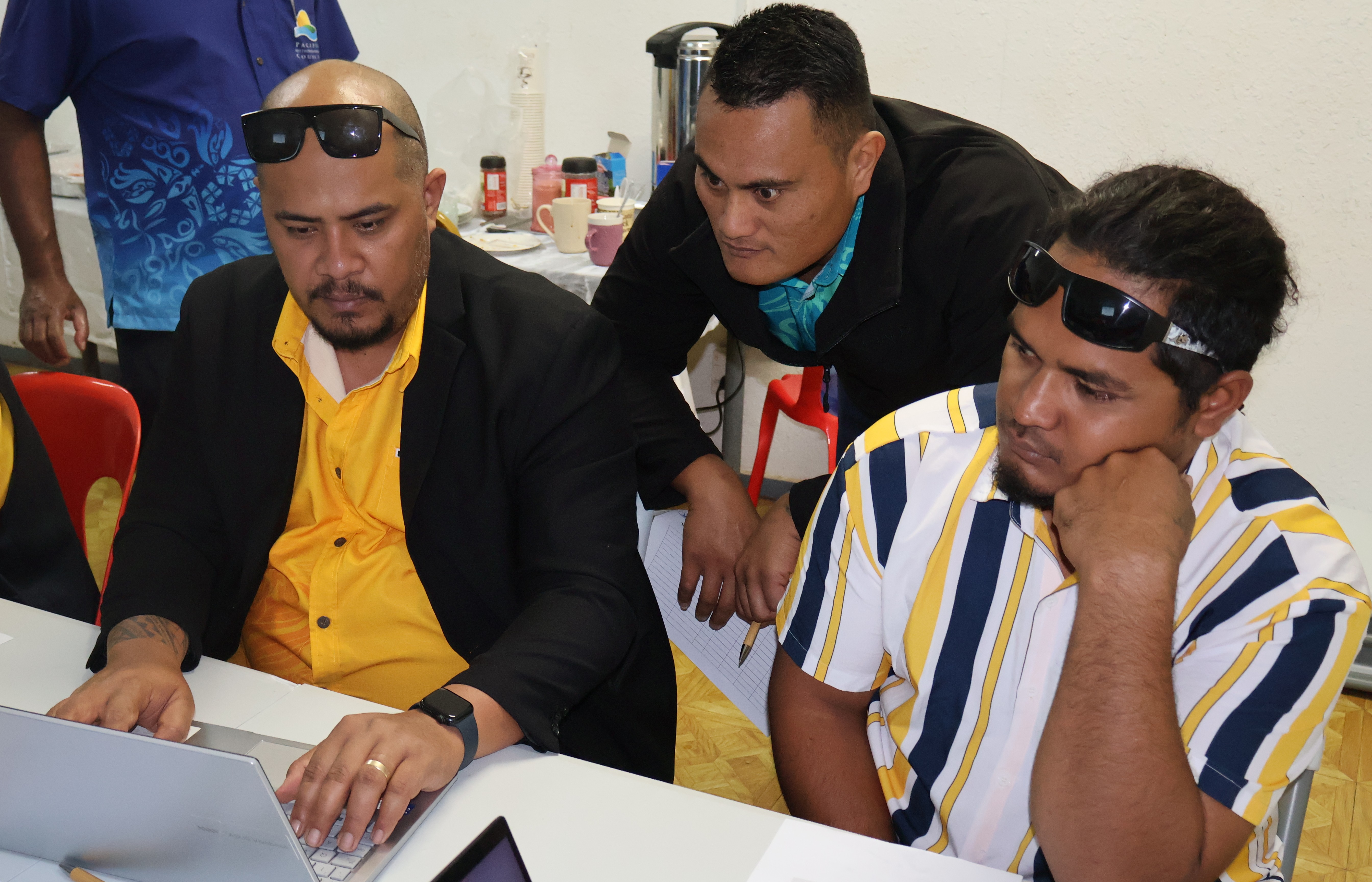
They also indicated a marked improvement in their confidence using climate prediction tools and models, highlighting the value of the hands-on training sessions and practical exercises in strengthening their capacity to interpret climate information and support the delivery of climate services in Tonga.
The training culminated in the collaborative development of Tonga's ENSO Directive by the TMS staff and the technical team from SPREP.
Once finalised through a consultation with national stakeholders, the Directive will provide a common framework for the Tonga National Working Group on Multi-Hazard Early Warning Systems (TNWG-MHEWS) and partners to work together before, during, and after ENSO events, helping to ensure timely, coordinated, and consistent action.
COSPPac3 Senior Climatologist, Mr Philip Malsale, said that the ENSO is a major climate driver across the Pacific and has significant implications for water security, agriculture, health, infrastructure and national economies.
“Our member countries have expressed their interest in initiating the development of their National ENSO Directives because they recognise the need for structured and coordinated approaches to managing ENSO-related information, risks and response,” Mr. Malsale said.
“This is part of the ongoing support provided by the COSPPac3 project to our NMHSs to strengthen climate services and preparedness for climate variability and extreme events through the enhancement of the use of both scientific and traditional knowledge systems, supported by data, tools, products and skills to improve climate and ocean services,” he added.
The TMS staff agreed on the need for an ENSO Directive, saying that the ENSO Directive will improve coordination and clarity of roles and responsibilities by aligning with the Tonga Multi-Hazards Early Warning Systems framework, having clear Standard Operating Procedures in place, and encouraging a more proactive approach to response efforts.
Director of the Tonga Meteorological Service, Mr. Laitia Fifita, said the ENSO Directive will be an important tool for Tonga to ensure coordinated response to slow-onset events such as El Niño and La Niña, and its development couldn’t have come at a better time, with Tonga and the Pacific now experiencing an El Niño event and its impacts

"This directive represents an important milestone for Tonga. It will provide us with clear guidance on how we properly monitor the science, prepare for and communicate El Niño and La Niña events, while strengthening collaboration with the sectors that rely on our climate information. Ultimately, it will help us deliver more effective climate services that support informed decision-making and build resilience across the country."
The Tonga National Stakeholder Engagement workshop on the ENSO Directive was held over two-days from 16 – 17 July and will provide a platform for shared dialogue between TMS and the members of the Tonga National Working Group on Multi-Hazard Early Warning Systems (TNWG-MHEWS)and stakeholders to ensure that cross-sectoral responsibilities are fully reflected in the Directive, ultimately addressing Tonga’s national priorities.
About COSPPac3
The Climate and Oceans Support Programme in the Pacific Phase 3 (COSPPac 3) project is a four-year project funded by the Australian Government Department of Foreign Affairs and Trade (DFAT) and the Government of New Zealand’s Ministry of Foreign Affairs and Trade (MFAT), which aims to support Pacific National Meteorological and Hydrological Services to deliver useful and usable climate and ocean information services to enable all Pacific peoples to remain resilient to the impacts of climate change and disasters. It is jointly implemented by the Australian Bureau of Meteorology (BOM), the Pacific Community (SPC), and the Secretariat of the Pacific Regional Environment Programme.
About ROK-PI CliPS
The Republic of Korea-Pacific Islands Climate Prediction Services Project supports Pacific Island countries by improving access to advanced climate science, reducing scientific isolation, and building forecasting capacity within National Meteorological and Hydrological Services (NMHSs). The project is implemented by the APEC Climate Center (APCC), Seoul National University (SNU) and Secretariat of the Pacific Regional Environment Programme (SPREP) to increase the resilience of the Pacific Islands through enhancing capacity of the utilization and production of high-quality climate prediction information.
For more information, please contact Mr. Philip Malsale at philipm@sprep.org or Mr. Laitia Fifita at laitiaf@met.gov.to.