

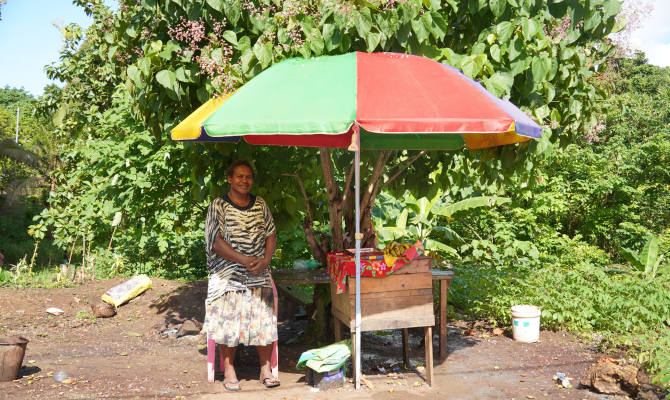
11 August 2026, Barana – For years, rain meant lost income for many women vendors in Barana. When the weather turned, they packed up their produce and returned home, often before making enough sales to support their families.
Today, that story is changing.
With support from the Secretariat of the Pacific Regional Environment Programme (SPREP), through the Pacific Ecosystem-based Adaptation to Climate Change (PEBACC+) project, women in Barana are expanding their small businesses, increasing their incomes, and building greater financial security for their households.
In November 2025, the PEBACC+ project, funded by the Kiwa Initiative and the French Facility for Global Environment, handed over market-access equipment to women from seven zones in Barana. Around 80 women received practical tools, including market umbrellas, chairs, trays, and containers, helping them continue selling even in wet weather and improving their market setup.
For 33-year-old Lydia Seno, a mother of six, the support has made a noticeable difference.
Before participating in the project's livelihood training, Lydia earned an income by farming and selling cakes, popcorn, and flour. Through the training, she learned new skills, including baking lolo buns and dyeing lavalava, allowing her to diversify her products and attract more customers.
"My income has increased," she said. "Before the training, I earned around SBD100. Now I can earn about SBD150."
The market equipment has also helped Lydia stay at the market longer.
"When it rains, I now have an umbrella to keep dry, a chair to sit on, and a tray for my products. Before, when it rained, I would go home before I could sell everything."
Lydia also participated in a two-day Bookkeeping and Financial Literacy Training held in April 2025 at the Barana Community Nature and Heritage Park. Supported by Bethel Enterprises and the Barana Community Nature and Heritage Park Management Committee, the training brought together 32 women to strengthen financial management skills through basic bookkeeping and budgeting.
The training responded directly to findings from the Barana Women's Market Assessment Report, which identified limited financial literacy as one of the biggest barriers preventing women from growing their businesses. While many women were already selling vegetables, fruits, root crops and handicrafts, few had the skills to track income, save consistently or reinvest profits.
Today, Lydia applies those lessons by recording her earnings and contributing regularly to a women's savings club established by the catholic mothers in the Barana community as a result of the training.
"We meet every Tuesday and Sunday. From our profits, we save a little every week," she said.
She has also shared the knowledge she gained with four women in her extended family.
"My advice to other women is to attend training, learn the skills, apply them and share what you learn to help others."
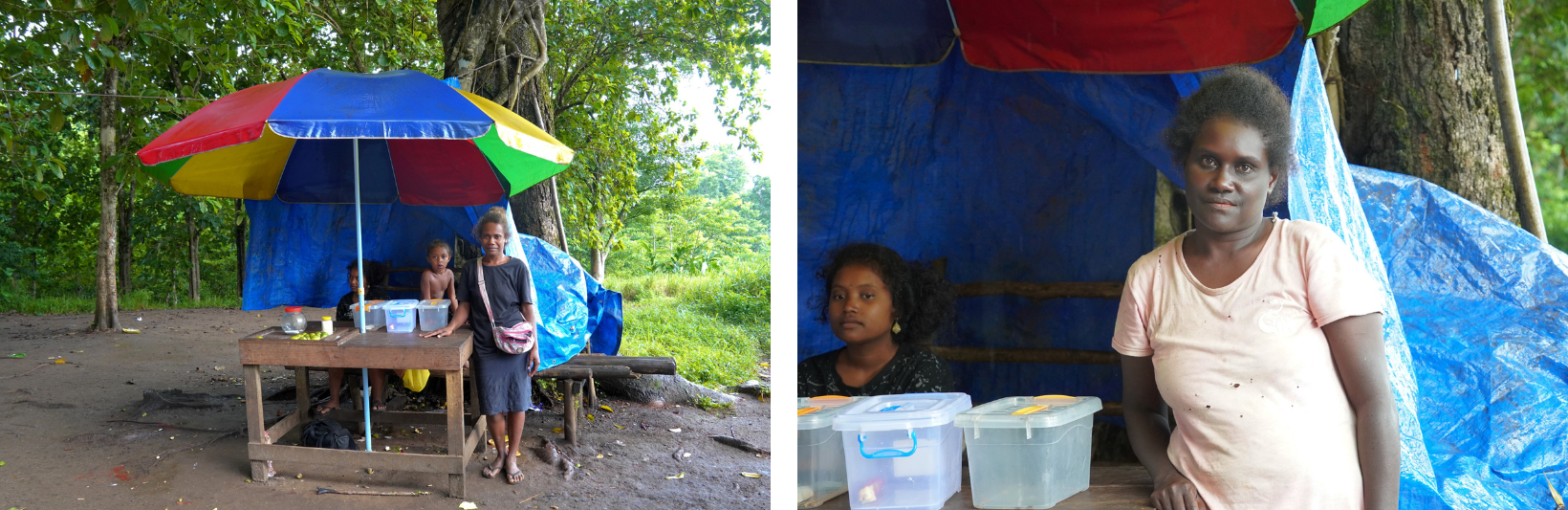
Like Lydia, 27-year-old Francisca Komalla has seen significant improvements in her small business.
Originally from Western Province and now living in Barana with her husband and three children, Francisca sells betel nut, cigarette rolls, and occasionally barbecue.
Before receiving her market umbrella, rain often meant no income.
"Before, I only sold on good days," she said. "Now I can continue selling when it rains."
The extra time at the market has nearly doubled her earnings.
"On rainy days, I used to earn around SBD400 to SBD500. Now I can earn up to SBD1,000."
For Alice Dola, a community leader and mother of nine, the equipment has also created new opportunities to expand her business.
She sells betel nut, bananas, pawpaw, and other fruits grown in her garden, and occasionally homemade cakes.
"Before, when it rained, there was no market," she said. "Now we can stay longer and earn more."
Alice saves up to SBD50 each day from her market sales to help cover her children's bus fares and household expenses. She has also begun planting tomatoes, beans, and eggplants to increase the range of produce she can sell.
"I want to make my market bigger," she said. "The profits will help me buy more things to grow and sell."
As one of Barana's women leaders, Alice encourages others to take advantage of the opportunities available.
"We must do our best to do a little marketing to earn money," she said. "I always encourage other women to start selling."
The experiences of Lydia, Francisca and Alice reflect the broader impact of the PEBACC+ project, which combines practical equipment with skills training to strengthen livelihoods while building resilience to climate-related challenges.
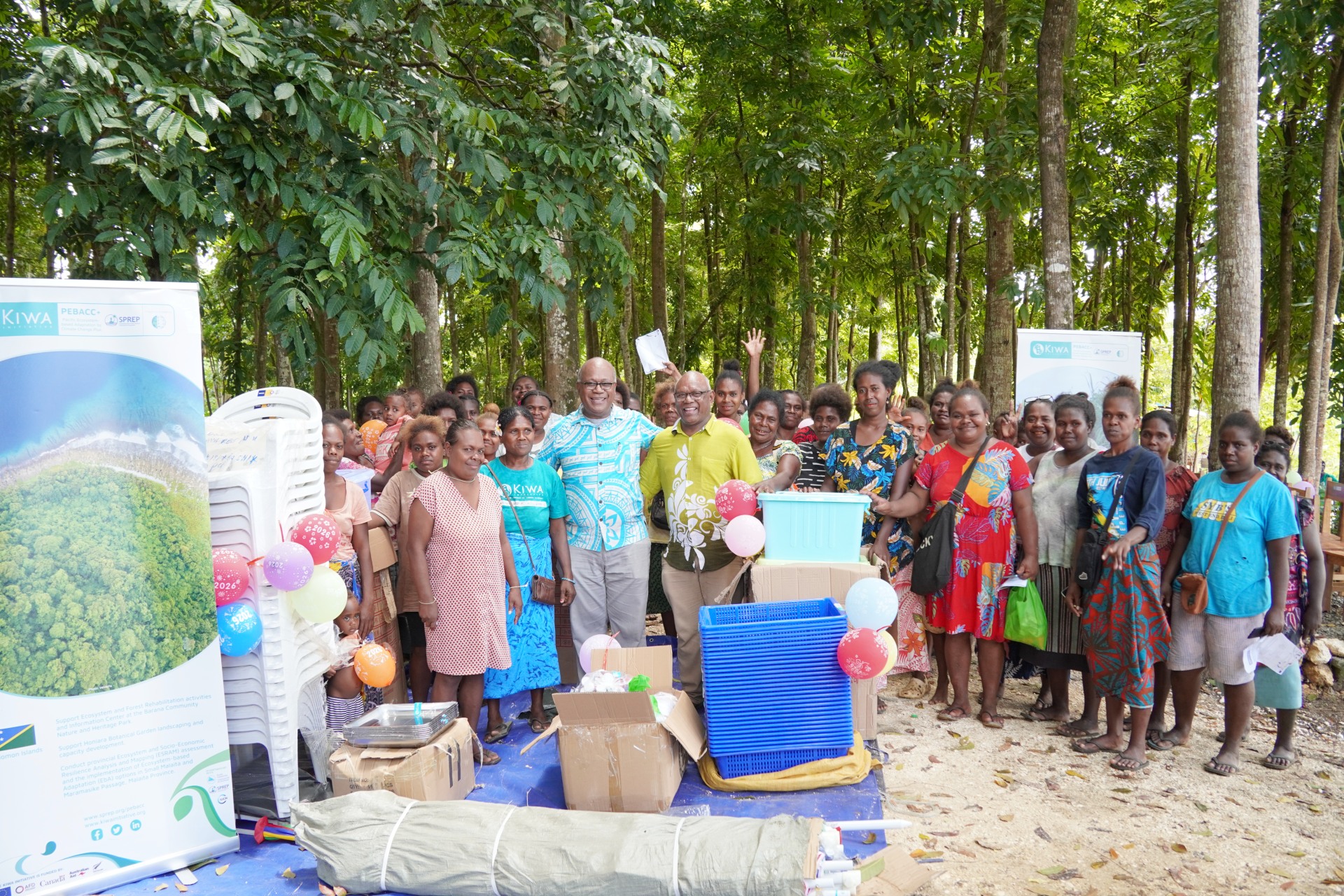
PEBACC+ is a regional project implemented by SPREP and funded by the Kiwa Initiative through its donors the European Union, Agence Française de Développement (AFD), Global Affairs Canada, Australian Government Department of Foreign Affairs and Trade (DFAT) and New Zealand Ministry of Foreign Affairs and Trade (MFAT), with co-financing from French Facility for Global Environment (FFEM). The project aims to develop, sustain, and institutionalize EbA approaches in Fiji, New Caledonia, Wallis and Futuna, Solomon Islands and Vanuatu. These efforts will strengthen the resilience of ecosystems, local economies, and communities against the impacts of climate change.
For more information, please contact: Setaita Tavanabola, Communications Officer, PEBACC+ Project, SPREP; email: setaitat@sprep.org or visit www.sprep.org/pebacc- plus