

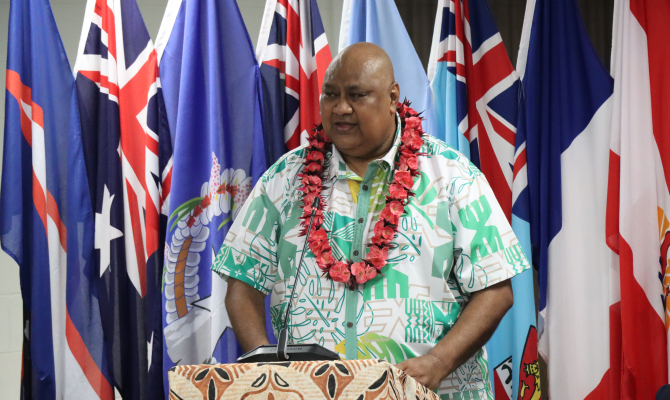
The Secretariat of the Pacific Environment Programme’s (SPREP) fifth Executive Board Meeting (5EBM) is underway in Samoa. We hear from Director General, Mr Sefanaia Nawadra on why this work matters:
We live in such volatile times. The impacts of economic, political and social challenges right across the world, as well as the toll of war, is a reality we cannot escape.
Our Pacific people and communities are not immune. But we are up against a much greater threat, forcing us into the fight for our lives. Despite contributing 0.01% of global emissions to the greenhouse gases that have warmed our planet, Pacific communities bear the brunt of the impacts of the triple planetary crises of climate change, biodiversity loss and pollution.
Against this backdrop, SPREP’s role in supporting all our Pacific countries to adapt and survive has never been more important, to ensure a resilient Pacific environment, sustaining livelihoods and natural heritage in harmony with cultures.
This week in Samoa, this effort continues with our fifth SPREP Executive Board Meeting (5EBM). The 5EBM membership comprises the Troika—United Kingdom (past Chair), Vanuatu (current Chair), and Wallis and Futuna (incoming Chair) —as well as Fiji for Melanesia, Cook Islands for Polynesia, FSM for Micronesia, Australia for the Metropolitan Members, and France for the French-speaking members.
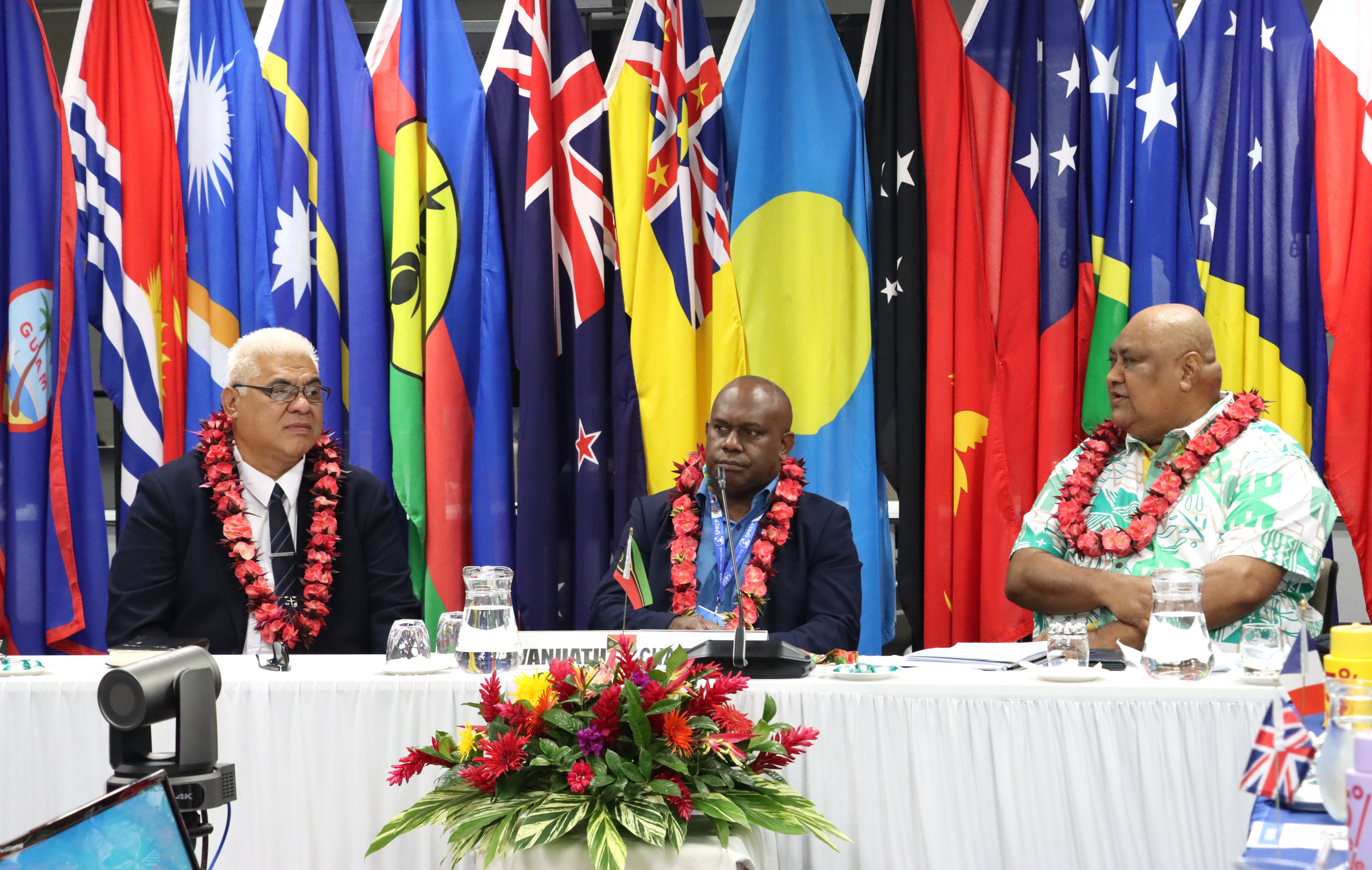
The Executive Board Meeting provides us an opportunity to review our progress from the past year, share lessons and experiences, refine priorities where necessary, and agree on the work programme and budget for the year ahead. Most importantly, it allows us to ensure that our collective efforts are delivering meaningful and lasting outcomes for our countries and communities.
I extend a warm Talofa Lava to the Troika membership and all the Officials who have travelled to Samoa for the Executive Board. I also extend warm greetings to our Members and our Partners from all corners of the world, who continue to actively engage in efforts to increase practical and tangible support for our member countries to better manage and protect their environment.
I look forward to the conversations and discussions this week because I believe they are very important in our efforts to continue to provide and mobilise assistance to protect and improve our environment. I believe in the past 12 months we have been able to make steady progress in our goals and ambitions for a more resilient Pacific. Indeed, 2025 was a rewarding and fruitful year of serving our members.
It marked the conclusion of several significant projects. After seven years, PacWastePlus funded by the EU, has ended having played a significant role, with its scope and reach, to ‘ensure the safe and sustainable management of waste with due regard for the conservation of biodiversity, health and wellbeing of Pacific Island communities.
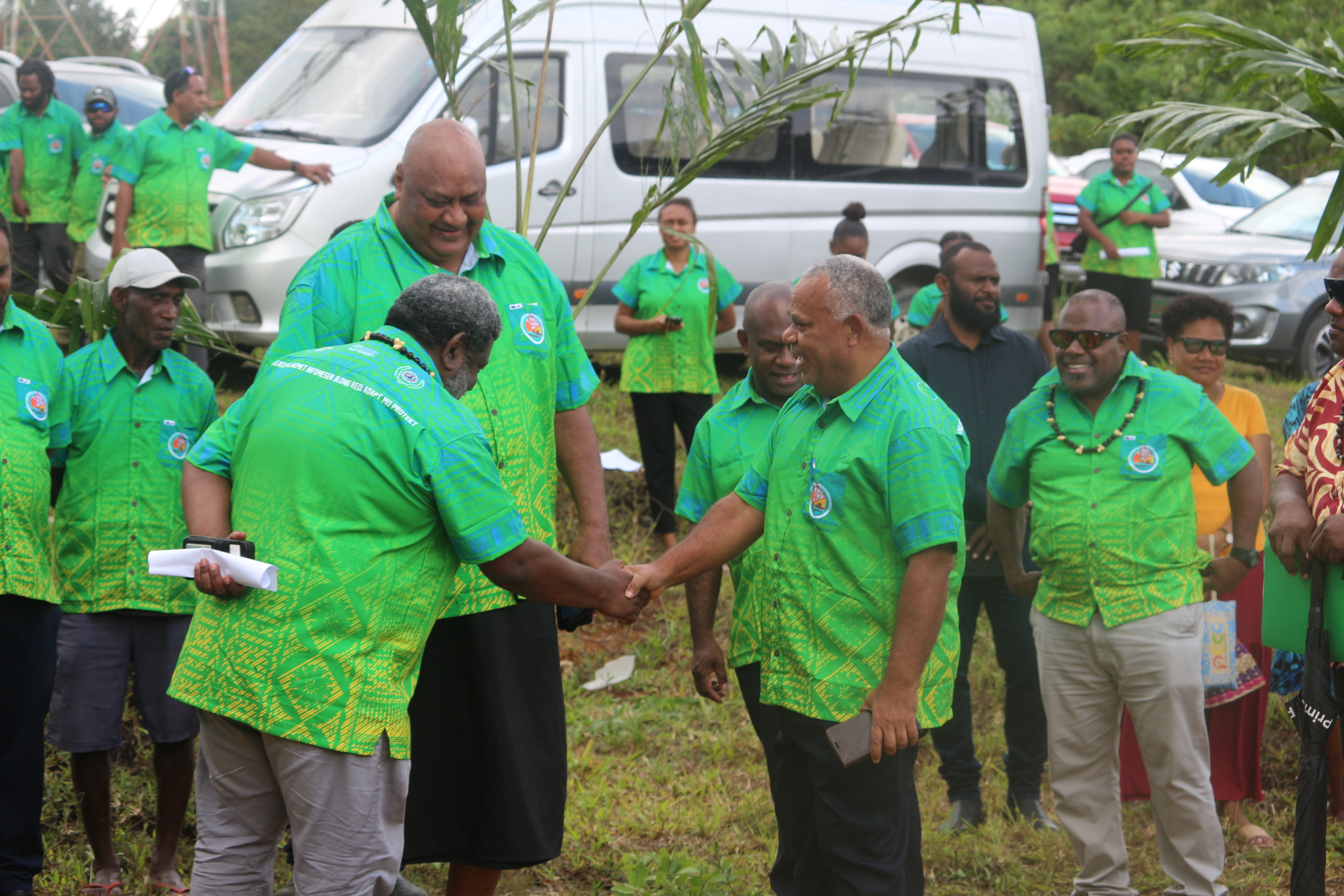
The Vanuatu Klaemet Infomesen blong Redy, Adapt mo Protekt (VanKIRAP) funded by the GCF, launched the weather radar system in Port Vila. As noted by the Honourable Jotham Napat, Prime Minister of Vanuatu during the launch: “We are not just launching technology; we are launching a new shield for our people...this radar fulfils a long-held vision to empower every Ni-Vanuatu with the knowledge needed to protect lives, livelihoods, and our future from a changing climate.”
The GEF 6 Regional Invasives Project (RIP), supported by the Pacific Regional Invasive Species Management Support Services (PRISMSS), made significant progress to protect biodiversity in the Pacific by reducing the impact of invasive species.
The African, Caribbean and Pacific (ACP) Multilateral Environmental Agreements (MEA) Phase 3 Project (ACP MEA3) revitalised the Noumea Convention and link to the regional seas, as well as mobilised over USD 80 million in funding through Inform and the UNEP GCF project to build regional data acquisition and management capacity.
We are thankful that all these projects were completed fully and met, and in some cases, exceeded their objectives and key deliverables. But with every end comes new beginnings.
SPREP launched the Emma Luke Regional Earth Observation Centre (ELEOC), honouring the memory of the late Ms Emma Luke, who championed the role of Pacific countries in leading earth observation conversations and interventions for the Pacific. Ms. Emma Luke left a generous donation to allow SPREP to strengthen its capacity and capabilities in earth observation, which now serves in the form of a regional hub for geospatial collaboration and learning.
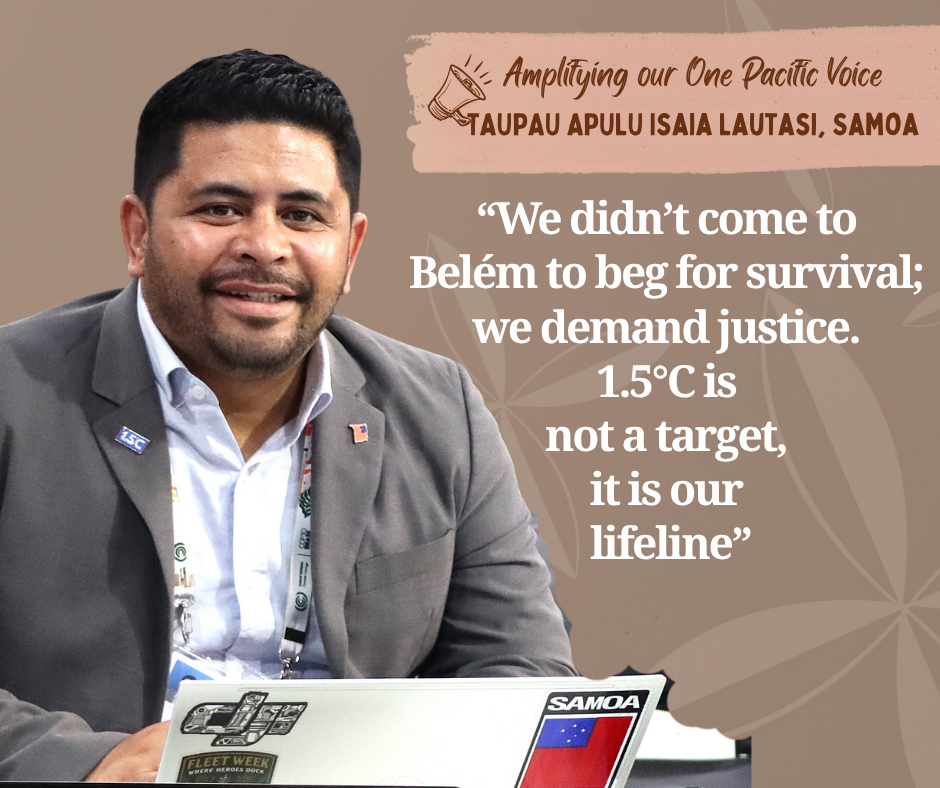
2025 was another pivotal year for amplifying our Pacific voyage across the international multilateral environmental agreement meetings. SPREP provided guidance and technical support for our hard-working member delegations at the UNFCCC COP30 in Belem, CITES COP20 in Uzbekistan, and INC-5.2 in Geneva. With Türkiye hosting COP31, Australia will be the ‘President of Negotiations’ and the pre-COP will be hosted in the Pacific. SPREP will support the Pacific Islands Forum process, already set in place and as agreed to by our Leaders. We will also have a direct role in supporting hosting and the Australian Presidency of Negotiations through our role as part of the joint Pacific COP 31 Secretariat with the Forum Secretariat and the Australian Government.
SPREP continues to be the partner of choice in our regional and where necessary, global environment space. We signed multi-year partnership arrangements with Australia (2025-2031) worth AUD 24.75 million and New Zealand (2025-2029) worth NZD 10.5 million. I acknowledge the United Kingdom for additional core funding support which paid for much-needed upgrades to facilities on campus, ranging from greater disability access, staff safety and security measures in buildings and expanded car parks.
There are many more successes I can highlight but I will stop here for now. What I want to say is that SPREP, like the Pacific, is a family. Our success is about our collective effort as SPREP Members, SPREP Staff, SPREP Community and the SPREP Family.
The work we do with all our members, communities and partners to build a resilient Pacific environment is a movement where SPREP, has strategically built its capacity to advise, offer technical assistance, support and nurtured partners with resources to make a difference. We have also seen how our members have increased their capacity and ability to meet these challenges and for that SPREP is grateful to have been part of this growth.
I acknowledge our valued Members, development partners, donors, our CROP family, stakeholders, the Government of Australia (DFAT) and the Government of New Zealand (MFAT) for their significant contribution to SPREP core and programme funding including the annual contribution from the People’s Republic of China. I also acknowledge the long term and increasing support from the European Union and Japan.
A message I often share with staff is that “the only sure reward for good work is more work!” Our workload will continue to get busier and heavier, as the world, continues to increasingly experience the impacts of the triple planetary crises. But I believe our work is a God given calling to serve and a journey of Faith. I also believe that he who called us will continue to strengthen and provide! Vinaka!