

15 August 2025, Rarotonga, Cook Islands - The Cook Islands National Environment Service is actively leading innovative work to control the invasive African tulip tree (Spathodea campanulata), in Rarotonga in partnership with the Pacific Regional Invasive Species Management Support Service (PRISMSS) Natural Enemies, Natural Solutions (NENS) programme, the Ministry of Agriculture and Te Ipukurea Society.
PRISMSS is led by the Secretariat of the Pacific Regional Environment Programme (SPREP) while the NENS programme technical lead is Manaaki Whenua - Landcare Research (MWLR) group of New Zealand’s Bioeconomy Science Institute. The NENS programme supports Pacific Island Countries and Territories restoring ecological balance using natural enemies from the weeds' native range.
The African tulip tree, admired for its striking orange-red flowers, was introduced in the 1920s as an ornamental plant. It has since become a major ecological threat, aggressively colonising forests, outcompeting native species, and reducing biodiversity, and threatening food security.
Listed among the world’s 100 worst invasive species, African tulip tree invades indigenous forests and farmland, undermining productivity and increasing vulnerability to climate change and natural disasters. Its prolific seed production and ability to sucker resilience allows it to quickly recolonise disturbed areas, such as those affected by cyclones.
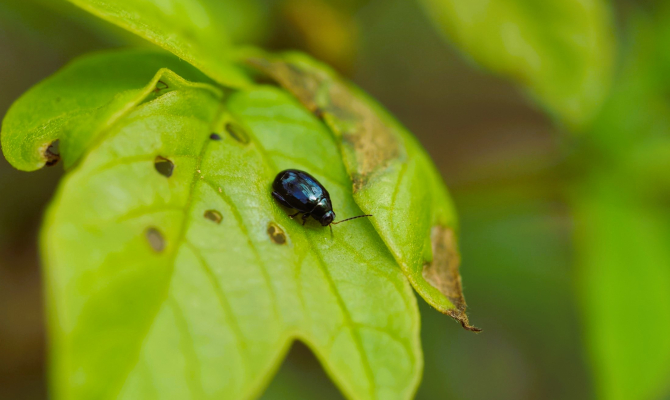
In a world first, the African tulip beetle (Paradibolia coerulea), a leaf-feeding beetle sourced from Ghana, was released in Rarotonga in 2021 and 2022. The beetle underwent rigorous host-specificity testing in South Africa to ensure it poses no threat to non-target species.'
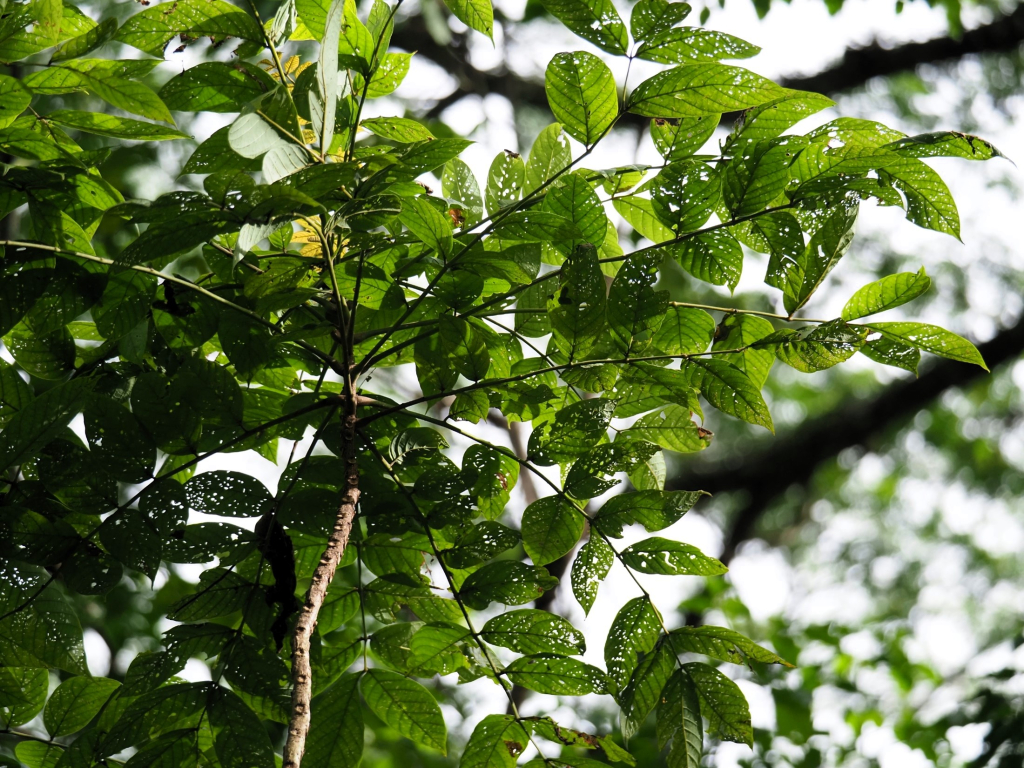
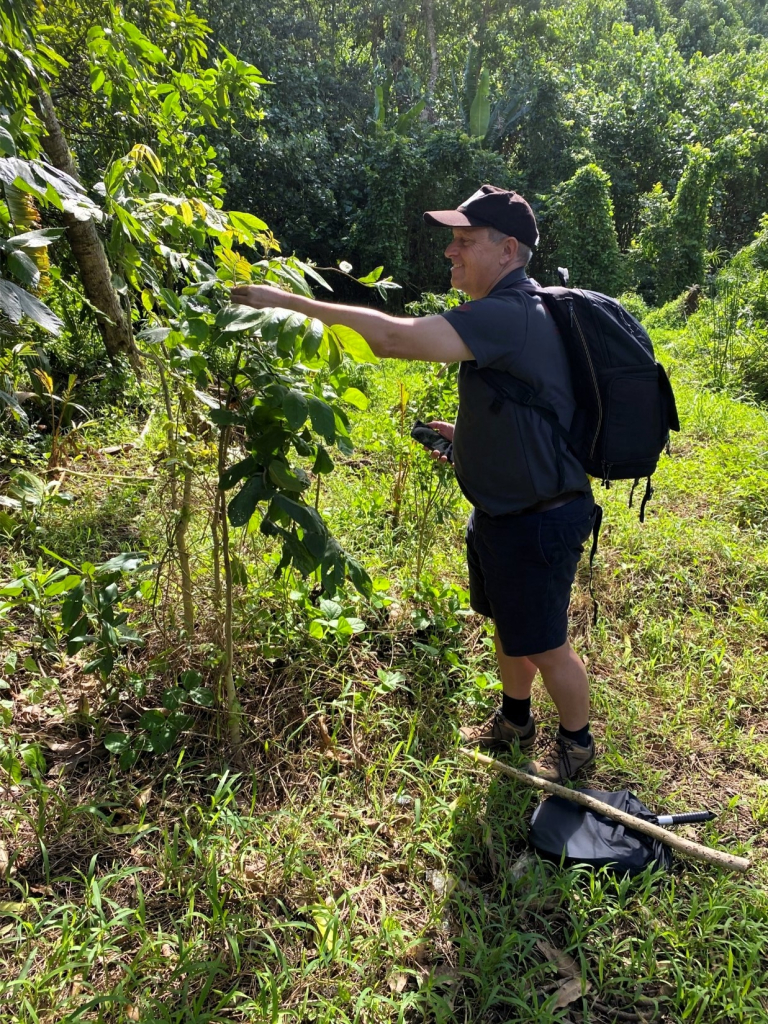
Rarotonga has become a pioneering site for biological control. Despite the beetle being introduced only recently, early results are promising. A PRISMSS NENS monitoring team, led by Dr. Quentin Paynter and Ms. Lynley Hayes of MWLR, reported excellent dispersal and damage levels during a June 2025 survey, particularly in the Takitumu Conservation Area.
The visiting PRISMSS NENS team reported that the African tulip beetle is exceeding expectations as signs of the beetle were found not only at all five release sites but across the whole island. The recent surveys show the beetle is dispersing well and causing significant damage across Rarotonga, including isolated urban plants, so it is dispersing well. and conservation areas like the Takitumu Conservation Area.
Moderate damage was already common on all plants inspected up to 500m away from the release point at the Takitumu Conservation Area.
PRISMSS NENS Technical lead for the Pacific, Ms. Lynley Hayes of MWLR highlighted that “the Cook Islands is leading the way with using natural enemies to control African tulip tree in the Pacific.”
“The early performance of the African tulip beetle in Rarotonga augers well for successful control of African tulip tree in coming decades.”
Damage from the gall mite (Colomerus spathodeae), which is also now extremely common in Rarotonga following its release there in 2017, is complementing the beetles. Galling ranges from slight to heavy with some significant damage to growing tips observed.
The SPREP Invasive Species Adviser, Mr David Moverley commented that, “the work of the PRISMSS Natural Enemies-Natural Solutions Programme is providing opportunities for many Pacific island states.”
“This is particularly evident with the work on African tulip tree, which is widespread across the region and is problematic everywhere it has been introduced, but by addressing it through a regional focus we are confident that the cost per state of natural enemy introduction can be minimised.”
The work in Rarotonga was the first site globally to release the African tulip beetle, and its success is guiding similar efforts, following the successful establishment of the African tulip beetle in Rarotonga, elsewhere with the PRISMSS NENS programme plannings to release the beetle in Fiji, Samoa, Tonga, and Vanuatu by the end of 2025.
---------------------------------------------------------------------------------------------------------------------------------------------------
About PRISMSS: The Pacific Regional Invasive Species Management Support Service (PRISMSS) is a coordinating mechanism designed to facilitate the scaling up of operational management of invasive species in the Pacific. PRISMSS, which is led by the Secretariat of the Pacific Regional Environment Programme (SPREP) brings together experts to provide support within the Pacific region with a focus on protection of indigenous biodiversity and ecosystem function. As a service provider, PRISMSS provides a comprehensive suite of support services in a cohesive, effective, efficient, and accessible manner to Pacific Island countries and territories.
Restoring Island Resilience (RIR): The PRISMSS - Restoring Island Resilience (RIR) is a New Zealand-PRISMSS collaboration project that aims to improve Pacific Island Countries and territories livelihoods and resilience to climate change by reducing the impact of invasive species on natural and agricultural ecosystems through the six PRISMSS programmes.
PRISMSS Powered by: New Zealand Foreign Affairs & Trade, UK International Development, GEF, United Nations Environment Programme & SPREP
PRISMSS Partners: Birdlife International, Earth Sciences New Zealand, New Zealand Department of Conservation, Island Conservation, Manaaki Whenua - Landcare Research group of New Zealand’s Bioeconomy Science Institute and Pacific Community and SPREP
PRISMSS Programmes: Natural Enemies Natural Solutions (NENS), Predator Free Pacific (PFP), Protect Our Islands (POI), Protect Our Marine Areas (POMA), Resilient Ecosystems Resilient Communities (RERC), War On Weeds (WOWs)
For additional information please contact Mr Dominic Sadler, PRISMSS Manager on dominics@sprep.org or Mr Nitish Narayan, PRISMSS Communications & Liaison Officer on nitishn@sprep.org