

Lenakel, Vanuatu – Nature-based Solutions (NbS) efforts have brought benefits to local communities, but long-term success hinges on the ability of these communities to manage and finance these efforts. Communities across Tanna Island in Vanuatu face a challenge of sustaining the vital environmental work initiated under previous projects, including the Pacific Ecosystem-based Adaptation to Climate Change (PEBACC+) project, when it concludes and they are without continued external support.
One of the key obstacles has been a lack of awareness and skills in accessing funding opportunities. Many local groups are unfamiliar with the processes involved in applying for grants or writing effective project proposals, critical tools for maintaining momentum post-project.
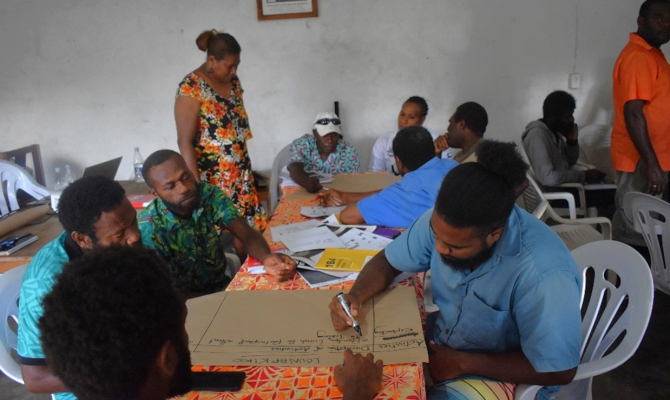
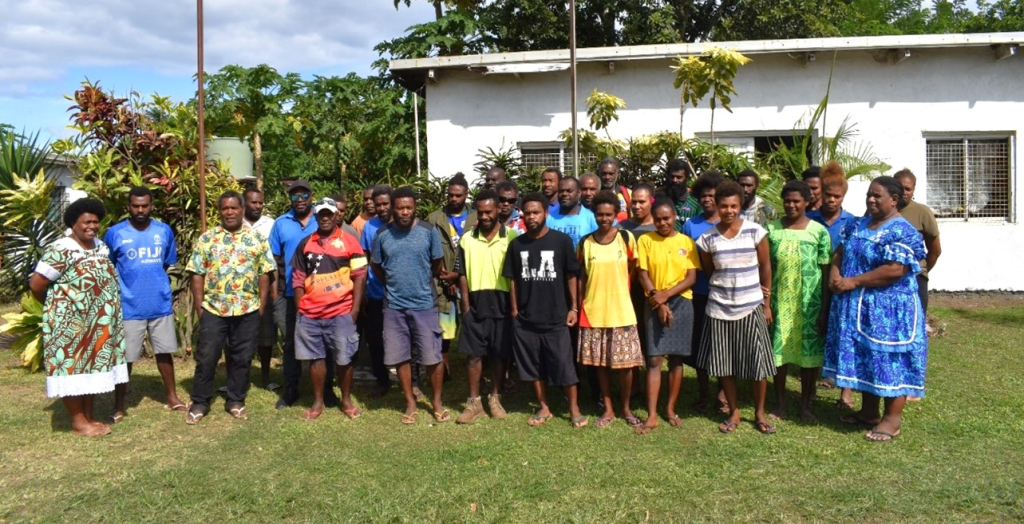
In response to this challenge, a three-day writeshop was held in Lenakel aiming to bridge this gap. Hosted at the Lenakel Municipal, the write-workshop brought together 32 representatives (seven women, 15 men, and 10 youth) from Lenakel landowning groups and Port Resolution communities for intensive training on grant access and proposal development.
Opening the event, Lenakel Town Administrator, Reginald Tangap highlighted its importance. “This writeshop is the first of its kind to be conducted on Tanna Island,” he said. “I urge all participants to engage fully and learn what you can from the resource people conducting this writeshop.”
Participants were introduced to a range of international funding opportunities, including the Global Environment Facility (GEF) Small Grants Programme, and guided through specific requirements for drafting concept notes and successful applications.
The workshop was carried out in collaboration with Lenakel Municipality, Department of Fisheries, and Department of Environment, with support from the UN Development Programme/UN Offices for Project Services GEF Small Grants Programme.
“The PEBACC+ project wishes to build community capacity, where it possibly can, so they can stand on their own and continue with NbS efforts as the project concludes,” said William Bani, PEBACC+ Country Coordinator.
The workshop was held on 9-11 June 2025, where participants gained practical knowledge and tools to help their communities secure funding and continue the critical work of protecting and restoring local ecosystems. The training represents a proactive step towards empowering Tanna’s communities to take ownership of their environmental future, ensuring the sustainability of PEBACC+ efforts well beyond the life of the project.
PEBACC+ is a regional project implemented by Secretariat of the Pacific Regional Environment Programme and funded by the Kiwa Initiative through its donors the European Union, Agence Française de Développement (AFD), Global Affairs Canada, Australian Government Department of Foreign Affairs and Trade (DFAT) and New Zealand Ministry of Foreign Affairs and Trade (MFAT), with co-financing from French Facility for Global Environment (FFEM). Over the next four years, the project aims to develop, sustain, and institutionalize EbA approaches in Fiji, New Caledonia, Wallis and Futuna, Solomon Islands, and Vanuatu. These efforts will strengthen the resilience of ecosystems, local economies, and communities against the impacts of climate change.
For more information, please contact: Setaita Tavanabola, Communications Officer, PEBACC+ Project, SPREP; email: setaitat@sprep.org or visit www.sprep.org/pebacc-plus