

14 November 2025, Belem - Pacific countries are already suffering from the impacts of climate change-induced loss and damage, from the devastation caused by tropical cyclones, floods, to human mobility issues resulting from slow onset events like sea level rise.
While development and adaptation efforts have reduced vulnerability, the escalating impacts of climate change continue to drive irreversible losses as natural and human systems are pushed beyond their ability to adapt.
At COP30 in Belem, Fiji’s Minister for Environment and Climate Change, Honourable Mosese Bulitavu lamented: “Families, communities and villages need to relocate now, this is already happening in some parts of Fiji. Identities and cultural aspects have been lost due to the impact of climate change.”
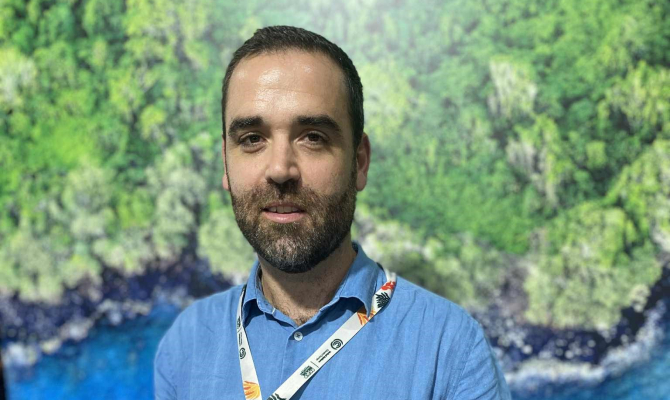
Mr Daniel Lund, Special Adviser to the Fijian Government, is one of the Pacific Lead coordinators for Loss and Damage at COP30. With progress made in operationalising the Fund for Responding to Loss and Damage, all eyes are on the next steps, and COP30 must advance this work.
At the end of the first week of negotiations, Mr Lund gives us an update of the negotiations for Loss and Damage:
QUESTION: Bula Daniel! What are the key messages and key asks from the Pacific in the thematic area you lead at COP30?
ANSWER: In terms of Loss and Damage, the Pacific continues to push for fit for purpose arrangements and financing modalities under the UNFCCC that can protect the most vulnerable. We seek recognition of the fact that irrespective of adaptation progress, and mitigation efforts, we continue to experience climate change-induced loss and damage and will continue to do so under any and all future climate change scenarios.
QUESTION: Tell us a bit about the Fund for Responding to Loss and Damage and why this is important for the Pacific?
ANSWER: The Fund for Responding to Loss and Damage (FRLD) is a critical new fund that is mandated to provide funding to support developing countries to respond to loss and damage. Unlike other funds which are not designed to deal with these complex and sensitive issues and don’t have the frameworks or the modalities that are appropriate for loss and damage response the FRLD is designed to. So, the FRLD is very important in terms of the vision it has taken onboard, which was very much informed by the Pacific SIDS. We’re now at the stage where we need to make sure it is operationalised in a way that is consistent with that vision.
QUESTION: How are things going at COP30? Progress or lack of progress?
ANSWER: In terms of the broader work around the Loss and Damage architecture of the UNFCCC, which is under the WIM (Warsaw International Mechanism) review, there is progress being made but it is quite a complicated process due to divergent views between parties.
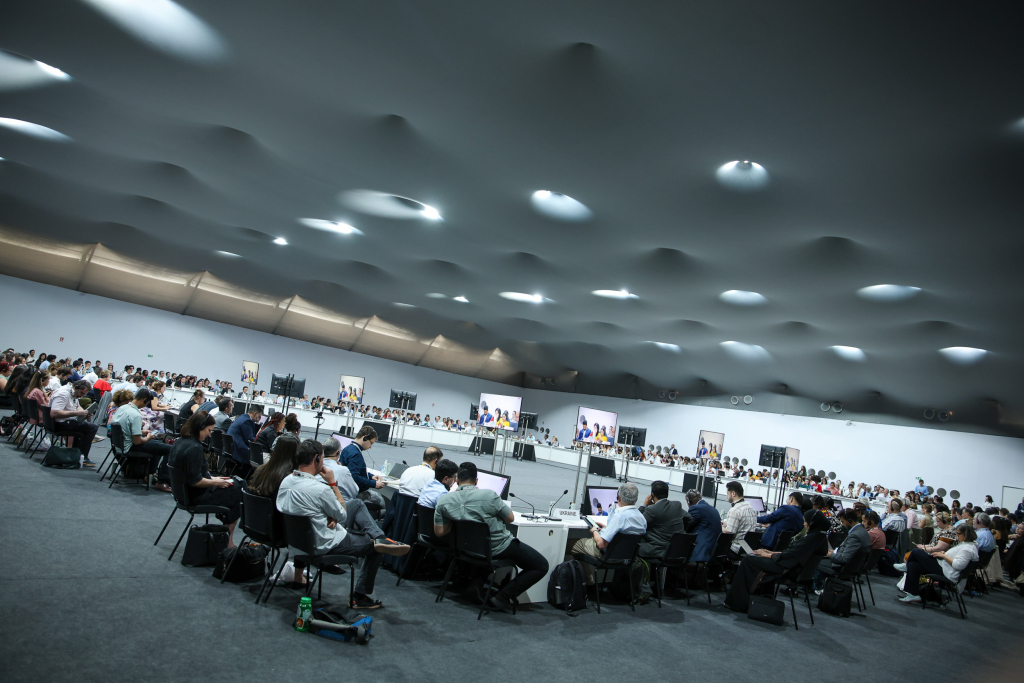
In relation to the FRLD, Parties are here to take decision where we reflect on the work that the Board has carried out, welcome that work and provide some guidance in terms of how the Fund can grow into its own over the coming years.
A big challenge within that is the question of scaling up finance for the fund and the difference of opinions in terms of how much guidance we provide in this respect. Obviously, in the context of this fund - this is not a multi-million-dollar issue, this is a multi-billion-dollar issue.
QUESTION: How do you think COP30 can solve the challenge of finance?
Answer: It’s about building a common understanding about how the financing that’s available for responding to the climate crisis, will be balanced and distributed across different priorities and also how to significantly scale-up and expand what’s available.
Having a Fund dedicated to loss and damage was the first step and now it’s about recognising it is more cost effective globally, by country, by region to respond to loss and damage than to incur this damage over time. Our ability to adapt and build resilience will be undermined if we do not address current and future loss and damage trends.
QUESTION: How do you see the next few days playing out? And what will it take to get a good outcome for the Pacific?
ANSWER: That’s a challenging question; it’s about keeping momentum on decisions we’ve made in the past but also trying to ensure that there can be new decisions taken here that can protect the fundamental elements of the Paris Agreement.
So, the fact that NDCs currently do not reflect what’s needed to reduce emissions to 1.5 degrees, is the core issue. If we can’t find a way of addressing this fundamental failure and design a commensurate response, it means all the work across various agenda items is at risk and comes under question. So really, it’s about 1.5-degree goal and how we respond to it.
The 30th Conference of the Parties to the UN Framework Convention on Climate Change (UNFCCC) is taking place from 10-21 November 2025 in Belem, Brazil.
It is being attended by Pacific leaders and their delegations, who are advocating for the survival of Pacific communities who continue to be at the forefront of climate change impacts.
Support for our Pacific Islands at COP30 from members of the Council of Regional Organisations of the Pacific (CROP) is through the One CROP mechanism led by the Secretariat of the Pacific Regional Environment Programme.
Members of one CROP include: The Secretariat of the Pacific Regional Environment Programme (SPREP) – Lead, Pacific Islands Development Program, Pacific Islands Forum Fisheries Agency, Pacific Island Forum Secretariat, Pacific Community.
A key part of amplifying the One Pacific Voice at COP30 is the Moana Blue Pacific Pavilion and the Pacific Delegation Office. The Moana Blue Pacific Pavilion at COP30 is a Pacific partnership with the Governments of Australia and New Zealand managed by the Secretariat of the Pacific Regional Environment Programme (SPREP).
The Pacific Delegation Office at COP30 is a Pacific partnership with the New Zealand Government managed by the Secretariat of the Pacific Regional Environment Programme (SPREP).
To learn more about the Pacific at COP30 please visit: https://www.sprep.org/cop30