

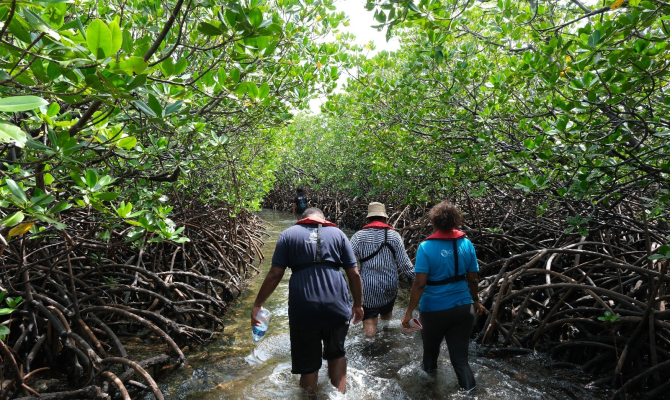
25 July 2025, Zimbabwe - Wetlands are amongst the Pacific region’s most important ecosystems that look to provide essential services for many communities, support lush biodiversity, and promotes climate resilience.
From the coral reefs of Qoliqoli Cakovata in Fiji to the freshwater swamp forests of Lake Ngardok Nature Reserve in Palau, these areas are deeply rooted into the cultural and ecological fabric of the Pacific.
However, the Pacific continues to face growing threats, such as sea level rise, habitat loss, development pressures, and much more.
To address challenges, the Oceanic region is working through the Ramsar Convention on Wetlands, a global treaty adopted in 1971 in Ramsar, Iran. The Convention aims to promote the protection and wise use of wetlands through international cooperation, national action, and local engagements.
Its central mechanism is the designation of Wetlands of International Importance, commonly known as Ramsar Sites. Countries that join the Convention commit to safeguarding these ecosystems and integrating wetland management into broader planning efforts.
Several Pacific countries are active Contracting Parties to the Convention, including Fiji, Kiribati, Marshall Islands, Palau, Papua New Guinea, Samoa, and Vanuatu. These nations have designated unique wetland areas totalling 12 wetlands of International Importance, such as Lake Lanoto’o in Samoa, Nooto-North Tarawa in Kiribati, and Lake Letes in Vanuatu, to name a few.
These are some of the sites that collectively contribute to the Pacific’s global recognition for their ecological, cultural, and economic value.
Beyond site designation, the Convention also works to encourage knowledge-sharing and policy development that reflect the unique needs of all Contracting Parties.
From 23 to 31 July 2025, the 15th Conference of the Contracting Parties (COP15) to the Ramsar Convention on Wetlands will be held in Victoria Falls, Zimbabwe. COP15 will bring together representatives from all member countries, intergovernmental and non-governmental organizations, and civil societies to assess progress, adopt new resolutions, and shape the future direction of wetland conservation.
For Pacific parties, this is a vital platform to share experiences, raise concerns about the vulnerability of small island wetlands, and advocate for increased support, recognition, and funding to continue such efforts.
“Ramsar COP15 is a chance to call for recognition of unique challenges and greater support as custodians of some of the world’s most valuable and vulnerable ecosystems. The Pacific Contracting Parties bring 12 Ramsar Sites of International Importance to the stage to express stances on policies concerning present and future sites,” Ms Nolani Hazelman, Pacific Youth Wetlands Coordinator.
For the first time in Ramsar COP history, the conference will serve as a key moment for youth engagements, with having specific sections in member countries national reports dedicated to youth engagement with wetlands.
The Pacific has three youth representatives attending the conference which marks huge significance as they step into leadership roles in wetland advocacy and conservation, where COP15 will give them the platform to influence global policy making and call for intergenerational equity in decision-making.
"This conference gives us a platform to influence global policy making and call for intergenerational equity in decision-making, ensuring that the voices of young people are heard in shaping the future of our wetlands,” says Ulaiasi Matakaiwai, Fiji youth delegate.
“I see this as more than just attending a conference, but about representing the aspirations, concerns, and solutions of Pacific youth who are already living on the frontlines of climate change and biodiversity loss. It is about bringing the stories from our communities, the work we are doing to protect our wetlands, and our call for stronger, youth-inclusive policies at every level.”
Youth presence will help ensure that the outcomes of COP15 reflect not only ecological priorities, but also the social and cultural values of future generations.
The 15th Conference of the Contracting Parties (COP15) to the Ramsar Convention on Wetlands is held in Victoria Falls, Zimbabwe, from 23 – 31 July 2025. The theme is “Protecting Wetlands for our Common Future”
The Pacific region is represented by delegates from Fiji, Papua New Guinea, and Vanuatu.
The Secretariat of the Pacific Regional Environment Programme (SPREP) is providing support to Pacific Contracting Parties as part of their efforts to amplify Pacific engagement in the Ramsar Convention. For further information on COP15, please visit: https://www.wetlandscop15.gov.zw/