

23 October 2025, Port Vila, Vanuatu – Preserving historical weather and climate data with aim of making them available for future climate analyses is vital for understanding how Pacific island climates are changing, and for strengthening the services that keep Pacific communities safe.
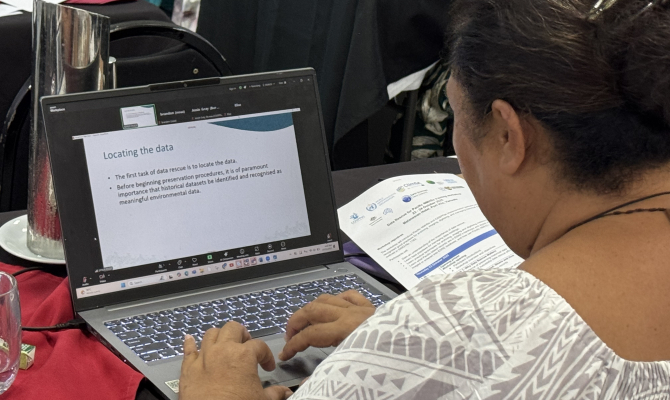
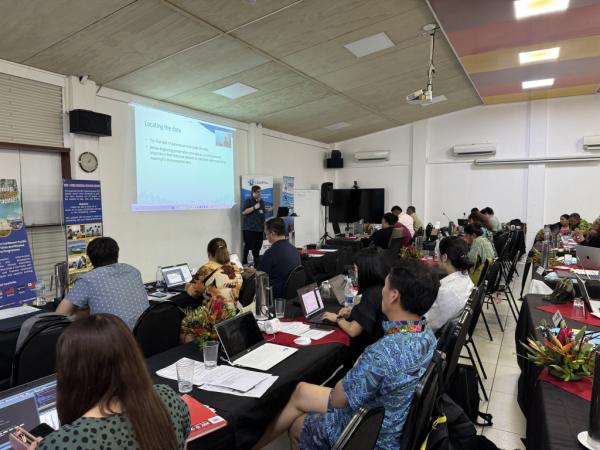
This week, representatives from Pacific National Meteorological and Hydrological Services (NMHSs) have come together for a Data Rescue Workshop, focused on safeguarding valuable meteorological records. The workshop was made possible through the support of the Governments of Australia and New Zealand-funded Climate and Oceans Support Program in the Pacific (COSPPac), the European Union-funded Intra-ACP Climate Services and Related Applications (ClimSA) project, and the World Meteorological Organization. The workshop presenters are from the Australian Bureau of Meteorology and Earth Sciences New Zealand.
The workshop introduces Pacific NMHSs and COSPPac implementing partners to internationally recognised good practices for archiving, imaging, digitising, and managing historical data.
Participants are expected to go back to their home countries with a better understanding of the importance of data rescue, best practices for managing data holdings, practical techniques for archiving, imaging, and digitising meteorological records, and how to access Pacific records held at Earth Sciences New Zealand.
Mr. Salesa Nihmei, Director of the Secretariat of the Pacific Regional Environment Programme’s (SPREP) Climate Science and Information programme, said, “Our past holds the key to understanding our future.”
“This workshop is crucial as it not only preserves important weather data, but it also empowers our services with the information needed to make better decisions, strengthen early warning systems, and support resilience to extreme weather events across the Pacific,” he added.
The workshop participants recognised the importance of good data management practices for Pacific NMHS.
“The quality of your output is only as good as the quality of your data,” said Mr. Wilfred Nanpei of the Pohnpei Weather Service Office.
“It all begins with proper data management, data rescue, and effective use of data. That’s how you can get good results.”
Ms. Amy McGowan of the Fiji Meteorological Service said, “Having good data management practices will help Met Services as it will help safeguard their climate records in the long run and also make it accessible for future education and research purposes.”
“I’m hoping to learn some of the best practices that are being used by those who have more experience and expertise in the area of data rescue from this workshop and looking forward to taking it back home to share with my colleagues at the Met Service,” she added.
The workshop was held immediately after the conclusion of the 17th Pacific Islands Climate Outlook Forum (PICOF) at the Melanesian Hotel in Port Vila.
For more information, please contact Mr. Simon McGree at simon.mcgree@bom.gov.au.