


2 September 2025, Apia, Samoa - The Pacific Regional Invasive Species Management Support Service (PRISMSS) has been spotlighted as a vital mechanism for protecting biodiversity across the Pacific’s 30,000 islands, where invasive species are the leading cause of ecosystem degradation. With growing international support, PRISMSS is enabling scalable, measurable, and locally driven solutions to one of the region’s most pressing environmental challenges.
Participants attending a side event held on the margins of the Secretariat of the Pacific Regional Environment Programme (SPREP) Partnership Dialogue were informed that the Pacific region faces an escalating threat to its biodiversity primarily from invasive species which disrupt fragile ecosystems, hinder forest regeneration, and endanger native wildlife.
In response, the SPREP led PRISMSS has emerged as a cornerstone initiative enabling collaborative solutions across the region. PRISMSS is successfully helping Pacific Island countries to scale up the management of invasives species to protect biodiversity and increase the climate resilience of their ecosystems and communities.
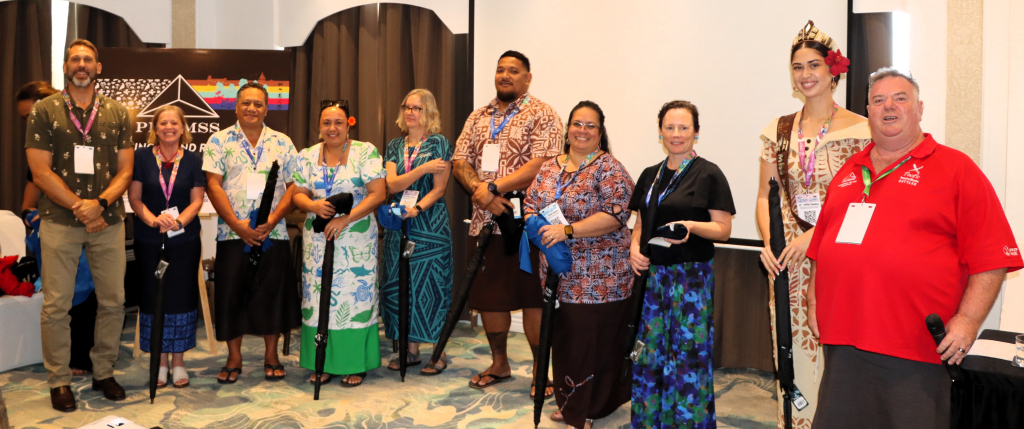
As a SPREP Centre of Excellence, PRISMSS provides Pacific Island countries with access to world-leading expertise of partners and provides a sustainable regional framework for building capacity, sharing best practice and scaling up management actions on the ground for invasive species management.
The Government of New Zealand has demonstrated strong leadership by investing NZD20 million into the PRISMSS Restoring Island Resilience (RIR) project, reinforcing its commitment to long-term sustainability and ecosystem resilience. This funding supports the expansion of PRISMSS from isolated projects to region-wide programmes with tangible outcomes.
Mr John Clemo, Senior Adviser Climate Change and Environment, New Zealand Ministry of Foreign Affairs & Trade shared that, “when addressing the dual cross crisis of climate change and biodiversity, it’s important to take a really long-term view and what I see in PRISMSS is that the approach and mechanism that the team has developed is focused on long term results and sustainability.”
“One way where this is achieved is through the incorporation of traditional knowledge and ensuring the work is embedded in local cultures and tradition, while also acknowledging the emerging threats that climate change and invasive species pose.”
“An example is the PRISMSS Resilient Ecosystems, Resilient Communities (RERC) which delivers on the ground restoration impact in various places including Vanuatu, Palau, Solomon Islands and FSM.”
“By building on traditional knowledge through that programme, as one of the pillars of climate resilience, I have real confidence that PRISMSS achieve sustained results and that it really does align with New Zealand’s ambition to achieve resilient development in the Pacific through practical means.”
“The knowledge sharing that PRISMSS as a model engenders has led to some amazing opportunities from different Pacific Island governments to come together to talk about some of the lessons and challenges that they face and also share the innovative solutions that are happening.”
“There are many examples of how PRISMSS is enabling a collaborative mindset for greater impact and resilience across the Pacific, and this is being recognized by other donors, and we are really appreciative of the UK coming on board recently as a donor.”
The United Kingdom (UK), a recent donor partner who bring a unique perspective, has joined PRISMSS with a focus on tailored, demand-led support. With a modest footprint in the Pacific, the UK’s partnership model enables impactful collaboration that complements its adaptation-focused investment strategy. The UK Foreign, Commonwealth & Development Office (FCDO) has now invested an additional NZ1.5m into PRISMSS.
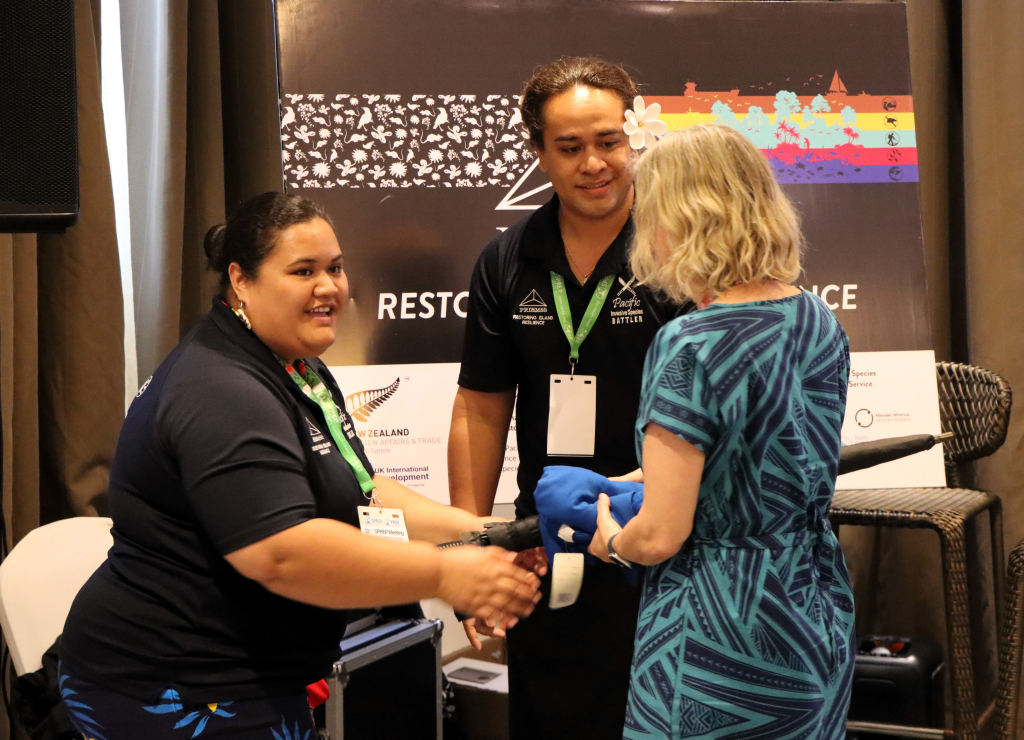
Ms Billie Selby, Pacific Climate and Energy Counsellor, UK Foreign, Commonwealth and Development Office shared during the side event that, “one of the key benefits for investing in the Pacific Regional Invasive Species Management Support Service is that it is delivered by SPREP as the regional home of action on climate and nature-based solutions.”
“The UK wanted to invest in PRISMSS because we could see that it is delivering a highly impactful and sustainable service for Pacific Island countries and PRISMSS brings together lots of different delivery partners and global expertise, but the partnership is really tailored to the Pacific context, and the specific needs of each country.”
“For PRISMSS as a programmatic approach, it enables us as a development partner to invest in a solution at scale, where Pacific Island countries can get support in a really tailored way to meet their own context and the coordinating mechanism that SPREP and the PRISMSS team provides means that we've been able to quickly put in more support than we would have been able to for any individual Pacific island country.”
“We are really pleased to be able to come on board to provide funding to PRISMSS and I think the way SPREP is so open to many different donor partners working together on one work plan is a real strength.”
Niue, leveraging the services of PRISMSS, aims to become the largest inhabited island globally to manage its priority invasive species by 2030, building on successful past initiatives and seeking further funding to realize this ambitious goal.

The Niue Director of the Department of Environment, Mr Haden Talagi, expressed during the side event that, “in terms of the ongoing assistance from PRISMSS, it builds up on the momentum from the Global Environment Facility (GEF)-PAS Invasive Alien Species project.”
“GEF has seen really detailed activities in a way that we are able to maintain and build up the principal leading up to the PRISMSS and trying to look beyond 2030 as we have different integrated approaches to invasive species.”
“PRISMSS is supporting Niue’s efforts to take a more holistic and integrated approach to increase the climate resilience of its entire ecosystem and this model has helped Niue to access global expertise and best practice in managing challenges such as Taro Vine.”
“The problems that we face now stems from the 60s and 70s when a lot of the invasive species came into Niue so now, we have to double up in terms of our efforts with the team at SPREP as well as the PRISMSS programme to try and be proactive in terms of some of our approaches and not just be reliant on PRISMSS.”
“For example, under the new Nationally Determined Contribution (NDC) 3.0, we have invasive species and biodiversity as one of the core pillars moving forward, so we just don’t depend on single projects but try and build on a programme that can take effective steps towards addressing invasive species and the added layer of building resilience and combating climate change.”
Samoa has taken a structured approach to biodiversity conservation with the launch of its National Invasive Species Strategy and Action Plan (2025–2030) and recently completed a successful pig and rat eradication campaign on Nu‘utele island, under the PRISMSS Predator Free Pacific executed in three cycles during August. Looking ahead, Samoa is preparing for a more complex rat eradication effort on Apolima Island, which presents unique challenges due to its human population.
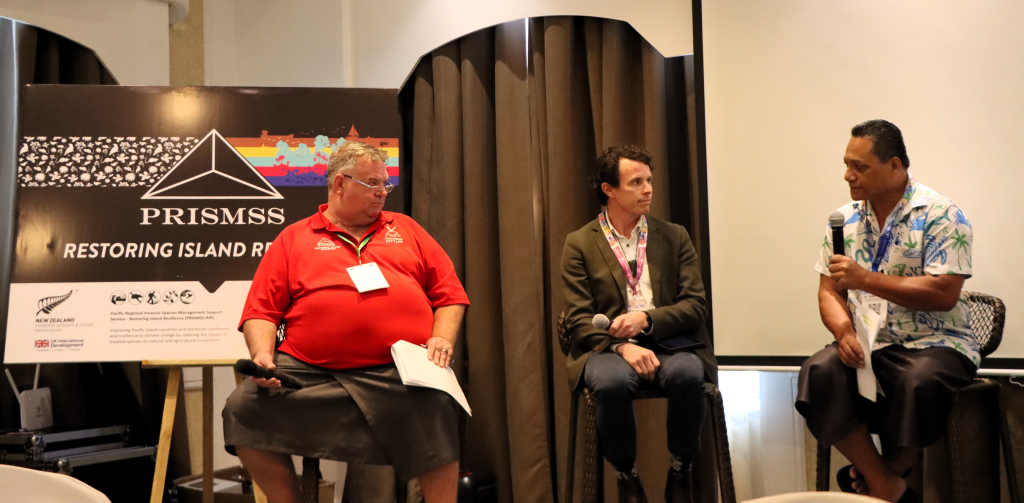
The Assistant Chief Executive Officer (ACEO) for the Division of Environment and Conservation, Mr Su’emalo Tumutalie Foliga shared during the side event that, “MNRE serves as the lead agency responsible for the sustainable management and development of Samoa’s environmental and natural resources and our coordination with the various stakeholders is essential to ensure full engagement and availability for the successful execution of initiatives such as the PRISMSS PFP programme on Nu’utele.”
“MNRE plays a critical role in mobilising community involvement, particularly in implementing projects at the district and village levels and our approach centres on consultations and awareness programmes that help communities understand the environmental efforts taking place right in their own backyards.”
The ACEO highlighted that these initiatives are closely aligned with national policies, including the Pathway for the Development of Samoa, the National Biodiversity Strategy and Action Plan, the National Invasive Species Strategy and Action Plan and the State of Environment report.
“We’re also very excited to be collaborating with PRISMSS partner Manaaki Whenua and the Scientific Research Organization of Samoa (SROS) on efforts to reduce a new mite as a natural enemy to control the invasive African Tulip and other PRISMSS programmes that are being implemented here in Samoa.”
“Samoa values being part of a regional partnership model where the different Pacific Island countries and territories can learn from each other in order to ensure that we are making the very most of these investments to ensure these gains and benefits are sustained and protected into the future.”
SPREP Invasive Species Adviser Mr David Moverley while facilitating the PRISMSS side event shared during that “there is lots of work to do in the Pacific and we have had to really focus on streamlining everything we do, not just within our SPREP system but also within our countries and with our partners.”
“It means that we have excellent services to draw upon to assist the Pacific with our partners such as Island Conservation, Earth Science New Zealand, Manaaki Whenua Landcare Research, Birdlife International, the Pacific Community (SPC) and SPREP and our goal is to try and provide excellent services to the Pacific and that is what really drives us to do what we do.”
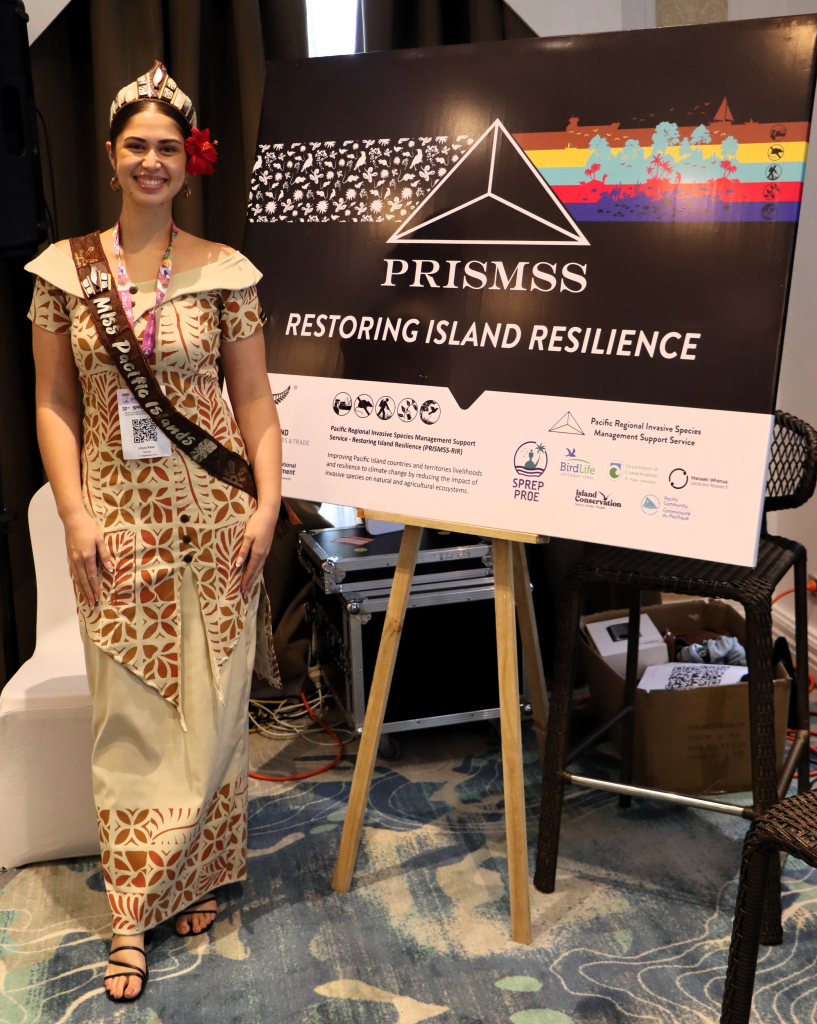
Building on the support from donors and partners, PRISMSS is now working with partners such as the Adaptation Fund to scale up investment in the management of invasive species as a nature-based solution to increase climate resilience across the entire Pacific region.
Through meaningful engagement and coordination with countries, partners and donors PRISMSS will continue to unite the region against invasive species by strengthening resilience, innovation, and cooperation to protect the Pacific’s unique biodiversity.
The Thirty second SPREP Meeting of Officials (SM32) and associated meetings are taking place at Sheraton Aggie Grey’s Hotel & Bungalows in Samoa, from 1-5 September.
Guided by the theme “Sustaining our Pacific Environment in Harmony with our Cultures”, the SM32 and associated meetings bring together SPREP Members to discuss strategic issues pertaining to the organisation, and to approve the 2026-2027 Work Programme and Budget.
The 21 Pacific Island Members of SPREP are: American Samoa, Commonwealth of the Northern Marianas, Cook Islands, Federated States of Micronesia, Fiji, French
Polynesia, Guam, Kiribati, Marshall Islands, Nauru, New Caledonia, Niue, Palau, Papua New Guinea, Samoa, Solomon Islands, Tokelau, Tonga, Tuvalu, Vanuatu and Wallis and Futuna. The five Metropolitan members of SPREP are: Australia, France, New Zealand, United Kingdom and the United States of America.
In our efforts to fulfil our vision of ‘a resilient Pacific environment, sustaining our livelihoods and natural heritage in harmony with our cultures’, SPREP is extremely grateful to our valued Members, partners, donors, our CROP family, and stakeholders. For more information on the 32SM, visit https://www.sprep.org/sprep-meeting/2025/32nd-meeting-of-officials or contact sprep@sprep.org
About PRISMSS: The Pacific Regional Invasive Species Management Support Service (PRISMSS) is a coordinating mechanism designed to facilitate the scaling up of operational management of invasive species in the Pacific. PRISMSS, which is led by the Secretariat of the Pacific Regional Environment Programme (SPREP) brings together experts to provide support within the Pacific region with a focus on protection of indigenous biodiversity and ecosystem function. As a service provider, PRISMSS provides a comprehensive suite of support services in a cohesive, effective, efficient, and accessible manner to Pacific Island countries and territories.
Restoring Island Resilience (RIR): The PRISMSS - Restoring Island Resilience (RIR) is a New Zealand-PRISMSS collaboration project that aims to improve Pacific Island Countries and territories livelihoods and resilience to climate change by reducing the impact of invasive species on natural and agricultural ecosystems through the six PRISMSS programmes.
PRISMSS Powered by: New Zealand Foreign Affairs & Trade, UK International Development, GEF, United Nations Environment Programme & SPREP
PRISMSS Partners: Birdlife International, Earth Sciences New Zealand, New Zealand Department of Conservation, Island Conservation, Manaaki Whenua Landcare Research and Pacific Community and SPREP
PRISMSS Programmes: Natural Enemies Natural Solutions (NENS), Predator Free Pacific (PFP), Protect Our Islands (POI), Protect Our Marine Areas (POMA), Resilient Ecosystems Resilient Communities (RERC), War On Weeds (WOWs)
For additional information please contact Mr Dominic Sadler, PRISMSS Manager on dominics@sprep.org or Mr Nitish Narayan, PRISMSS Communications & Liaison Officer on nitishn@sprep.org