

By Inoke Rabonu, Fiji Sun
The Santiago Network has issued an open invitation for Pacific governments, organisations, and communities to make use of its technical assistance to help unlock climate finance for loss and damage projects.
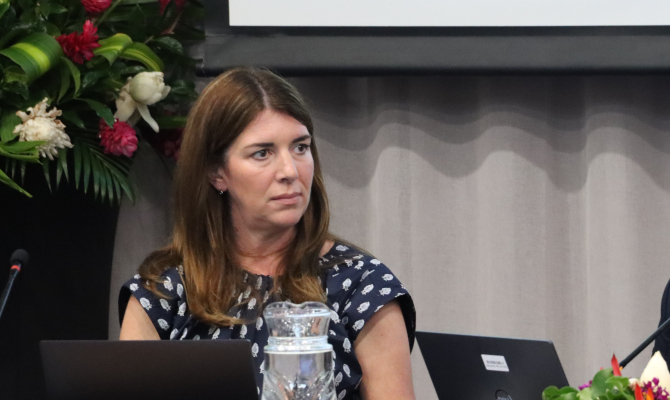
Speaking at the Pacific Climate Change Roundtable in Apia, Samoa, Senior Programme Manager Elizabeth Carabine described the network as “the glue that can stick all of these pieces together” in the push to strengthen climate resilience.
“Our mandate is on loss and damage specifically, and it’s on technical assistance and the catalytic potential of technical assistance,” Carabine said.
“It doesn’t apply just to governments or just to a country level — any organisation, individual or civil society group can access that assistance, based on needs and demand at whichever level.”
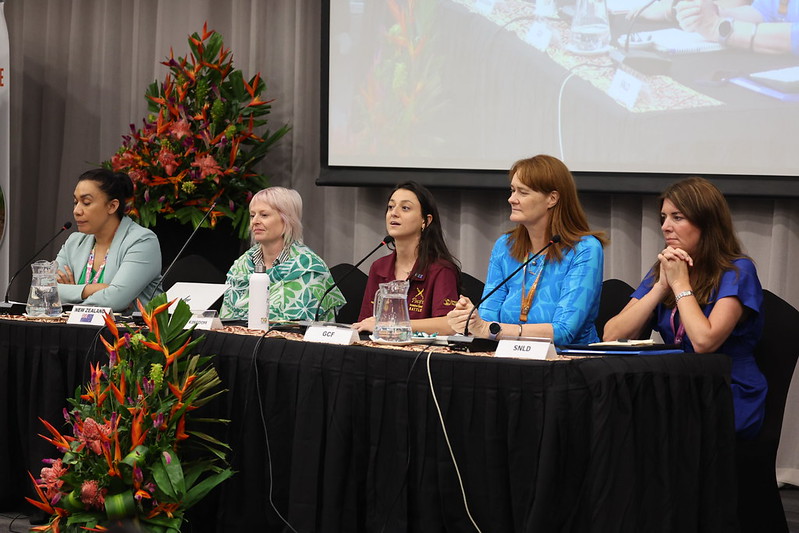
She stressed that the Santiago Network’s support includes facilitating access to climate finance, helping countries and communities bridge gaps between ideas and funding.
“We’ve heard innovative examples of this… how to build up that technical assistance to be able to access not just the funds responding to loss and damage, but other facilities such as the Pacific Resilience Facility,” she said.
Carabine called for a “diverse and representative membership” of providers within the network to respond to requests for support.
“It’s an invitation to all — think about the Santiago Network as the glue that can fill in the gaps, provide more agile and quick assistance, and enable what you see in the room here to happen in the best possible way given your country’s context.”
About the Santiago Network
The Santiago Network for Loss and Damage was established under the UN Framework Convention on Climate Change (UNFCCC) at COP25 in Madrid, Spain, and operationalised at COP27 in Sharm el-Sheikh, Egypt.
Its mission is to connect vulnerable developing countries with technical assistance, knowledge, and resources to address climate-related loss and damage.
The network acts as a matchmaker — linking governments, civil society groups, and communities with global and regional experts, institutions, and funding pathways to help design and implement solutions.
The Pacific Climate Change Roundtable (PCCR), guided by the theme “1.5 to stay alive and thrive,” is taking place at Taumeasina Island Resort from 13-15 August. The PCCR is attended by Pacific governments, youths, civil society, academia, NGOs, and the private sector to engage collectively through the use of interactive activities to share their experiences amongst peers, bolster their networks and utilise the event to initiate new partnership opportunities.
The PCCR follows the Pacific Regional Loss and Damage Dialogue 2025 and the inaugural Pacific Youth Dialogue on Loss and Damage, at the same venue in Samoa.
This story was produced by the Pacific Media Team covering the meetings. Their attendance is made possible with funding support from the Loss and Damage Capability and Capacity (LDCC) Project with the Government of New Zealand.