

By Inoke Rabonu, Fiji Sun
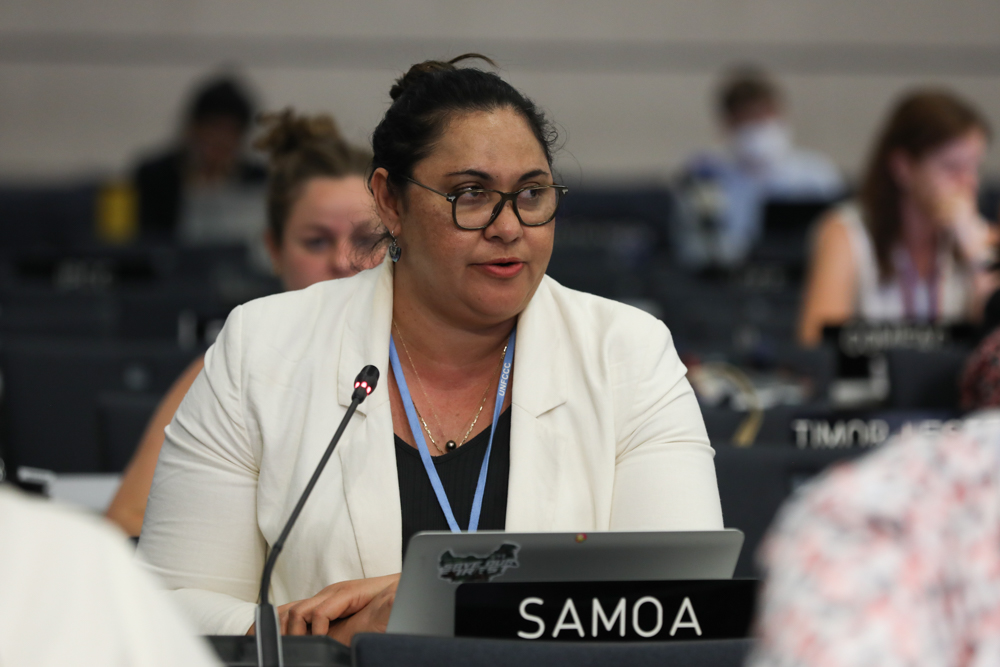
Small island nations may be among the smallest voices at global climate talks — but they often carry the greatest moral and scientific weight, says Alliance of Small Island States (AOSIS) lead negotiator, Galumalemana Anne Rasmussen.
In an interview on the sidelines of the Pacific Climate Change Roundtable in Apia, Rasmussen said her role representing 39 nations in high-stakes talks with major emitters like China, the United States, and the European Union is “both difficult and invigorating.”
“You’re up against really strong countries,” she said.
“We’re always overlooked because they look at you as a small country that doesn’t bring much to the table. But if you change the angle, we have always punched above our weight. We are the biggest custodians of the world’s largest Ocean ecosystems — the lungs of the earth.”
Rasmussen, who has spent her career in Samoa’s environment ministry before moving into the international arena, said the survival of island nations is deeply connected to the survival of the planet’s climate systems.
“Without our islands, our ecosystems, our coral reefs, the rest of the world will not survive. Healthy oceans regulate a livable climate for all,” she said.
Bridging policy and practice
Rasmussen’s career began in hands-on environmental projects, from restoring mangroves in Savai’i to building seawalls in vulnerable villages. Those early projects still stand today, shaping her approach to global negotiations.
“When I’m in the international arena, I’m grounded by the fact that I’ve restored forests and protected coastlines. It’s not an individual job — it’s collective work,” she said.
Breaking cultural barriers for negotiators
One of the gaps Rasmussen sees in small island negotiator capacity is rooted in cultural norms.
“We are taught to respect elders, to not speak before we’re spoken to, to be quiet. But with training and empowerment, our young negotiators are finding their voices,” she said. “Fear and second-guessing are still there, but I see that slowly changing.”
She emphasised that AOSIS is the united platform for all island nations in global talks.
“We’re not PCS, we’re not CARICOM — we are all islands, and we only have one platform to negotiate at.”
A legal boost for climate justice
Rasmussen also hailed the recent International Court of Justice advisory opinion on climate change as a “milestone” for small island states.
“It calls out the major emitters to do better, to reduce emissions. It recognises the 1.5°C goal, the legitimacy of COP decisions, and the importance of science,” she said. “It gives us a legal basis to back up our interventions.”
For the next generation of negotiators, her message is clear: “Be informed, be prepared, and be teachable. When you step up, have grounding to rely on.”
The Pacific Climate Change Roundtable (PCCR), guided by the theme “1.5 to stay alive and thrive,” is taking place at Taumeasina Island Resort from 13-15 August. The PCCR is attended by Pacific governments, youths, civil society, academia, NGOs, and the private sector to engage collectively through the use of interactive activities to share their experiences amongst peers, bolster their networks and utilise the event to initiate new partnership opportunities.
The PCCR follows the Pacific Regional Loss and Damage Dialogue 2025 and the inaugural Pacific Youth Dialogue on Loss and Damage, at the same venue in Samoa.
This story was produced by the Pacific Media Team covering the meetings. Their attendance is made possible with funding support from the Loss and Damage Capability and Capacity (LDCC) Project with the Government of New Zealand.