

9 July 2025, Majuro, Republic of the Marshall Islands – The Secretariat of the Pacific Regional Environment Programme’s (SPREP) strategic support and growing presence across Micronesian countries, provided through its North Pacific Office (NPO), was highlighted during the 27th Micronesian Islands Forum (MIF) in Majuro, Republic of the Marshall Islands.
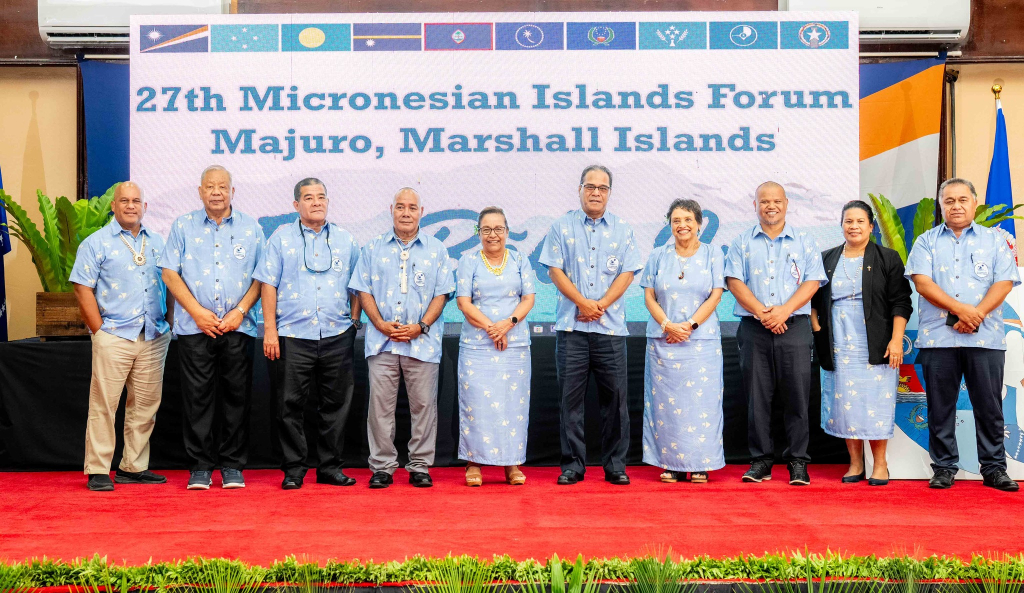
Concluded last Friday, MIF is an event where leaders meet to discuss a wide range of important topics/issues concerning the region. Formally known as the Micronesian Chief Executives’ Summit, the meeting has grown to include all the states in the Federated States of Micronesia (Chuuk, Kosrae, Pohnpei and Yap), the Republic of Palau, the Republic of the Marshall Islands, Nauru and the two US territories of Guam and the Commonwealth of the Northern Mariana Islands.
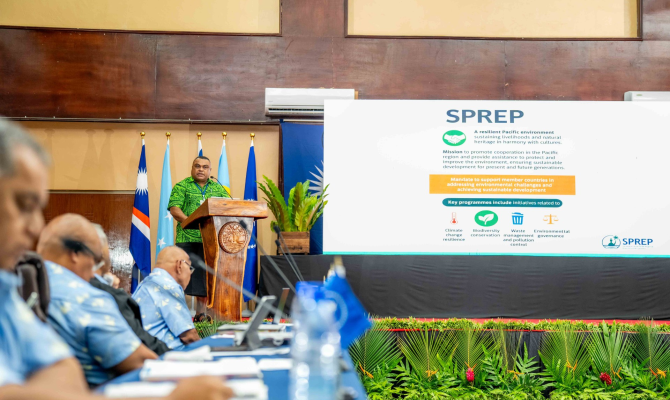
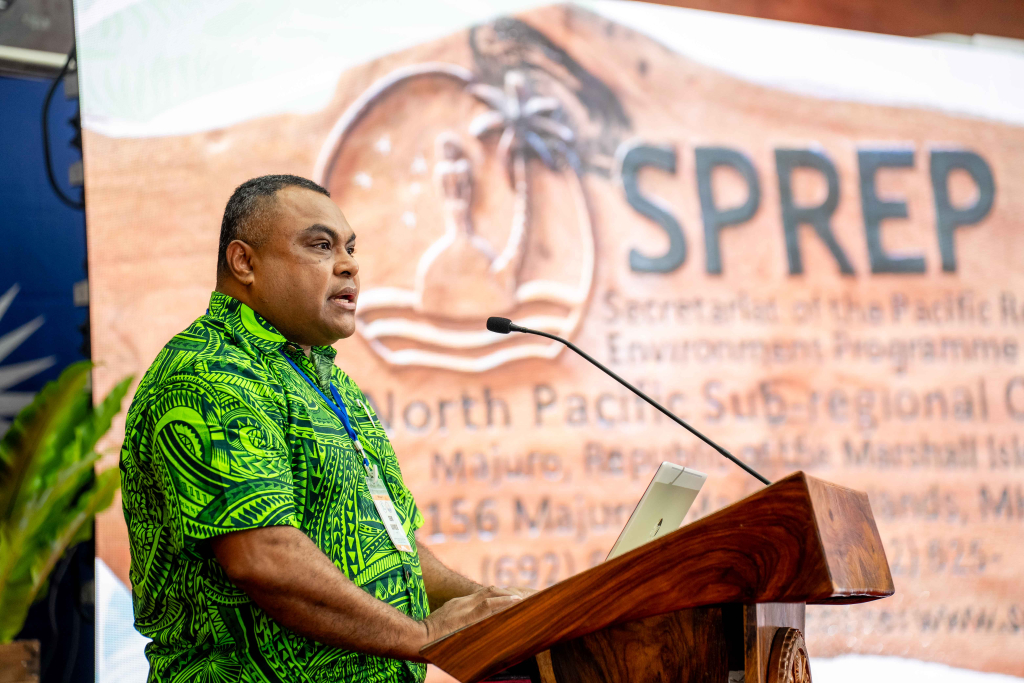
The Manager of SPREP’s NPO, Mr. Semi Qamese, addressed the Summit, emphasizing SPREP’s collaborative vision for environmental resilience, regional coordination, and climate action in the North Pacific.
“We are committed to ensuring our Micronesian members have the support they need to tackle climate change and protect their unique environments,” said Mr Qamese.
Mr. Qamese highlighted that SPREP’s North Pacific Office, based in Majuro, is an essential platform for delivering real-time, localised, and impactful technical support to member countries. He detailed SPREP’s efforts in climate adaptation, biodiversity conservation, waste management, and environmental governance—critical areas identified by the Forum’s leaders as regional priorities.
Reflecting on the NPO’s vision and direction, Mr. Qamese underscored the alignment of SPREP’s work with national priorities through tailored strategies, stronger partnerships, and dedicated technical assistance.
“Our vision is to see a resilient North Pacific where communities thrive in harmony with their environment,” he noted, calling on member countries to remain engaged and involved in steering the NPO’s evolving work programme.
In addition to its strategic direction, the presentation showcased SPREP’s expanding project portfolio in the North Pacific, with initiatives spanning climate early warning systems, ecosystem restoration, waste and pollution control, and environmental policy development.
“We are proud to see a growing portfolio of projects making a real difference on the ground,” Mr. Qamese said, noting that this progress reflects increased collaboration, enhanced financing opportunities, and regional leadership.
The outcomes of the 27th MIF Communique reaffirmed this message. Forum leaders recognised the crucial role of regional institutions, including SPREP, in supporting national and subregional environmental goals.
This year’s MIF focused on five Regional Committees which are related to Education, Health, Transport (Aviation), Ocean and Gender Equality. Under the MIF, there are total of nine Regional Committees, which consist of the Regional Workforce Development Council (RWDC), Regional Invasive Species Council (RISC), Pacific Islands Regional Recycling Initiative Council (PIRRIC), Regional Tourism Committee, Regional Energy Committee, Micronesia Challenge, and lastly the Regional Telecommunications Committee.
Although these other Regional Committees didn’t present to the forum, written reports were submitted for the leaders’ notation. This year, a new committee or council of Youths was ratified and included into the MIF.
The meeting emphasised the need for sustained political, technical, and financial commitment to organisations like SPREP that are delivering tangible impact across Micronesia.
Mr. Qamese echoed this sentiment, inviting leaders to “recognise SPREP’s vital contributions to environmental resilience, governance, and finance access in the North Pacific,” and to “reaffirm their collective and individual commitments to the NPO’s long-term success.”
He urged continued engagement through the shared financing agreement endorsed by all Micronesian leaders, which supports the operational sustainability of the North Pacific Office.
As the region faces increasing environmental pressures, SPREP’s strengthened partnership with Micronesian nations stands as a model for regional cooperation, climate resilience, and shared responsibility.
The call from both SPREP and the 27th MIF is clear: long-term success in safeguarding the North Pacific’s environment depends on united action, sustained commitment, and locally driven solutions.
SPREP through the North Pacific Office in Majuro, will continue to support related topic and outcomes coming out of the MIF.
For more information on the MIF, please visit their website: https://www.mifsecretariat.org