

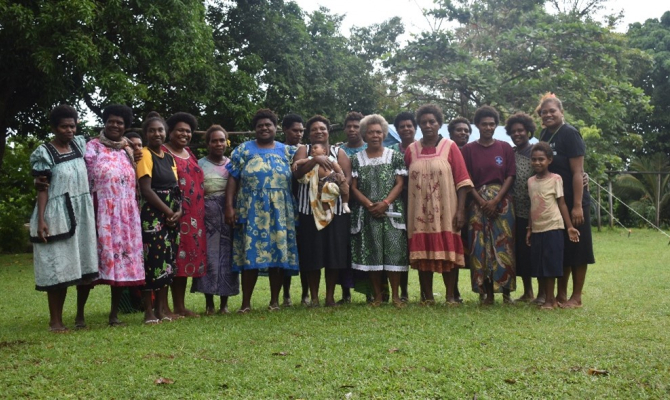
Tanna Island, Vanuatu – Communities across Tanna Island, where women and girls have traditionally been excluded from decision-making spaces, are opening doors to empowerment, participation, and environmental leadership.
In villages on Tanna, including Lenakel and Port Resolution, cultural norms have restricted women from attending village meetings or engaging in project planning. These male-dominated gatherings have shaped the future of their communities, often without the input of half the population. This exclusion has not only stifled the voices of women and girls but has also limited the reach and sustainability of community-led environmental action.
To address this imbalance, PEBACC+ project implemented a series of targeted workshops and awareness-raising activities. From 12-15 June 2025, three-hour sessions were held in Lenakel’s communities of Lenmaot, Lounelaben, and Letakren. Facilitated by the Green Environment Network, based in Port Vila, these workshops focused on educating women and girls about their essential role in project implementation, alternative livelihoods, and climate adaptation efforts. A total of 102 participants attended the workshop, comprising of 75 women, 12 men, and 15 youth.
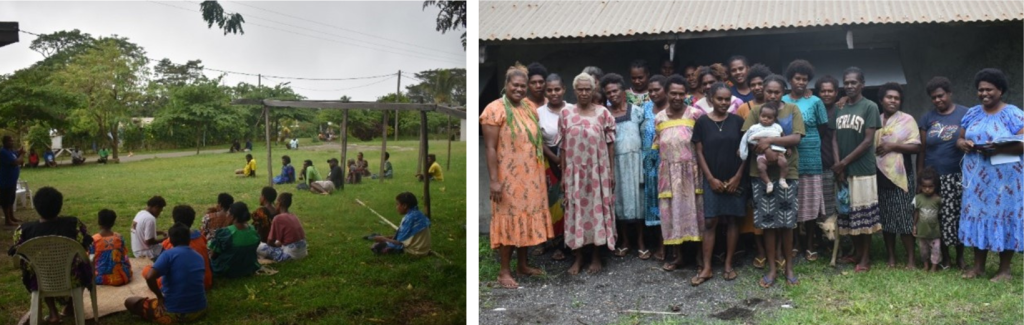
“Traditionally, women in Tanna Islands are not involved in community meetings, as such gatherings are commonly attended only by men and village elders,” explained Mr William Bani, PEBACC+ Country Coordinator with the Secretariat of the Pacific Regional Environment Programme (SPREP). “These workshops were therefore vital to ensuring women understand their role and right to participate fully in shaping and supporting project activities.”
Ms Touasi Kalsaria Abel Tiwok, Technical Advisor with the Green Environmental Network, reinforced this message: “Women are equally important in community building, hence our participation in decision-making plays a significant role. These workshops are not just about information sharing, they’re about empowerment and inclusion to undertake this role.”
The momentum continued in Port Resolution on 17 June 2025, where a half-day awareness and mangrove planting event brought together women and girls from the community in a hands-on conservation effort. Supported by the Vanuatu Department of Forests and the Department of Fisheries, the activity provided environmental education and direct involvement in the restoration of mangrove ecosystems, a critical buffer against climate impacts and a key habitat for marine life.
“The mangroves you plant contribute significantly to breeding the fish that those canoes you see out at sea are harvesting,” said Bani. “Those men out there do the harvesting but contribute little to fish multiplication, and some know very little about where the fish that they catch shelter and breed.”
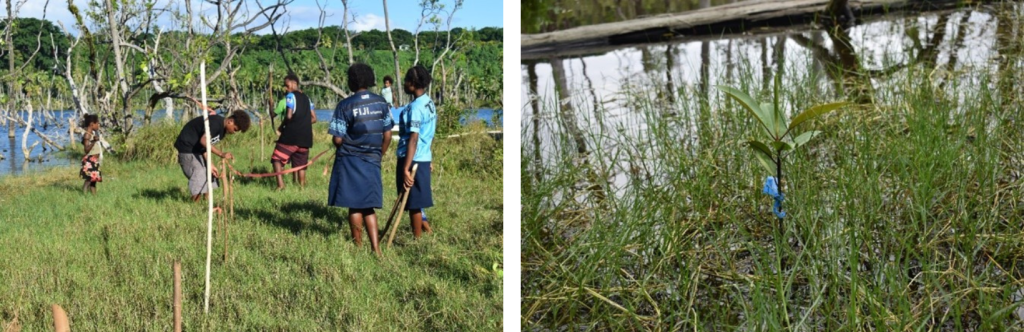
By integrating awareness with action, the Port Resolution event not only educated participants but also empowered them as stewards of their environment. The mangrove planting supported the marine conservation area already established in the village and aligned directly with PEBACC+’s core objectives of ecosystem-based adaptation and inclusive community engagement.
These initiatives reflect a broader, growing commitment to ensuring that women’s voices are heard and valued in climate resilience efforts across Vanuatu.
“Through both dialogue and direct involvement, the women of Lenakel and Port Resolution are taking ownership of their roles as leaders, decision-makers, and protectors of their natural heritage,” said Bani. “As PEBACC+ continues its work, it does so with the clear understanding that effective adaptation must include and be driven by everyone.”
PEBACC+ is a regional project implemented by Secretariat of the Pacific Regional Environment Programme and funded by the Kiwa Initiative through its donors the European Union, Agence Française de Développement (AFD), Global Affairs Canada, Australian Government Department of Foreign Affairs and Trade (DFAT) and New Zealand Ministry of Foreign Affairs and Trade (MFAT), with co-financing from French Facility for Global Environment (FFEM).
Over the next four years, the project aims to develop, sustain, and institutionalise EbA approaches in Fiji, New Caledonia, Wallis and Futuna, Solomon Islands, and Vanuatu. These efforts will strengthen the resilience of ecosystems, local economies, and communities against the impacts of climate change.
For more information, please contact: Setaita Tavanabola, Communications Officer, PEBACC+ Project, SPREP; email: setaitat@sprep.org or visit www.sprep.org/pebacc-plus