

10 November 2025, Port Vila Vanuatu - Invasive species are among the pressing environmental challenges facing the Pacific today, silently undermining biodiversity, threatening livelihoods, and eroding the natural resilience of island ecosystems. In response, environmental practitioners and community representatives are gathering this week in Port Vila for a three-day Invasive Species Management Workshop.
Held at the Department of Forestry in Tagabe from 10–12 November, the workshop is part of the Pacific Ecosystem-based Adaptation to Climate Change (PEBACC+) project, led by the Secretariat of the Pacific Regional Environment Programme (SPREP) under the Kiwa Initiative and the French Facility for Global Environment (FFEM).
Across Vanuatu, invasive plants are spreading rapidly through rivers, wetlands, and agricultural land, reducing biodiversity and affecting food production. These invasive species compete with native plants, degrade ecosystems, and increase the cost of managing natural resources.
“Invasive species are one of the biggest threats to Vanuatu’s biodiversity and the livelihoods of our people,” said Mimosa Bethel, Invasive Species Officer from the Vanuatu Department of Environment. “By sharing knowledge and working together, we can strengthen our ability to control and manage these pests before they cause lasting damage.”
.JPG)
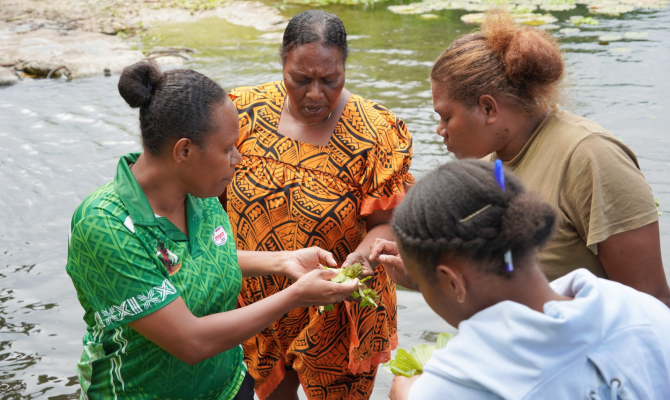
The workshop focuses on knowledge sharing, capacity building, and hands-on training. Sixteen participants from government and non-government organisations, and local communities are taking part in sessions on biological control methods, practical field demonstrations, and community-based activities such as river clean-ups and awareness sessions with the Green Environment Network.
Case studies from around Vanuatu will be presented, showing how invasive species management can be integrated with Nature-based Solutions (NbS) and Ecosystem-based Adaptation (EbA) approaches that help protect communities from climate change.
William Bani, PEBACC+ Country Coordinator, SPREP said, “The workshop aims to strengthen collaboration between government departments, local communities, and partners. Participants are expected to identify priority actions and partnerships to enhance invasive species control efforts nationwide.”
He added, “The health of our forests, rivers, and reefs depends on tackling these threats head-on. By managing invasive species, we are also protecting the resilience of our communities and the natural systems we rely on.”
Partners that supported the initiative include the Biosecurity Vanuatu, the Department of Forestry, the Department of Environment, and the Green Environment Network. Expected outcomes from the event include greater technical capacity in invasive species management, stronger partnerships between communities and institutions, and clearer pathways for integrating these efforts into national climate and biodiversity strategies.
PEBACC+ is a regional project implemented by SPREP and funded by the Kiwa Initiative through its donors the European Union, Agence Française de Développement (AFD), Global Affairs Canada, Australian Government Department of Foreign Affairs and Trade (DFAT) and New Zealand Ministry of Foreign Affairs and Trade (MFAT), with co-financing from French Facility for Global Environment (FFEM). This four-year project seeks to strengthen the resilience of ecosystems, economies, and communities to the impacts of climate change in Fiji, New Caledonia, Wallis and Futuna, Solomon Islands and Vanuatu. The project will develop, sustain, and institutionalize Ecosystem-based Adaptation to climate change in these five countries and territories.
Contact Information:
William Bani, PEBACC+ Country Coordinator, SPREP; email: williamb@sprep.org or
Setaita Tavanabola, PEBACC+ Communications Officer, SPREP; email: setaitat@sprep.org