


18 November 2025, Belem - In the Republic of Marshall Islands (RMI), and in most Pacific countries, it is customary that when a child is born, the umbilical cord is buried on family land.
The tradition signifies that no matter where the child ends up in the world, he or she will always belong to the land and be pulled back to their first place of nourishment.
But what happens if that land is under the sea?
What then for the child?
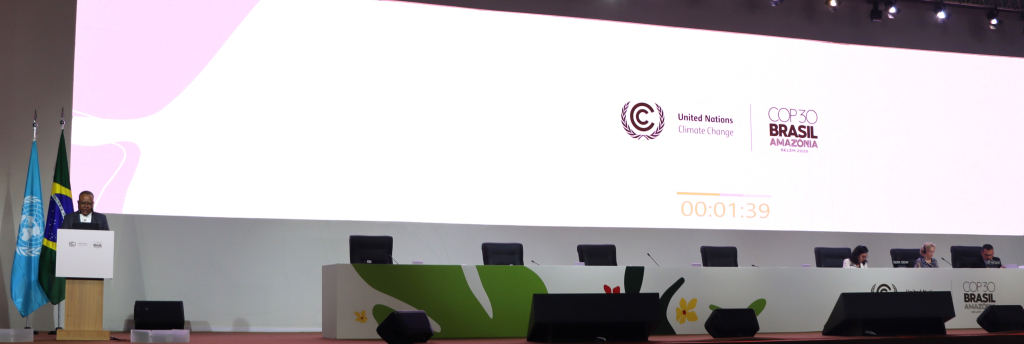
Under the global glow of COP30 in Belem Brazil, Mr. Bremity Lakjohn, Minister in Assistance to the President and Minister of the Environment of the Marshall Islands, posed those questions to world leaders and delegates, who are meeting to try and address the climate crisis.
As climate change negotiations kick into another gear on the second week of COP30, Minister Lakjohn lamented the struggles of his atoll island nation during the High Level segment, opened by President of COP30, Mr. André Aranha Corrêa do Lago and the Vice President of the Federative Republic of Brazil, Mr. Geraldo Alckmin.
Setting the scene for the final week of COP30, UNFCCC Executive Secretary, Mr. Simon Stiell, said there is a huge amount of work ahead for ministers and negotiators to do if COP30 is to be successful.
“I urge you to get to the hardest issues fast. When these issues get pushed deep into extra time, everybody loses,” Mr Stiell said. “We absolutely cannot afford to waste time on tactical delays or stone-walling. The time for performative diplomacy has now passed.”
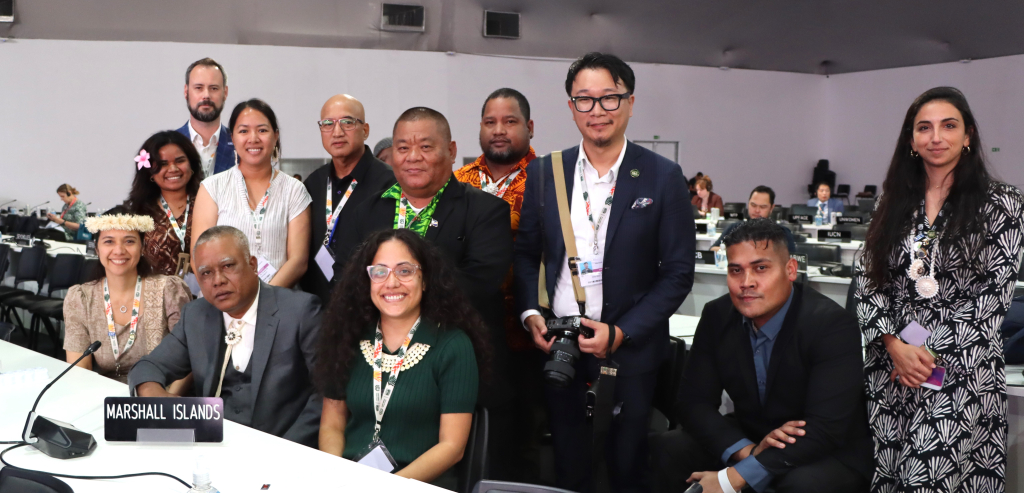
Minister Lakjohn and RMI know the urgency of the matter. They live and breathe climate change impacts on a daily basis.
“When we published our NAP two years ago we called it our national survival plan. Now we are focused on implementation of that plan, with our Marshall Islands Resilience and Adaptation Fund, the MIRA, set up to receive support. The policy instruments are in place. We now need “survival finance” to deliver.”
On adaptation, the Minister said RMI’s needs are in the “billions.”
“The impact of sea level rise, the salting of freshwater supplies, the erosion of shorelines, the dieback of the coral reefs - these physical impacts will transform our atoll island environment,” he pointed out.
“We, in turn, must protect our coasts, reclaim land from the sea, and raise our islands. Adaptation has limits, and the destruction to property, culture and heritage will be profound. And we know that these impacts are not gender-neutral. In the Marshall Islands, women are stewards of land and climate action must be designed with their realities in mind.
“Despite the impacts on our shores, our people want to stay. I believe we all share this feeling; we want to remain and live with dignity in our countries.”
As world leaders and negotiators struggle with some of big issues in the final sprint to the finish at Belem, the RMI Minister believes they could take inspiration from “our ancestors.”
“When the stars disappeared behind clouds and the winds died, Marshallese navigators lay down in their canoes to feel their way forward by reading the patterns of the waves,” he said. “At a time when geopolitics threaten to overtake us, we can and we must navigate our way forward.
“We will use every tool available to help our people - such as the recent advisory opinions from the international courts. They tell us what we must do to protect human rights and the planet.”
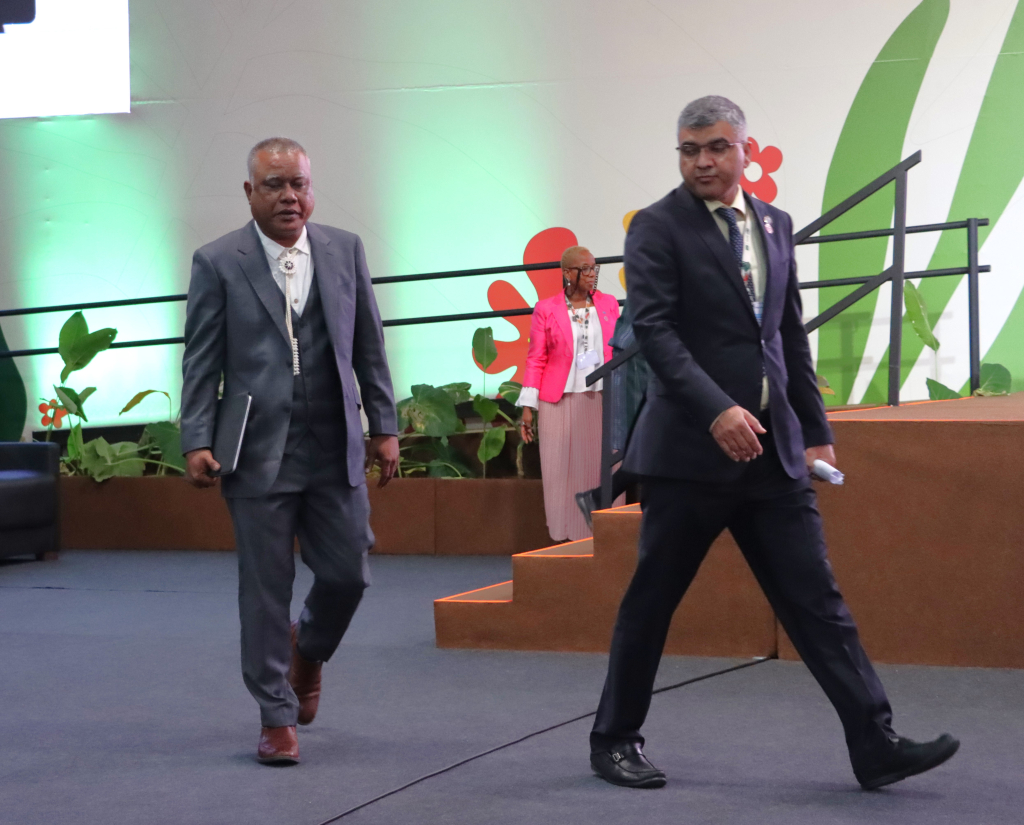
RMI called for COP30 outcomes to deliver NDCs that are 1.5 aligned, stop exploiting fossil fuels, provide adaptation support and above all, cooperate to deal with the climate emergency.
“At the Belem Climate Action Summit our leaders made bold calls to action to kick off this COP of truth - such as roadmaps for the ending of fossil fuels and deforestation.
“Negotiators must become navigators, heed those calls and prove that Paris still works. We are not giving up on this process. I appeal to this process not to give up on us.”
The 30th Conference of the Parties to the UN Framework Convention on Climate Change (UNFCCC) is taking place from 10-21 November 2025 in Belem, Brazil.
It is being attended by Pacific leaders and their delegations, who are advocating for the survival of Pacific communities who continue to be at the forefront of climate change impacts.
Support for our Pacific Islands at COP30 from members of the Council of Regional Organisations of the Pacific (CROP) is through the One CROP mechanism led by the Secretariat of the Pacific Regional Environment Programme.
Members of one CROP include: The Secretariat of the Pacific Regional Environment Programme (SPREP) – Lead, Pacific Islands Development Program, Pacific Islands Forum Fisheries Agency, Pacific Island Forum Secretariat, Pacific Community.
A key part of amplifying the One Pacific Voice at COP30 is the Moana Blue Pacific Pavilion and the Pacific Delegation Office. The Moana Blue Pacific Pavilion at COP30 is a Pacific partnership with the Governments of Australia and New Zealand managed by the Secretariat of the Pacific Regional Environment Programme (SPREP).
The Pacific Delegation Office at COP30 is a Pacific partnership with the New Zealand Government managed by the Secretariat of the Pacific Regional Environment Programme (SPREP).
To learn more about the Pacific at COP30 please visit: https://www.sprep.org/cop30