

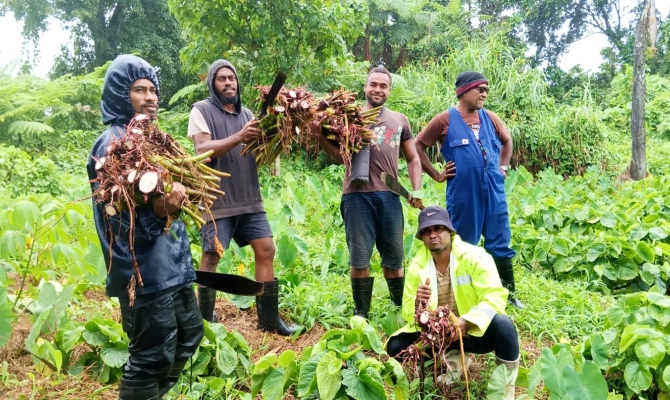
Taveuni, Fiji - In the quiet farming community of Vuna, on the southern tip of Taveuni, Fiji, a new wave of young farmers is redefining what it means to cultivate the land and a future. They call themselves the Kevin Young Farmers Alumni (KYFA), a group of 14 young men from Kanacea and Vuna, most of them graduates of the Tutu Rural Training Centre. What began as a casual conversation among friends about how to apply what they learned at Tutu has grown into a structured and disciplined farming cooperative.
“We realised that after leaving Tutu, many of us were not putting our training into practice,” said Liqorio Tuvisa, 37, one of KYFA’s founders. “So, we got together those who were just at home, and we decided to form this group. We started with five members and now there are 14 of us, all working together towards our goals.”
KYFA farms dalo (taro), yaqona (kava), cassava, bananas, vudi, and coconuts, with each member setting monthly planting targets. Their income targets are tied to long-term goals such as building their homes, purchasing vehicles for the farm, and supporting their families and communities.
“Many times, when church or village obligations came our way, we didn’t have anything to give,” said Filimone Sorowaqaliu, 34, a member with links to both Taveuni and Rewa. “Now, through farming, we can give back to our schools, our church, and our vanua. It’s helping us as well to rise out of poverty.”
A move toward organic farming
Initially, KYFA used chemical fertilizers to speed up production, but this is now changing as they transition to organic farming with guidance and support from the Pacific Ecosystem-based Adaptation to Climate Change (PEBACC+) project.
PEBACC+ is a regional initiative implemented by the Secretariat of the Pacific Regional Environment Programme (SPREP) and funded by the Kiwa Initiative and the French Facility for Global Environment. The project promotes ecosystem-based adaptation to climate change to strengthen community resilience against climate change.
“Our partnership with PEBACC+ is helping us make the switch to organic farming,” said Mikaele Takala, 32. “Before, when we saw weeds, we reached for chemicals. Now, with the help and tools provided, we manage weeds without chemicals. The soil stays fertile, and the crops are healthier.”
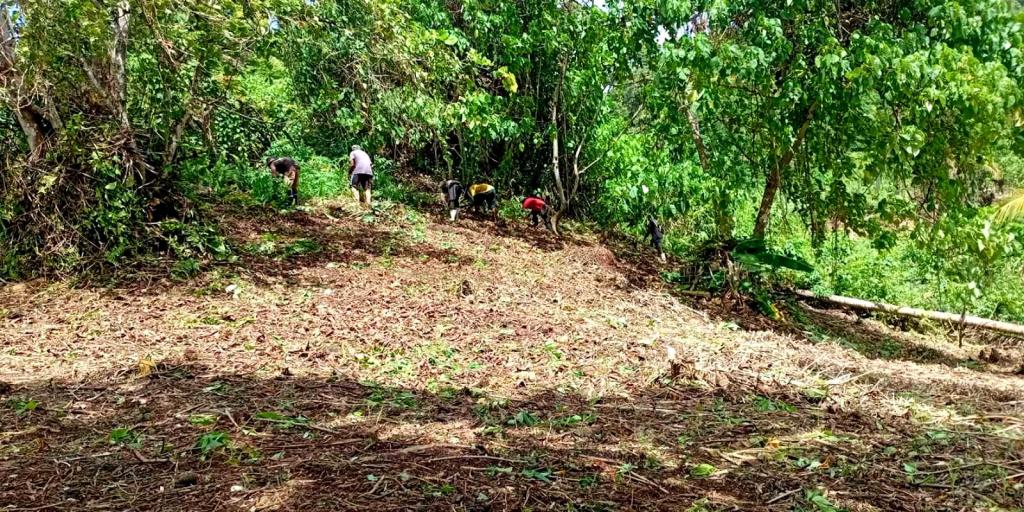
Under the PEBACC+ support, KYFA has set aside four acres of land for organic vegetable farming. The group has received vegetable and fruit seedlings and will receive farming tools to create an enabling environment for them to use the land sustainably. Some young farmers still need support after graduating from vocational schools to apply what they have learned. The PEBACC+ project is also working with the Ministry of Agriculture’s Extension Office in Taveuni to conduct farmer profiling, aiming to develop more training that incorporates financial literacy.
“For me, it’s about protecting the land for the long term,” added Filimone. “When we use chemicals, the soil becomes weak after one harvest. With organic farming, we can continue planting year after year. It’s also healthier for our families.”
Building a future together
KYFA’s strong sense of teamwork and shared vision has been key to their success. They meet every Sunday to plan the week’s work, track progress, and address challenges. A constitution guides their operations, including attendance, discipline, and financial contributions.
Their efforts have also been supported by Mr. Wane Tavata, also an alumnus of Tutu Rural Training Centre, who volunteers to transport the group to their farms each day. In return, the farmers contribute labour on Mr. Tavata’s farm.
“We leave home at 5 am and often return when it’s dark,” said Liqorio. “Ta Wane is more than just a driver; he has become part of the group. His support and connecting us to PEBACC+ have opened doors for us.”
The young farmers’ long-term plan includes expanding membership to include women, starting an agribusiness, and creating employment for other village youth. They hope that through their success, more young people will see farming as a viable and dignified livelihood.
“Our three-year plan is just the beginning,” said Mikaele. “We will continue to grow and support one another. This teamwork is forever, and it’s part of who we are.”
A Model for Rural Youth Empowerment
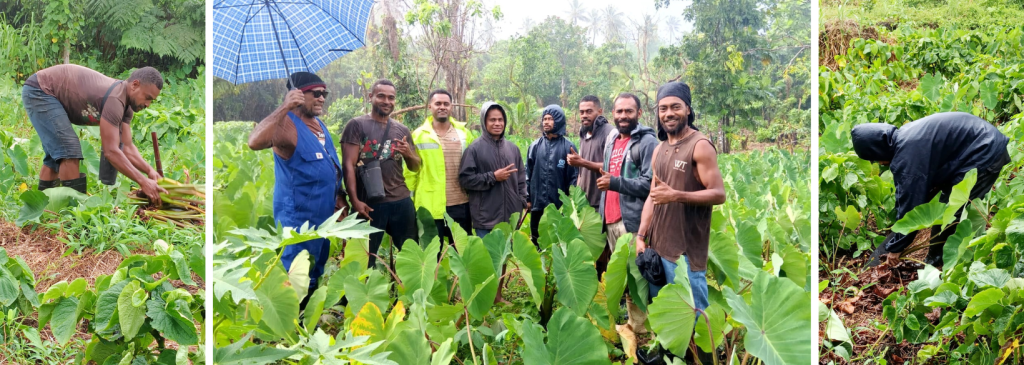
KYFA’s partnership with PEBACC+ has exposed them to learning events where they talk about their work in Taveuni and demonstrate how ecosystem-based adaptation and sustainable farming can empower rural youth to build climate resilience while improving their livelihoods.
“We may not have much, but we have our hands, our land, and our faith,” said Filimone. “With support like this, we can build our future and help others do the same.”
PEBACC+ is a regional project implemented by SPREP and funded by the Kiwa Initiative through its donors the European Union, Agence Française de Développement (AFD), Global Affairs Canada, Australian Government Department of Foreign Affairs and Trade (DFAT) and New Zealand Ministry of Foreign Affairs and Trade (MFAT), with co-financing from French Facility for Global Environment (FFEM). Over the next four years, the project aims to develop, sustain, and institutionalize EbA approaches in Fiji, New Caledonia, Wallis and Futuna, Solomon Islands and Vanuatu. These efforts will strengthen the resilience of ecosystems, local economies, and communities against the impacts of climate change.
For more information, please contact: Setaita Tavanabola, Communications Officer, PEBACC+ Project, SPREP; email: setaitat@sprep.org or visit www.sprep.org/pebacc-plus