

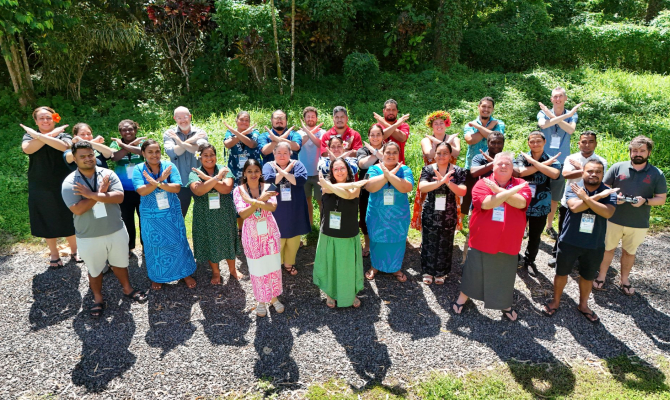
8 August 2025, Apia, Samoa- In a landmark gathering that emphasised the urgency of preserving Pacific islands biodiversity through invasive species management, representatives from Pacific Small Island Developing States (SIDS) convened in Apia for a specialised training course held from July 15-17, 2025. This event marked a significant regional effort to build capacity and share tools and strategies aligned with global biodiversity goals.
Hosted collaboratively by the Secretariat of the Convention on Biological Diversity (CBD) and the Secretariat of the Pacific Regional Environment Programme (SPREP) with support from the Government of Denmark, the European Union and the Japan Biodiversity Fund, the training course brought together experts, practitioners, and policymakers working on the frontlines of biosecurity and conservation.
Funding and coordination support was also provided by the Pacific Regional Invasive Species Management Support Service (PRISMSS) and the Global Environment Facility (GEF), together with the United Nations Environment Programme (UNEP) through the GEF-6 Regional Invasive Species Project.
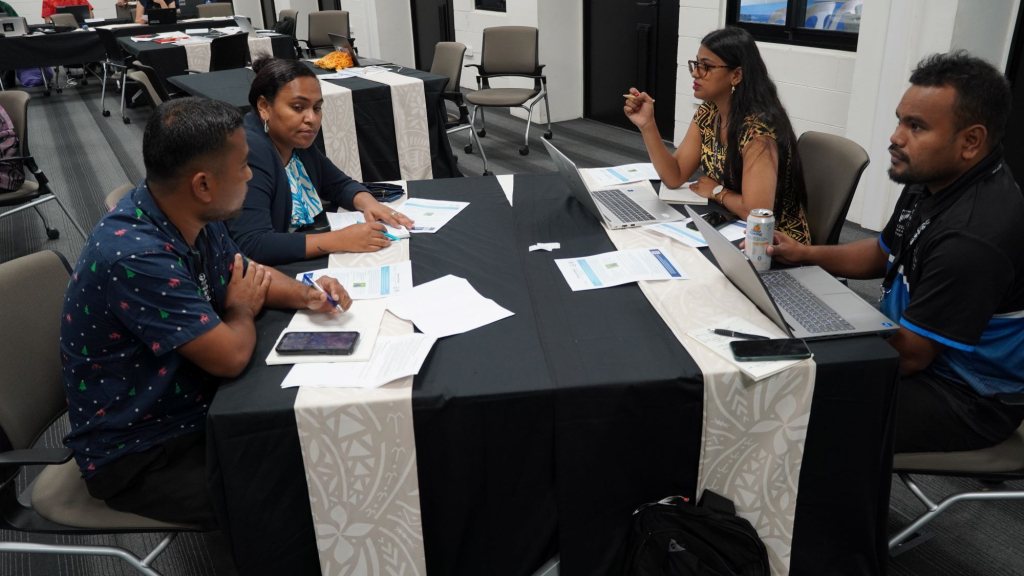
This training course also reflects the growing momentum behind the Kunming-Montreal Global Biodiversity Framework (KMGBF), adopted in 2022, which seeks to halt and reverse biodiversity loss by 2030. Target 6 of the KMGBF continues to spotlight invasive species as a critical challenge with impacts that cascade across ecosystems, public health, and economies.
Recognising these impacts, the CBD Conference of the Parties has tasked the Executive Secretary, in collaboration with the Inter-Agency Liaison Group on invasive species to further assess technical and scientific capacity needs, particularly in developing countries and to expand guidance and training opportunities.
Ms Marianela Quesada, Program Officer with the Biodiversity and Health/Invasive Alien Species, Biodiversity Science, Policy and Governance Unit at the CBD reflected that, “effective management of invasive alien species requires proactive, science-based strategies, strong regional cooperation, and inclusive community engagement.”
“Early action, knowledge sharing, and alignment with national and global frameworks are essential, given the islands' unique biodiversity and vulnerability, prevention and preparedness must be prioritised and only through coordinated, sustained efforts can we make significant progress to achieve Target 6 of the KMGBF.”
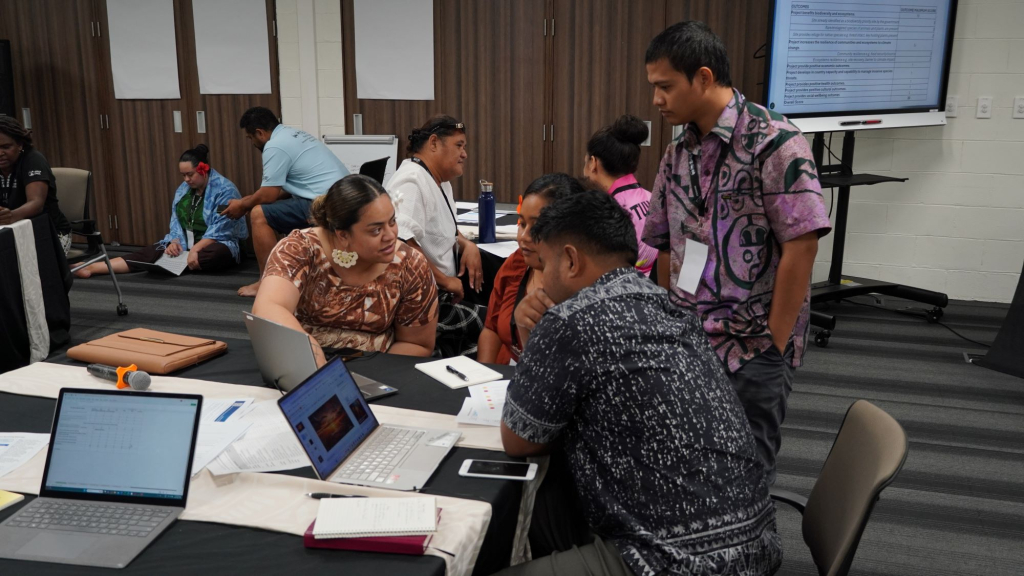
The training course included a deep dive into Target 6 of the Kunming-Montreal Global Biodiversity Framework, which focuses on preventing the introduction and mitigating the impact of invasive species. Participants engaged with practical tools, regional case studies, and scientific resources that have emerged through years of effort in the Pacific.
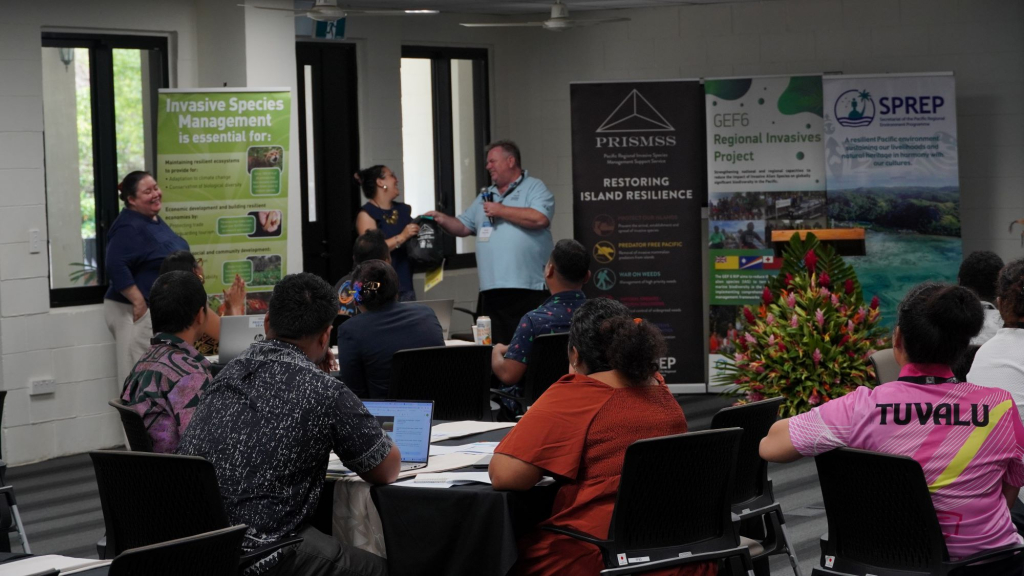
SPREP Invasive Species Adviser, Mr David Moverley shared during the training course, “that SPREP is the Pacific’s regional intergovernmental organisation established to protect, conserve, and promote a resilient Pacific environment, and the Oceania Regional Technical and Scientific Cooperation Support Centre for the implementation of the KMGBF.”
“The training course builds upon the Sub-Regional Dialogue on National Biodiversity Strategies and Action Plans held in Fiji in March 2024 and this time the focus was on invasive species and the implementation of Target 6 specifically.”
“In the Pacific region, we have made significant progress in addressing invasive species where on-the-ground management has increased exponentially with over USD 40 million worth of activities being implemented since 2020 and significant further projects are currently under development.”
“This has been largely achieved through the development of PRISMSS, the development of regional tools and assets such as the Battler Resource Base and PRISMSS Navigator System, significant mainstreaming of invasive species management into other sectors nationally, regionally and internationally, and the tremendous effort put in by our Member states, their communities and our partners.”
Participants attending the training course were encouraged to incorporate the practical tools and methodologies gained into national monitoring systems to improve the timely identification and reporting of priority invasive species. The training also fostered stronger awareness and capacity building among local communities and agencies, promoting a more inclusive and proactive approach.
Country representatives attending the training learnt about international invasive species context from the Secretariat of the Convention on Biological Diversity, research and guidance on invasive species from the Intergovernmental Science-Policy on Biodiversity and Ecosystem Services and pathways of invasive species management from the International Union for the Conservation of Nature.
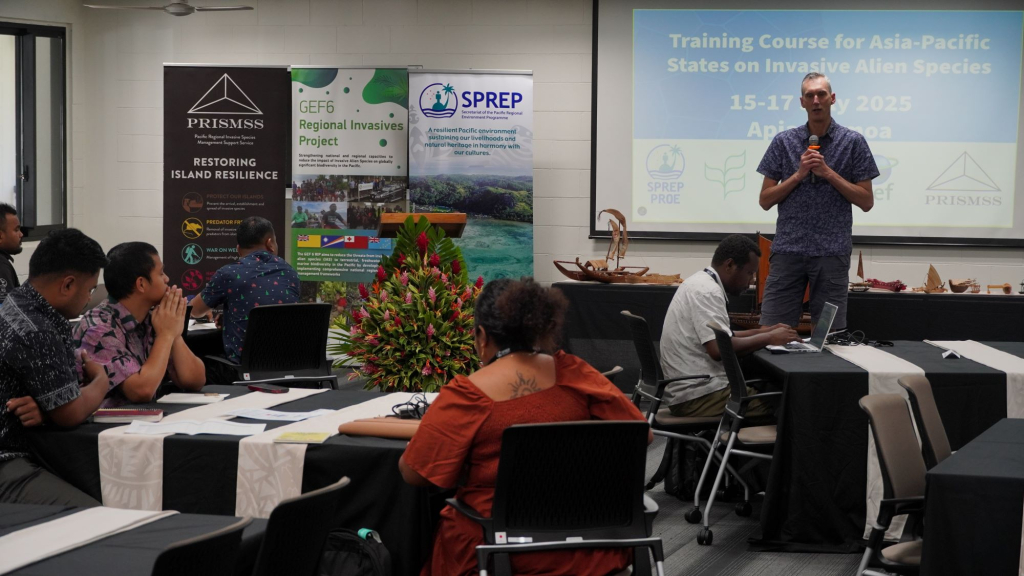
Ms Jessie Nicholson, Biodiversity Co-ordinator at the Cook Islands National Environment Service reflected on the training and shared, “it will take a whole of government, whole of society approach to achieve the KMGBF and this is no different for achieving Target 6 on invasive species as there are many actors to be brought to the table to ensure we are tackling invasive species management together, and a lot of work lies ahead.”
“It is important to continuously be upskilled and updated on new tools, guidance and advice on invasive species management as we need to be equipped to address these types of issues and priorities back in our home countries, and these regional trainings are a perfect avenue to do so and to learn from the experiences of other Pacific Island Countries and Territories.”
“This workshop showed the importance of strong working relationships, integration and mainstreaming of biodiversity and invasive species management with other government departments and stakeholders if we want to meet the 2030 GBF goals.”
Ms Sheemal Nand, Environment Officer at the Fiji Ministry of Environment and Climate Change shared that, “the training emphasised the critical role of early detection and rapid response in preventing the spread of invasive species before they become unmanageable, while also outlining practical pathways for implementation.”
“The training course underscored the importance of regional collaboration and knowledge sharing, demonstrating that effective invasive species management requires coordinated action among Pacific countries and it also aligned with Fiji’s National Biodiversity Strategy and Action Plan (NBSAP).”
“With Fiji’s ecosystems facing heightened risks from biological invasions, these targeted efforts combined with a spirit of regional solidarity are essential for building the technical and operational resilience needed to protect biodiversity across the Pacific and this course supported the development of enhanced capacities for the swift identification and management of invasive alien species, an essential step in preserving Fiji’s unique and vulnerable ecosystems.”
Ms Mimosa Bethel, Biosafety and Invasive Species Officer with the Vanuatu Department of Environment reflected on the training and said, “proactive management of invasive species is far more cost effective than responding after introduction, making prevention a critical priority.”
“Equally important is ensuring diverse community representation in management activities, as different groups experience and respond to invasive species in distinct ways. Inclusivity strengthens local ownership and ensures that solutions are culturally responsive and ecologically sound.”
“Collaborative action, not isolated efforts is vital to the success of invasive species management and regional meetings and trainings like those convened under Target 6 of the KMGBF provide essential platforms for capacity building, knowledge exchange, and alignment of best practices.”
“These gatherings reinforce the importance of integrating invasive species strategies into broader stakeholder priorities, helping our Pacific island countries maintain a united and effective front.”
Mr Veira Talilotu, Principal Conservation Officer with the Solomon Islands Environment and Conservation Division shared that “the training facilitated valuable face-to-face dialogue with international and regional organisations, offering updates and insights into significant research outcomes particularly the global significance of invasive species, their trends, and knowledge gaps in the Pacific region.”
“An important takeaway for me was learning strategic invasive species management approaches, including Horizon Scanning and its key steps, as well as tools, guidelines, and online resources. The training also emphasized alignment between GBF T6, the Regional Invasive Species Management Framework, and IPBES indicators with the PRISMSS (PISI) indicators.”
“Given that the Solomon Islands currently lacks a National Invasive Species Strategy and Action Plan (NISSAP), the knowledge gained from this training will significantly support the planning and development of such a strategy and lessons learned from other GEF project countries such as Niue, Tonga, FSM, RMI, Vanuatu, Tuvalu, and Samoa will inform our approach. MECDM, as the lead agency, will collaborate with key sectoral partners to establish a NISSAP Technical Advisory Committee to guide this process.”
“Invasive species have often been overlooked or deprioritized in many Pacific countries and trainings like this are important because they provide targeted knowledge, practical tools, and context specific insights into invasive species management.”
“By showcasing processes, case studies, and outcomes from across the region, these trainings empower our governments to make informed decisions and elevate invasive species as a priority issue in national biodiversity strategies.”
Invasive species are now widely acknowledged as one of the primary drivers of biodiversity loss. Their crosscutting influence requires integrated, science-based responses and the Pacific, with its unique vulnerabilities and rich ecological heritage, is rising to the occasion.
As the Pacific islands and territories continue to build regional solidarity in managing invasive species, coordinated initiatives by SPREP through its invasive species programme and in coordination with PRISMSS, stand as milestones in the shared journey toward a resilient, biodiverse future.
The GEF 6 Regional Invasives Project (RIP) is funded by the Global Environment Facility, implemented by the United Nations Environment Programme, and executed by the Secretariat of the Pacific Regional Environment Programme (SPREP). The Project works primarily in the Marshall Islands, Niue, Tonga, and Tuvalu and has a regional component. Implementation of the GEF 6 RIP is supported by the Pacific Regional Invasive Species Management Support Services (PRISMSS).
For more information on the GEF 6 Regional Invasives Species Project (GEF 6 RIP), please contact the Project Manager Ms Isabell Rasch-Mulitalo, at isabellr@sprep.org
About PRISMSS: The Pacific Regional Invasive Species Management Support Service (PRISMSS) is a coordinating mechanism designed to facilitate the scaling up of operational management of invasive species in the Pacific. PRISMSS, which is led by the Secretariat of the Pacific Regional Environment Programme (SPREP) brings together experts to provide support within the Pacific region with a focus on protection of indigenous biodiversity and ecosystem function.
As a service provider, PRISMSS provides a comprehensive suite of support services in a cohesive, effective, efficient, and accessible manner to Pacific Island countries and territories.
Restoring Island Resilience (RIR): The PRISMSS - Restoring Island Resilience (RIR) is a New Zealand-PRISMSS collaboration project that aims to improve Pacific Island Countries and territories livelihoods and resilience to climate change by reducing the impact of invasive species on natural and agricultural ecosystems through the six PRISMSS programmes.
PRISMSS Powered by: New Zealand Foreign Affairs & Trade, UK International Development, GEF, United Nations Environment Programme & SPREP
PRISMSS Partners: Birdlife International, Earth Sciences New Zealand, New Zealand Department of Conservation, Island Conservation, Manaaki Whenua Landcare Research and Pacific Community and SPREP
PRISMSS Programmes: Natural Enemies Natural Solutions (NENS), Predator Free Pacific (PFP), Protect Our Islands (POI), Protect Our Marine Areas (POMA), Resilient Ecosystems Resilient Communities (RERC), War On Weeds (WOWs)
For additional information please contact Mr Dominic Sadler, PRISMSS Manager on dominics@sprep.org or Mr Nitish Narayan, PRISMSS Communications & Liaison Officer on nitishn@sprep.org