

8 August 2025, Rewa, Fiji - Mangroves play a crucial role in Fiji’s fight against climate change, acting as natural buffers that protect coastal communities from rising seas levels and storm surges.
Beyond their environmental benefits, mangroves hold deep traditional value, providing resources for medicine and food that have sustained Fijian communities for generations.
“Mangroves are a part of our lives and livelihoods, they provide us with shelter, food, and raw materials for cultural artefacts such as dyes to salusalu and medicine.”
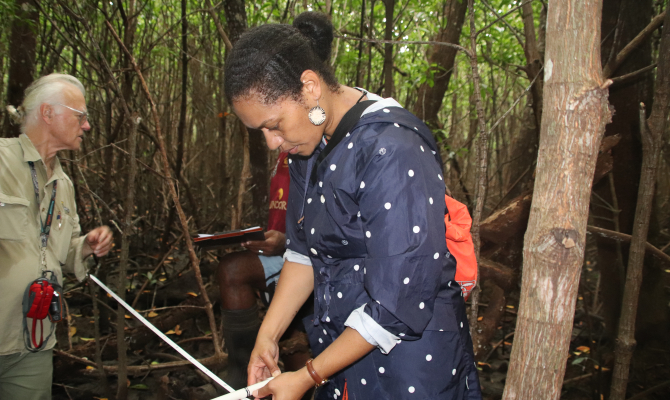
Dr Salanieta Kitolelei says as she reflects on her work on mangroves in the Rewa Province.Hailing from Vunisinu, Dreketi, Rewa, Kitolelei currently works with the villages of Narocake in the Noco District, and Muanaira in the Vutia District under the Management and Conservation of Blue Carbon ecosystems (MACBLUE) project, specifically on the local management approaches for mangroves in Rewa.
In this role, she provides local expertise and coordinates on-the-ground project activities in Rewa. This includes awareness raising and capacity building activities, assists in community consultations, surveys and assessments, and provides direct support to the villagers of Narocake and Muanaira for the documentation of their challenges and needs towards mangrove management and restoration.
‘Sala, as she is fondly known by her peers, describes mangroves as a symbol of her people in Rewa.
“Mangroves symbolise the resilience of our people through the impacts of climate change which affect us, such as flooding, prolonged dry seasons and sea level rise. Through all these challenges, mangroves continue to stand along our coastlines and wetlands protecting our people,” she shared.
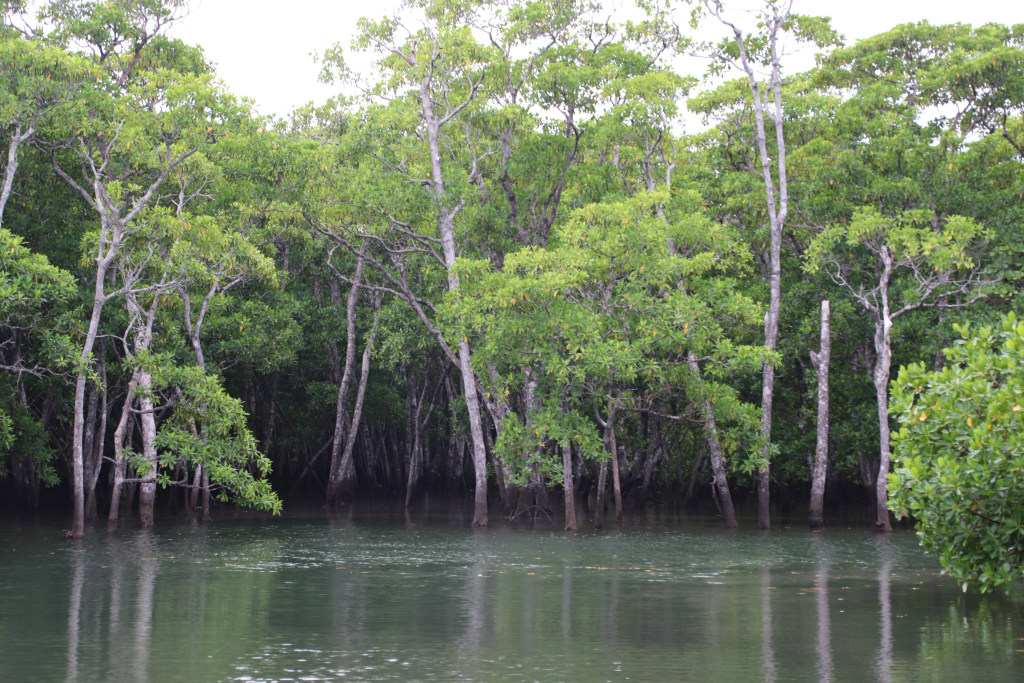
Home to Fiji’s largest mangrove forests, the province of Rewa contains an estimated 7000 hectares of mangrove forest; a nursery for wildlife, birds and marine species such as kuka (mud crabs), mana (mud lobsters), qari (mud crabs) and several freshwater fish.
Sala is presently pursuing hera doctorate degree in Marine Science at the University of the South Pacific and believes that working with communities is not just about giving back, but also about learning from people and bridging formal education with traditional knowledge to influence meaningful change.
“I grew up listening to stories about nature from my grandparents. When I went to university, I realised that it is always important to link the two, because what is the point of going to school if you cannot apply it in real life or make an impact in your life and in the lives of our people?”
“I thought, why not link the natural sciences I learned in university to what I've learned and the lived experiences I’ve had. The stories that I've heard from the past and those shared to me, and how things work in the world or the ‘scientific’ world,”
“I believe that training our next generation of local taxonomists and scientists to have the confidence to carry their stories and learnings of their community and help inform existing knowledge gaps for resource management. That is what motivated me to teach and inspire communities. “Her dedication is profound.
In addition to her conservation work, Sala is a part of the Rewa Provincial Strategic Development Planning (SDP) Committee (Environment and Climate Change), which informs development plans of the 55 villages in the Rewa Province.
“We look at all the needs and gaps in the community, which are issues consensually agreed by the villages and approved by the village leaders, then brought to us through the respective Turaga ni Koro or village headman. The SDP committee acts as a bridge between our people and the government, a whole-of-province approach that provides strategic oversight and advisory role for planning and development in Rewa.
She identified pollution, overharvesting of fisheries resources, and competition from outsiders fishing in their qoliqoli (traditional fishing ground) as some of the key challenges.
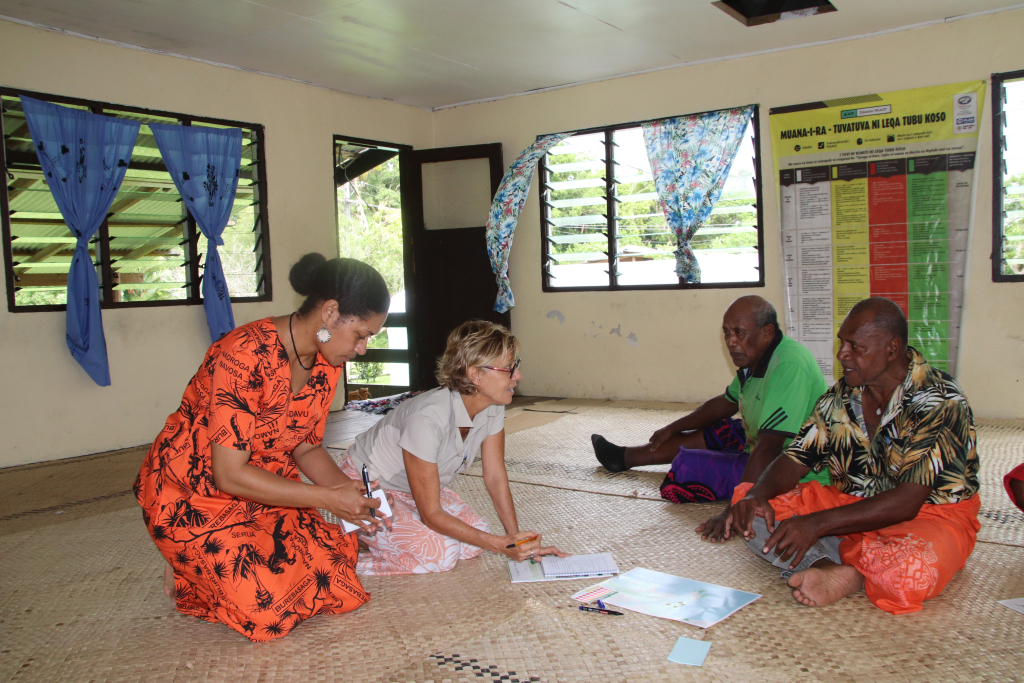
“There is also a link to climate change. The fish are starting to move away, the water is warmer, and that is coupled with pollution, overfishing, unsustainable fishing practices. These issues impact our food security, and that is something that I work on with the provincial office and also the biodiversity committees in our province, to combat and hopefully drive positive tangible impacts in our villages.”
For World Mangrove Day, her message is clear, human survival is deeply interconnected with the environment.
“If you don't protect the home and the places where these fish and crabs, and the multitude of resources we rely on, our food security is compromised.”
“People have always lived alongside mangroves and our traditional knowledge developed through our interaction with the environment go hand in hand”.
“If our environment is degraded and our natural resources disappear, we also lose the associated knowledge. So, it is a win-win situation - we protect the environment, the environment protects us”.
The MACBLUE project is jointly implemented by the Secretariat of the Pacific Regional Environment Programme (SPREP), the Pacific Community (SPC), and the Deutsche Gesellschaft für Internationale Zusammenarbeit GmbH (GIZ) in close cooperation with their four partner governments: Fiji, Papua New Guinea, Vanuatu, and the Solomon Islands.
The project is funded by the German Federal Ministry for Environment, Nature Conservation, Nuclear Safety and Consumer Protection (BMUV) through its International Climate Initiative (IKI).