

By Sanjeshni Kumar, Pacnews
The Pacific Regional Loss and Damage Dialogue 2025 opened today in Apia, Samoa, reaffirming the urgency of the need to address climate-induced loss and damage as a critical priority for Small Island Developing States (SIDS) in the Pacific.
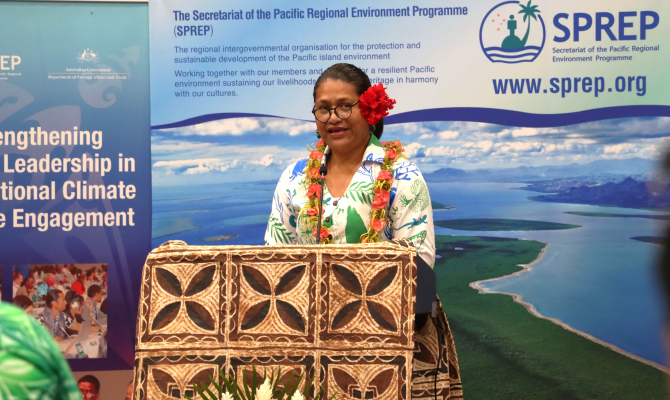
Ms Lealaisalanoa Frances Brown-Reupena, Chief Executive Officer of Samoa’s Ministry of Natural Resources and Environment (MNRE) highlighted the progress made since the first dialogue, held in Samoa, two years ago.
“We’ve witnessed significant progress, both regionally and globally, in raising awareness, deepening understanding, and advancing financing for loss and damage,” Brown-Reupena said.
Loss and damage has been a steadfast concern for the Pacific region for over three decades.
It was first introduced at the United Nations Climate Negotiations in 1991 by Vanuatu on behalf of the Alliance of Small Island States, calling for an insurance scheme to support nations vulnerable to rising sea levels.
Since then, the issue has evolved through key milestones, including the establishment of the Warsaw International Mechanism at COP19 in 2013, the Santiago Network at COP25 in 2019, and the Loss and Damage Fund at COP27 in 2022.
“Fighting for climate justice has never been easy, and the Pacific has been at the forefront of this fight for many years,” she said.
Brown-Reupena noted a landmark achievement this year, the International Court of Justice’s advisory opinion, which provides vulnerable communities with a legal mechanism to hold states accountable and demand urgent climate action.
This historic ruling was the result of tireless efforts by groups such as Pacific Island Students Fighting Climate Change.
She highlighted that climate change is already causing profound impacts on Pacific families, communities, and cultures.
“Our rich tapestry of cultures, languages, and ways of life are under threat from the climate crisis. That is why it is so vital that we come together to exchange knowledge, share success stories, and collectively shape the priorities for safeguarding our future.
“Our profound bond with the land, the sea, and sky compels us to speak to the islands we call home for ourselves, for the health of our communities, and for the future we are determined to protect. The Blue Continent we share connects us through the lifeblood of the Pacific Ocean.”
Brown-Reupena also acknowledged the ongoing Pacific advocacy within the UNFCCC framework, the Fund for Responding to Loss and Damage, and the Santiago Network, praising the efforts of Pacific representatives and their teams.
“They remain as essential to ensuring that global decisions reflect the unique needs and perspectives of our region on loss and damage.”
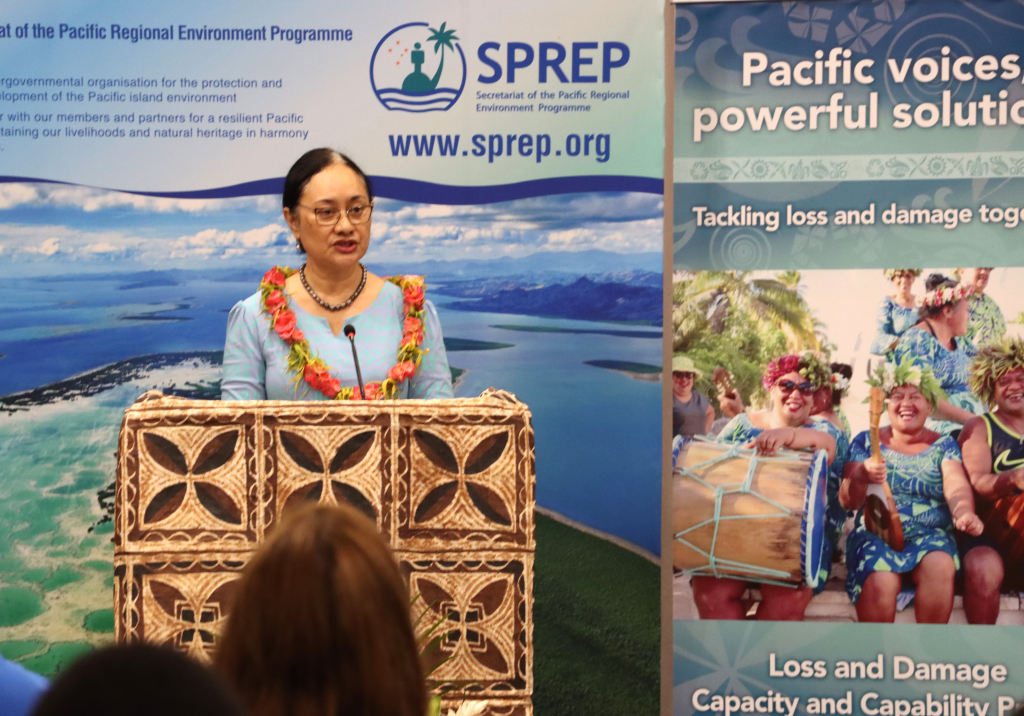
The Secretariat of the Pacific Regional Environment Programme (SPREP) Deputy Director General, Easter Chu Shing, stressed the importance of the Fund for Responding to Loss and Damage and the Santiago Network in opening new funding and technical support avenues for Pacific countries.
“At the regional level, SPREP is implementing two key projects to support our members: the Loss and Damage Capacity and Capability Project, funded by New Zealand’s Ministry of Foreign Affairs and Trade, and the Building Our Loss and Damage Response project, funded by Germany’s International Climate Fund,” Chu Shing said.
These initiatives will help nations hold national dialogues to define loss and damage needs, develop evidence-based case studies, and trial community-based solutions.
Youth engagement is also playing a pivotal role.
“The first regional youth dialogue on loss and damage wrapped up last week, and many of those youth participants are here for the continued discussions,” she said.
The dialogue aims to move beyond talk to action, focusing on practical, locally relevant solutions over the next two days.
Both leaders expressed gratitude for the continued financial support from the governments of New Zealand and Australia, which have been instrumental in enabling this regional dialogue and strengthening the Pacific’s capacity to address climate loss and damage.
The Pacific Regional Loss and Damage Dialogue 2025 is held from 11-12 August at Taumeasina Island Resort. It follows the inaugural Pacific Youth Dialogue on Loss and Damage, held from 7- 8 August, at the same venue in Samoa.
The Pacific Regional Loss and Damage Dialogue 2025 and the inaugural Pacific Youth Dialogue on Loss and Damage are made possible with funding support from the Loss and Damage Capability and Capacity (LDCC) Project with the Government of New Zealand.
Hosted by the Secretariat of the Pacific Regional Environment Programme (SPREP), the dialogues bring together Pacific governments, youths, civil society, academia, NGOs, and the private sector to collectively advance the region’s priorities on Loss and damage.
This story was produced by the Pacific Media Team covering the meetings. Their attendance is made possible with funding support from the Loss and Damage Capability and Capacity (LDCC) Project with the Government of New Zealand.
For more information, please contact SPREP Climate Change Adaptation Adviser, Ms Filomena Nelson filomenan@sprep.org , SPREP Climate Change Loss and Damage Officer, Ms Jessica Rodham jessicar@sprep.org or Media and Public Relations Officer, Mr Keni Lesa sosikenil@sprep.org