

By Puaseiese A Pedro, Office of Prime Minister Tuvalu
“1.5 to stay alive and thrive demands urgent, practical action — and the Climate Action Pathways for Island Transport (CAP-IT) is delivering that action for the Pacific.”
So declared Mr. Vladimir Kalinsky of UNDP CAP-IT when he addressed delegates at the 2025 Pacific Climate Change Roundtable, in Apia.
Addressing a room of regional leaders, policymakers, and stakeholders, Mr. Kalinsky stressed that the project goes far beyond simply introducing electric vehicles to island nations.
“You can’t just drop in EVs and expect the transition to stick,” he said. “If you don’t build the roads, install the chargers, train the workforce, and align the policies, you risk creating short-lived solutions.”
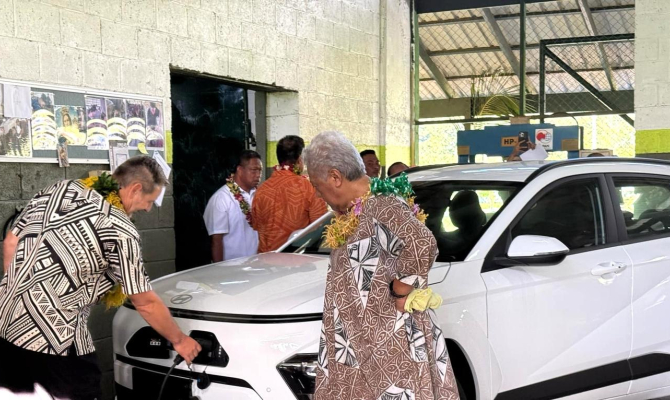
The Pacific Transformation initiative — funded by the Government of Japan — aims to do exactly that: create a complete ecosystem that will enable Samoa to shift from carbon-based transport to clean, reliable mobility.
Mr. Kalinsky described a carefully planned, country led approach.
Technical studies and a baseline assessment of traffic and registrations shaped a five year sustainable mobility plan and policy road map that tell Samoa what to do, step by step.
“Policy must follow evidence,” he said. “We first measured, then designed, then delivered.”
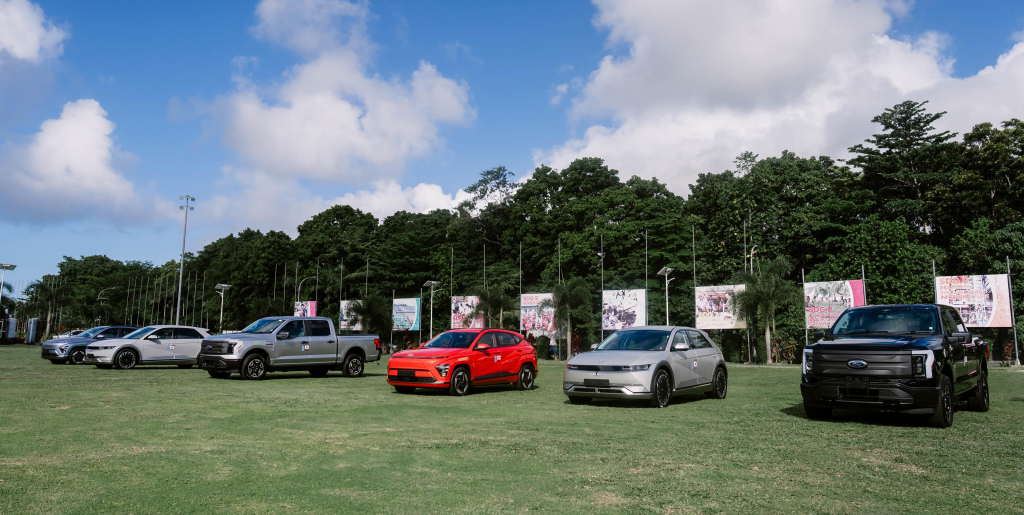
That evidence led to the procurement of 76 electric vehicles for government services, from passenger vans to an electric truck capable of carrying oxygen tanks, chosen to meet the real needs of ministries and frontline services.
“At the heart of this project is people,” Kalinsky explained.
Teachers and technicians from three schools received hands on training and new curricula so local workshops can service EVs for years to come.
“We are building local mechanics and local knowledge, that is how this becomes permanent.” He pointed to the recently launched central charging hub with multiple fast chargers and public charging points planned for islands and airports.
“Charging infrastructure is public infrastructure,” he added. “It needs operators, training and careful administration before it opens to everyone.”
Maritime transport will also benefit. Mr. Kalinsky welcomed a fleet of five electric outboard boats, the e Alia, designed to move people between Upolu, Manono and small tourism sites with near silent, zero emission operation.
“These boats are not toys,” he said. “They are 10 metre vessels built for real service, and we are training local vendors to assemble and maintain them alongside international partners.”
A new national maritime registry, moving records from paper to digital, will help track vessel performance and energy use, a small but important step toward smarter, cleaner seas.
When questions in the room turned to e waste and the fate of used batteries, Mr. Kalinsky met the concern head on.
“E mobility brings big benefits, but it also brings responsibility,” he said. “We prepared for that.”
UNDP CAP IT has published a detailed report on end of life EV batteries for Samoa, and is introducing interim solutions such as purpose built battery containers that reduce fire and explosion risks and can safely store retired batteries for years while long term recycling pathways are developed.
Fire services have received specialised incident response equipment and training to manage battery incidents safely.
“We are not ignoring the problem, we are managing it,” Mr. Kalinsky said. “These containers buy us the breathing space to design regional recycling and repurposing systems that actually work for island nations.”
Mr. Kalinsky was clear-eyed about limits and ambition.
“E mobility is not a silver bullet,” he said, “but it is one of the most practical answers we have right now to cut transport emissions and protect our islands.” He closed with a challenge, “If the Pacific wants to thrive at 1.5 degrees, we must pair urgency with durability, practical projects with long term thinking. That is the work we are doing in Samoa.”
The Pacific Climate Change Roundtable (PCCR), guided by the theme “1.5 to stay alive and thrive,” is taking place at Taumeasina Island Resort from 13-15 August. The PCCR is attended by Pacific governments, youths, civil society, academia, NGOs, and the private sector to engage collectively through the use of interactive activities to share their experiences amongst peers, bolster their networks and utilise the event to initiate new partnership opportunities.
The PCCR follows the Pacific Regional Loss and Damage Dialogue 2025 and the inaugural Pacific Youth Dialogue on Loss and Damage, at the same venue in Samoa.
The Pacific Regional Loss and Damage Dialogue 2025 and the inaugural Pacific Youth Dialogue on Loss and Damage are made possible with funding support from the Loss and Damage Capability and Capacity (LDCC) Project with the Government of New Zealand.
This story was produced by the Pacific Media Team covering the meetings. Their attendance is made possible with funding support from the Loss and Damage Capability and Capacity (LDCC) Project with the Government of New Zealand.
PHOTOS CREDIT: UNDP MCO Samoa