

By Ednal Palmer, In-Depth Solomons
Pacific nations are stepping up efforts to embrace electric mobility as part of a broader drive to cut emissions, reduce reliance on imported fossil fuels, and advance sustainable transport solutions tailored to island realities.
The call to accelerate e-mobility came during the climate ‘Unlocking mitigation’ discussions in Apia this week, where leaders, experts, and development partners examined how clean transport can complement renewable energy ambitions.
Advocates say shifting from petrol and diesel vehicles to electric alternatives could bring significant benefits — from lowering greenhouse gas emissions to reducing air pollution and fuel costs.
For small island states, the move is also seen as a step toward energy security in the face of volatile global oil prices.
However, experts stressed that electrification must be paired with careful planning to avoid creating new environmental challenges.
Dr. Vladimir Kalinski cautioned that while electric vehicles (EVs) are a promising solution, their batteries could pose waste and recycling problems for fragile island ecosystems.
“We have to make sure our solutions don’t turn into new problems,” he said.
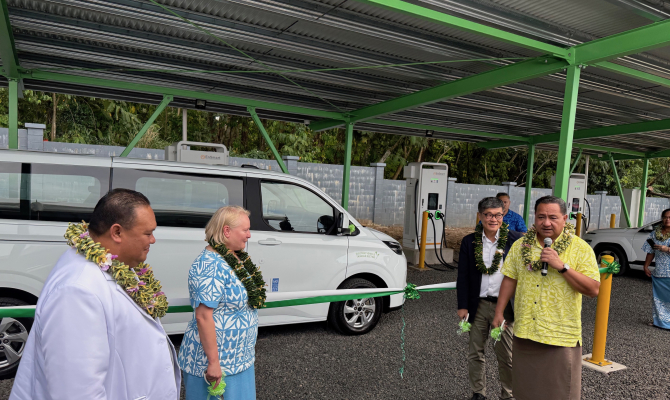
Some countries in the region, including Fiji and Samoa, have already begun pilot projects introducing EVs for public transport and government fleets.
Charging infrastructure remains limited, but new partnerships with development agencies and private investors are in the works to expand capacity.
Pacific Centre for Renewable Energy and Energy Efficiency (PCREEE), in their presentation, emphasized their readiness to work with those who want to pursue activities in this space.
PCREE is part of a global network of regional centres and represents an innovative fusion of regional and international efforts and capabilities. Its design allows for the leveraging of a network of intra- and extra-regional partnerships, thereby serving as a “hub” for knowledge and technical expertise on matters related to sustainable energy project implementation.
The push for e-mobility aligns with the Pacific’s broader climate goals, including the transition to 100% renewable energy and the phasing out of fossil fuels — a commitment reinforced by ongoing efforts to secure a Fossil Fuel Non-Proliferation Treaty.
As discussions continue, the message from Apia is clear: the Pacific is ready to drive forward on clean transport, but it must do so in a way that is practical, equitable, and resilient.
The Pacific Climate Change Roundtable (PCCR), guided by the theme “1.5 to stay alive and thrive,” is taking place at Taumeasina Island Resort from 13-15 August. The PCCR is attended by Pacific governments, youths, civil society, academia, NGOs, and the private sector to engage collectively through the use of interactive activities to share their experiences amongst peers, bolster their networks and utilise the event to initiate new partnership opportunities.
The PCCR follows the Pacific Regional Loss and Damage Dialogue 2025 and the inaugural Pacific Youth Dialogue on Loss and Damage, at the same venue in Samoa.
This story was produced by the Pacific Media Team covering the meetings. Their attendance is made possible with funding support from the Loss and Damage Capability and Capacity (LDCC) Project with the Government of New Zealand.
PHOTO CREDIT: UNDP MCO