

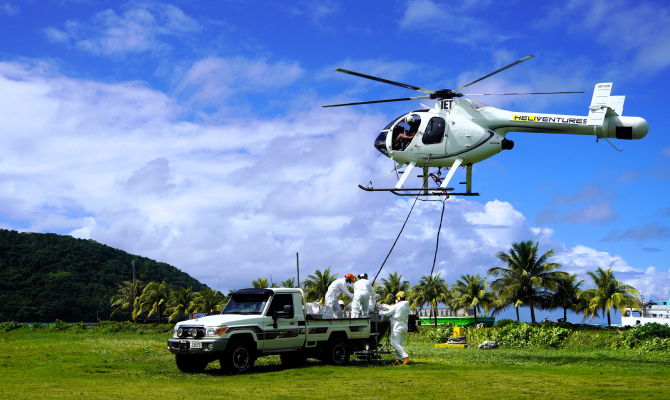
18 August 2025, Aleipata, Samoa - On Tuesday, 5th August, the Ministry of Natural Resources and Environment (MNRE) carried out a significant conservation initiative on Nu‘utele Island, one of Aleipata’s offshore islands. This operation was conducted in partnership with the Secretariat of the Pacific Regional Environment Programme (SPREP), under the Pacific Regional Invasive Species Management Support Service (PRISMSS) and with Island Conservation (IC).
The effort was part of the PRISMSS Restoring Island Resilience (RIR) Predator Free Pacific (PFP) programme, which aims to protect and restore island ecosystems by removing invasive species, with the operation enabled through financial support to the PRISMSS RIR from New Zealand’s Ministry of Foreign Affairs and Trade (NZMFAT) and the United Kingdom’s International Development.
By utilising helicopter assistance, the team implemented targeted measures to advance the PFP predator free goals of the RIR programme. This collaborative effort highlights the importance of regional and international partnerships in safeguarding biodiversity and enhancing the resilience of Pacific Island environments.
Nu’utele is known for its unique biodiversity and considered one of the nation’s Key Biodiversity Areas for the conservation of threatened birds such as the friendly ground dove, maomao, boobies, terns and marine species such as the hawksbill turtle. It also hosts some of Samoa’s rarest endemic plants.
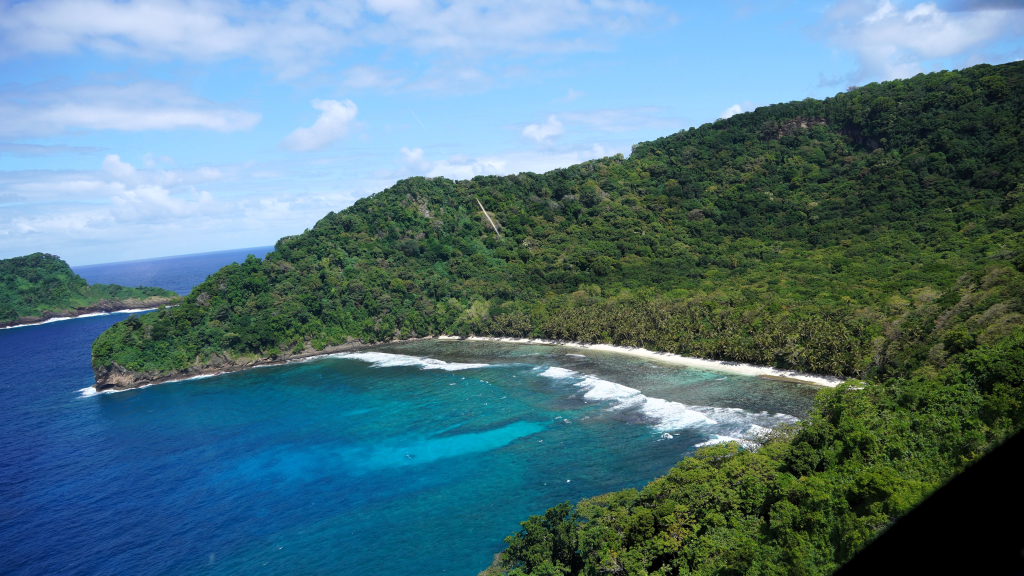
This high impact project which aims to restore the ola (lifeforce) of Nu’utele commenced earlier this year. It hopes to restore the ecological integrity of the offshore island through the permanent removal of invasive species that threaten its ecosystems and biodiversity. The removal of feral pigs was the first step post community consultations. With the successful completion of that initial phase, the project has now transitioned to the removal of invasive rats.
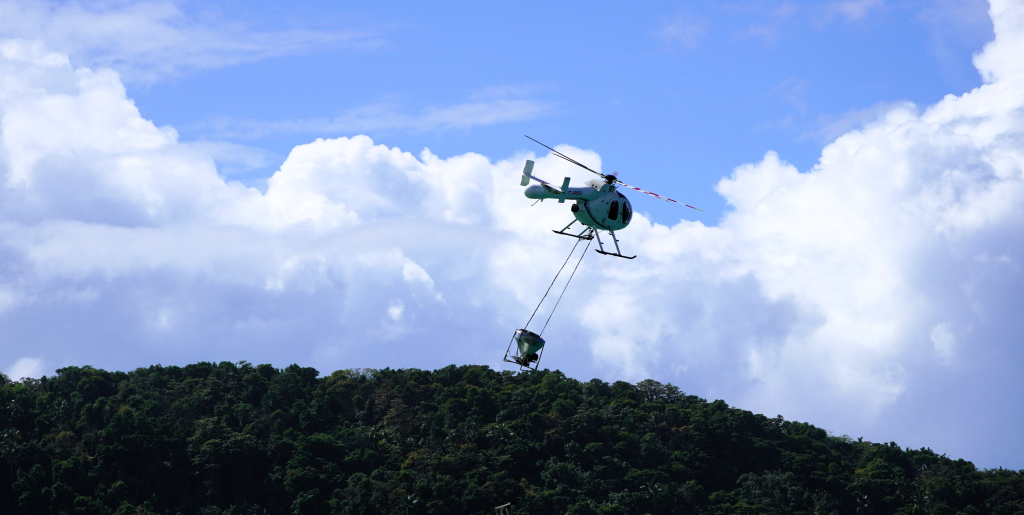
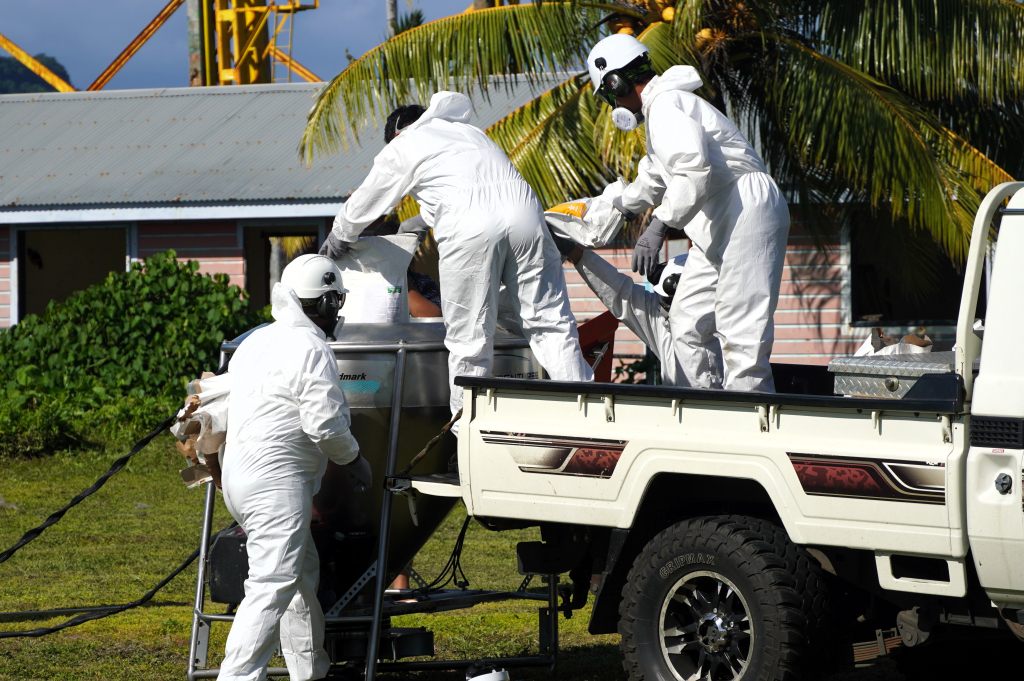
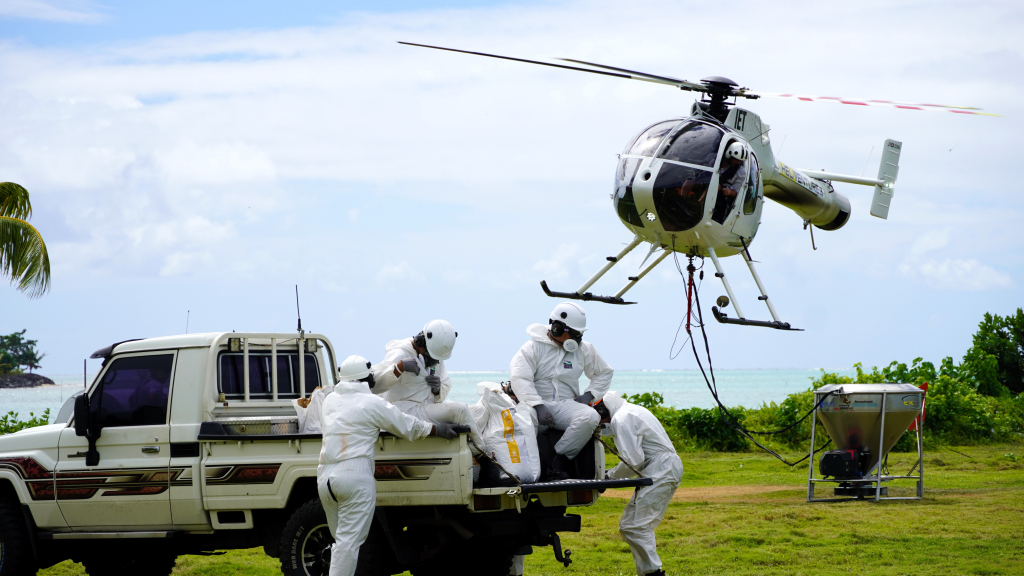
To effectively target the rodent population, a specialised helicopter operation began on Friday, 1st August, using a spreader system to apply brodifacoum in the form of pellet baits. This method is the only one available to ensure efficient and comprehensive coverage of the steep and formidable terrain of Nu’utele much of which is impossible to access on foot.
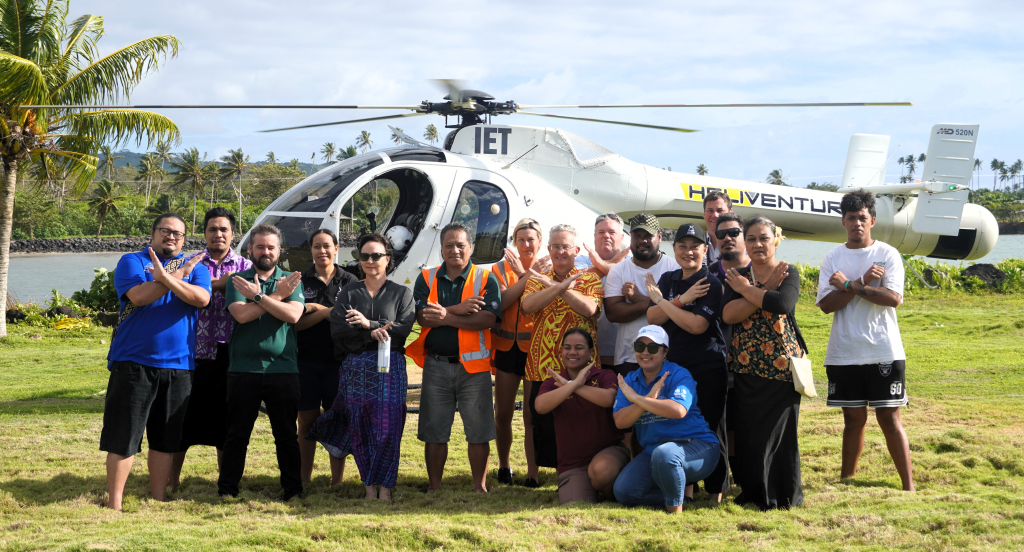
The operation was attended by representatives from the New Zealand High Commissioner, Her Excellency Si’alei Van Toor, the British Deputy High Commissioner, His Excellency Daniel Garlick and SPREP’s Deputy Director General, Le Susuga Easter Chu Shing, representatives from the MNRE Division of Environment and Conservation, as well as local stakeholders and community representatives actively engaged in the project.
The Assistant Chief Executive Officer (ACEO) for the Division of Environment and Conservation, Mr Su’emalo Tumutalie Foliga shared during the operation that, “MNRE serves as the lead agency responsible for the sustainable management and development of Samoa’s environmental and natural resources and our coordination with the various stakeholders is essential to ensure full engagement and availability for the successful execution of initiatives such as the PRISMSS PFP programme on Nu’utele.”
“MNRE plays a critical role in mobilising community involvement, particularly in implementing projects at the district and village levels and our approach centres on consultations and awareness programmes that help communities understand the environmental efforts taking place right in their own backyards.”
The ACEO highlighted that these initiatives are closely aligned with national policies, including the Pathway for the Development of Samoa, the National Biodiversity Strategy and Action Plan, the National Invasive Species Strategy and Action Plan and the State of Environment report.
“It is vital that we protect our islands from the harmful impacts of invasive species and in Nu’utele, we hope that following these operations, the island will be safeguarded, preserving its biodiversity and strengthening community resilience against climate change.”
“These islands hold deep cultural and spiritual significance, serving as sacred spaces and refuges for unique birds, plants, and other native species.”
The NZ High Commissioner, Her Excellency Ms Si’alei Van Toor shared that, “New Zealand is really proud to support this initiative of eradicating invasive species such as feral rats and pigs on Nu’utele island which have impacted marine life and native birds.”
“This work is important for the biodiversity of the island to heal and will help combat the wider climate change challenges that invasive species pose and over time, the people of this area will be able to benefit in terms of tourism potential.”
The Deputy British High Commissioner, His Excellency Mr Daniel Garlick commented that, “the UK views climate change as a big challenge and we would like to thank the government of Samoa for implementing a project with our partners at SPREP, PRISMSS and IC that helps build island resilience and biodiversity conservation.”
“We are very fortunate to have the opportunity to work with them and believe that with the support of the government, we will be able to assist with biodiversity conservation efforts by helping manage invasive species through these targeted programmes and creating a better environment for our future generations.”
SPREP Deputy Director General, Ms Easter Chu Shing shared that, “the operation that is currently happening on Nu’utele forms part of the work that SPREP delivers to support our member countries towards building island resilience through the eradication of invasive species.”
“We have success stories from other Pacific Island countries around invasive species management work and the operations happening here on Nu’utele will also enable us to capture lessons and apply a similar approach to other Pacific islands where similar eradication work is needed.”
“Collaboration is very important to SPREP as we cannot alone on the restoration and eradication work in managing invasive species, so we work very closely with our member countries, our partners as well as local communities.”
“We are fortunate to have the support of our donors like NZ, UK, GEF and we continue to look for funding support from our partners and donor agencies to ensure we continue to maintain and sustain the work that we are doing for our countries and our communities in ensuring our biodiversity is protected and conserved.”
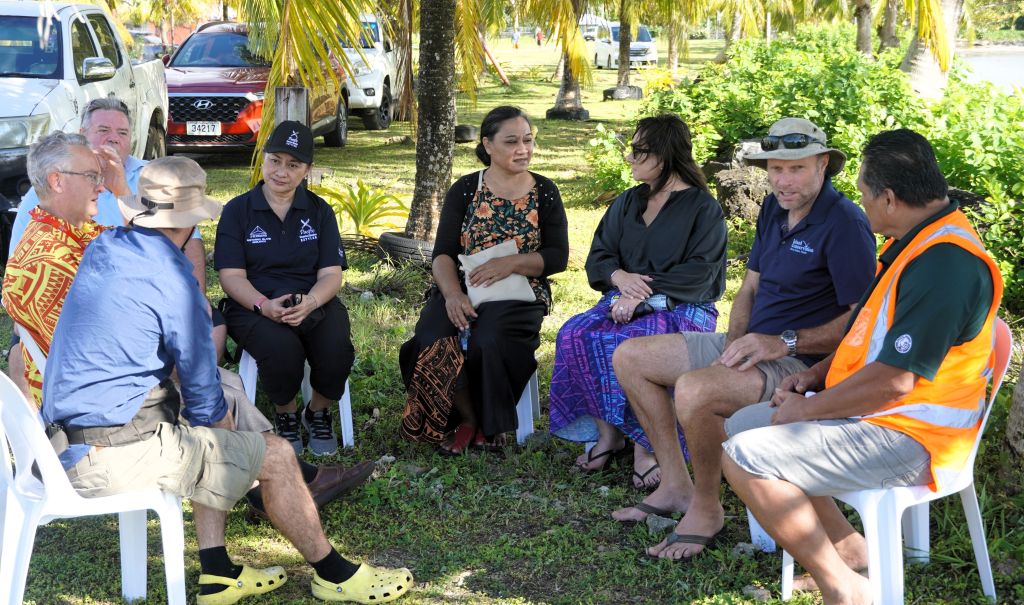
Invited guests to observe the aerial application of bait to eradicate invasive rats on Nu’utele were given the opportunity to experience a short helicopter flight, which enabled them to witness the bait loading process and see how the location and flight paths of the helicopter are tracked and mapped to ensure precise application of the bait loading and dispersal techniques.
This event served to both showcase the innovative methods being deployed and strengthen collaboration among key partners supporting Samoa’s biodiversity conservation goals demonstrating Samoa’s continued efforts towards protecting native ecosystems from the impacts of invasive species and ensuring that natural resources have one less threat to deal with.
The PRISMSS-RIR team, MNRE, IC and SPREP, extended their gratitude to all those who have made this project possible including donor partners such as the NZMFAT and UK International Development and the Nu’utele island’s landowners, Tuaolemoso Fa’afetai Sagapolutele and family.
MNRE expressed appreciation to the local communities actively involved in the project and local agencies, namely the Ministry of Works, Transport and Infrastructure, Ministry of Police, Ministry of Customs and Revenue, Samoa Ports Authority, Ministry of Agriculture and Fisheries, and Ministry of Women Community and Social Development.
A similar operation, which will be the third helicopter bait dispersal, is scheduled for later in August and MNRE wishes to reiterate to the communities in Apia not to be alarmed with the helicopter operations.
About PRISMSS: The Pacific Regional Invasive Species Management Support Service (PRISMSS) is a coordinating mechanism designed to facilitate the scaling up of operational management of invasive species in the Pacific.
PRISMSS, which is led by the Secretariat of the Pacific Regional Environment Programme (SPREP) brings together experts to provide support within the Pacific region with a focus on protection of indigenous biodiversity and ecosystem function. As a service provider, PRISMSS provides a comprehensive suite of support services in a cohesive, effective, efficient, and accessible manner to Pacific Island countries and territories.
Restoring Island Resilience (RIR): The PRISMSS - Restoring Island Resilience (RIR) is a New Zealand-PRISMSS collaboration project that aims to improve Pacific Island Countries and territories livelihoods and resilience to climate change by reducing the impact of invasive species on natural and agricultural ecosystems through the six PRISMSS programmes.
PRISMSS Powered by: New Zealand Foreign Affairs & Trade, UK International Development, GEF, United Nations Environment Programme and SPREP
PRISMSS Partners: Birdlife International, Earth Sciences New Zealand, New Zealand Department of Conservation, Island Conservation, Manaaki Whenua Landcare Research and Pacific Community and SPREP
PRISMSS Programmes: Natural Enemies Natural Solutions (NENS), Predator Free Pacific (PFP), Protect Our Islands (POI), Protect Our Marine Areas (POMA), Resilient Ecosystems Resilient Communities (RERC), War On Weeds (WOWs).
For additional information please contact Mr Dominic Sadler, PRISMSS Manager on dominics@sprep.org or Mr Nitish Narayan, PRISMSS Communications & Liaison Officer on nitishn@sprep.org
About Island Conservation: Island Conservation is the world’s only international non-profit conservation organization dedicated solely to restoring islands for nature and people worldwide. Island Conservation is committed to a holistic island-marine ecosystem restoration method that combines efforts to improve community livelihoods, manage invasive species, and reintroduce native species.
For additional information please contact, Sally Esposito, Island Conservation, Strategic Communications Director: sally.esposito@islandconservation.org