

3 September 2025, Apia, Samoa - Across the Pacific, island nations and territories are increasingly challenged by the safe and sustainable management of hazardous materials. Limited infrastructure for receiving, storing, transporting, and disposing of these substances often results in hazardous materials especially those at the end of their life cycle being released into the environment. This poses serious and ongoing threats to both human health and the region’s fragile ecosystems.
Mercury is classified as a potent neurotoxin by the World Health Organisation, affecting vulnerable populations such as pregnant women and young children, with bioaccumulation occurring in top predator fish, like swordfish, shark, tuna and mackerel. Common mercury sources include fluorescent bulbs, batteries, and dental amalgams, necessitating stricter import and export controls on mercury-added products.
In response to this urgent issue, the Secretariat of the Pacific Regional Environment Programme (SPREP) has taken decisive action as member countries acknowledged the critical need to address mercury waste and endorsed the development of the Mercury-Free Pacific Campaign, a bold initiative aimed at phasing out mercury containing products and protecting communities and ecosystems from mercury exposure.
To support Pacific island countries, a Pacific Regional Action Plan on Mercury has been developed through a partnership involving Pacific Island nations, SPREP, the United Nations Environment Programme (UNEP), and the Global Environment Facility (GEF). This plan focuses on reducing mercury exposure by identifying sources of mercury emissions and releases to air, water, and land, and by prioritising strategic regional and national actions to minimise exposure. Ultimately, the plan aims to reduce the human and environmental impacts of mercury pollution.
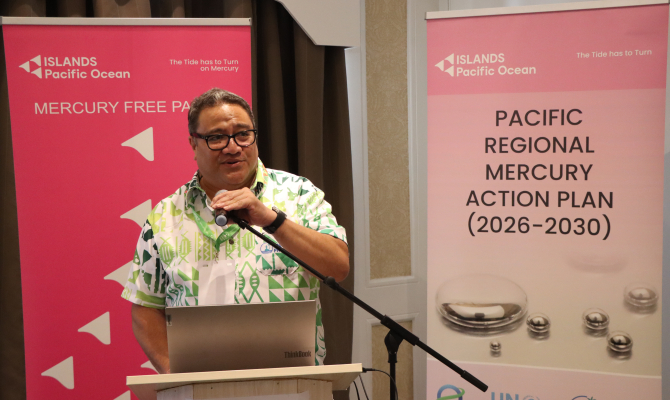
At a side event on the Pacific Regional Mercury Action Plan, on the margins of the 32 SPREP Executive meeting, the SPREP Waste Management Pollution Control (WMPC) programme Director Mr Anthony Talouli shared that, “limited access to regional hazardous waste management facilities means that in most cases, the end-of-life hazardous materials are released to the environment, which poses imminent and on-going risks to both human and environmental health.”
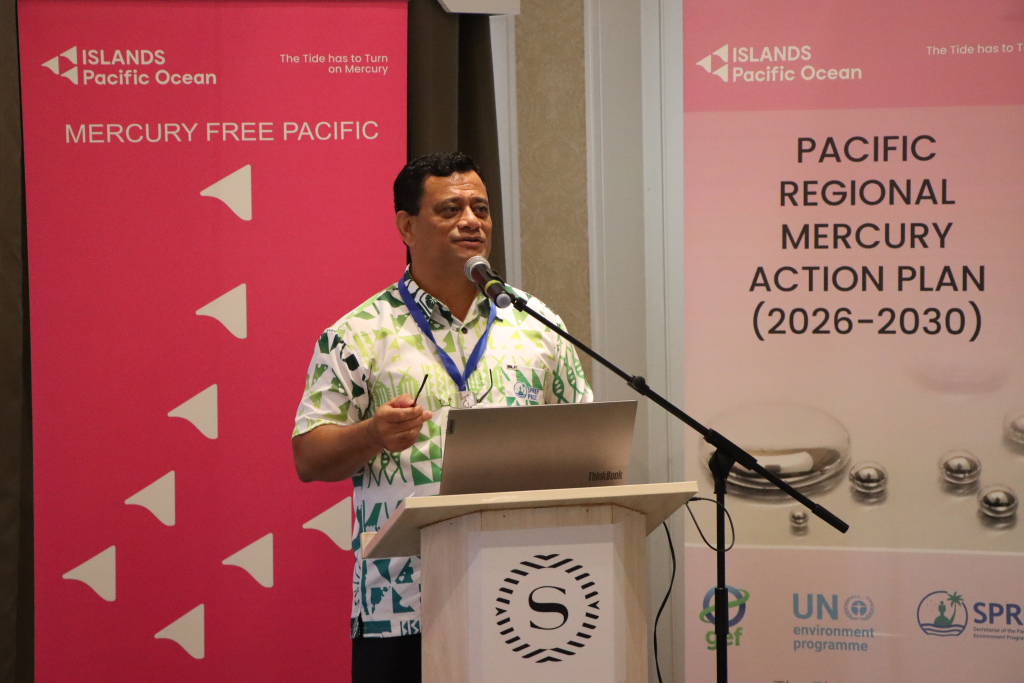
The SPREP WMPC Director informed the participants of the side event that the Minamata Initial Assessment (MIA) Project with funding from the Global Environment Facility (GEF) completed 12 MIA assessments to assist Pacific island countries ratify the Minamata Convention and take steps to protect their environment and communities from the adverse impacts of mercury pollution.
“These countries include Kiribati, Palau, RMI, Samoa, Tonga, Tuvalu, Vanuatu all 7 countries Party to the Minamata Convention as well as FSM, Nauru, Cook Islands, Niue, and PNG have undertaken an assessment of national capacities to deal with mercury and develop mercury inventories capturing sources of mercury emissions and industries that produce or import mercury containing products.”
“The goals of the Pacific Regional Mercury Action Plan (2026-2030) will be delivered through implementation of its 52 strategies, with Action Plan progress being reviewed on a regular basis over its first five-year implementation period by the Scientific and Technical Advisory Committee (STAC) of the Waigani Convention within the Pacific Basel Centre for Regional Cooperation (Pacific BCRC).”
The Mercury Free Pacific Campaign is a regional movement with clear and impactful goals that will assist PICs to accede to the Minamata Convention and encourage more Pacific nations to formally join the global effort. It will also focus on collecting and disposing of legacy mercury waste by removing existing mercury from communities and ecosystems.
ISLANDS Pacific Child Project Manager, Mr Dean Solofa shared during the side event that, “the Regional Action Plan will promote the monitoring of mercury levels by establishing systems to track mercury in the environment and assess exposure risks.”
“The campaign will raise public awareness by educating communities about the dangers of mercury and promote safer alternatives and support policy and legislation by assisting governments develop and enforce mercury-free policies.”
The Government of Australia, having ratified the Minamata Convention in December 2021, now models national implementation and educational strategies as one of four countries globally pursuing this path.
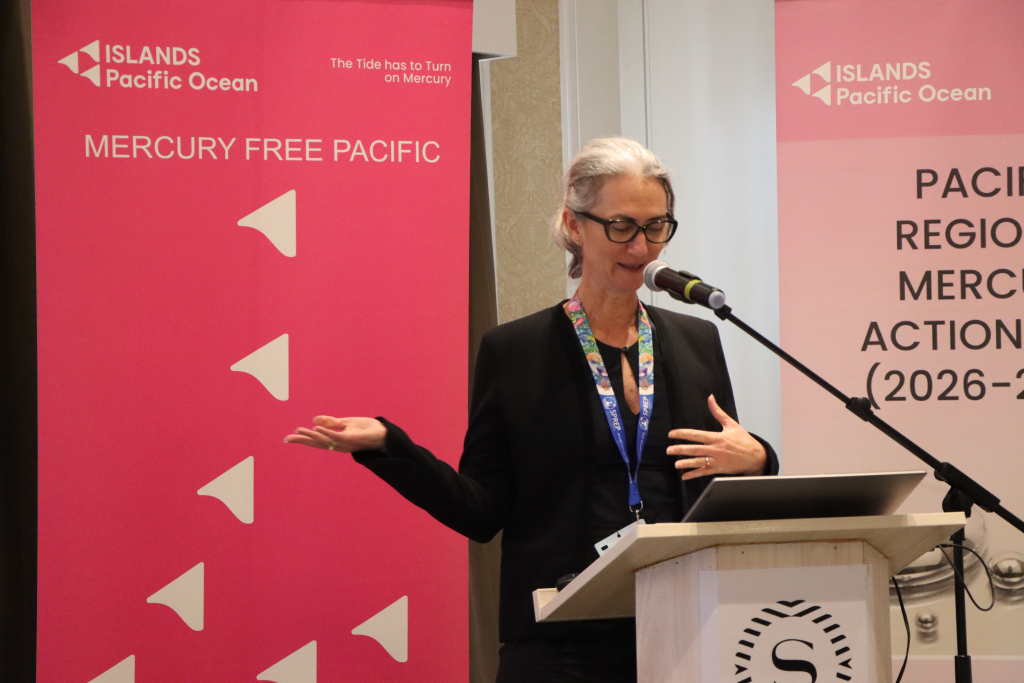
Ms Katrina Maguire the Head of International Environment, Reef and Ocean Division, Department of Climate Change, Energy the Environment and Water (DCCEW), Australia, reflected, “our decision to join the Convention was guided by the fact that the scale of the challenge to manage and reduce mercury pollution is greater than the capacity of any one country to effectively handle on their own.”
“Mercury pollution disproportionately affects coastal communities and because many Pacific communities rely on seafood for sustenance, culture and mercury contamination in marine life is a direct threat to livelihoods and identity.”
“We see the Minamata Convention as a common platform to facilitate effective and coordinated global action and SPREP’s Mercury Free Pacific campaign and development of the Pacific Regional Mercury Action Plan serving a similar purpose as a National Implementation Plan.”
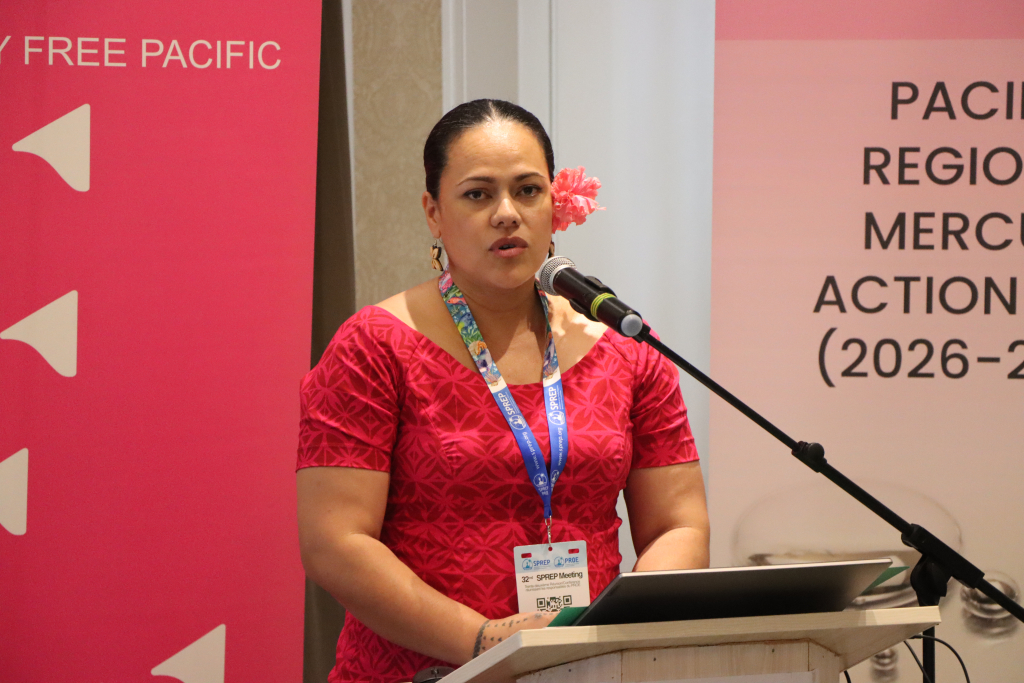
While reflecting on Samoa’s commitments, Ms Katenia Rasch, Assistant CEO of the National Waste Management & Pollution Control Division of the Ministry of Natural Resources and Environment shared that, “the Mercury Regional Action Plan offers Samoa not only compliance pathway for mercury but also a platform to strengthen hazardous waste governance more broadly and by using this plan as further support to strengthen our National Waste Management task force.”
“MNRE can enhance national capacity, leverage external financing and create synergies with other chemical and waste priorities.”
“The key is ensuring adequate resources and strategic partnerships so that we can meet this new mandate without overstretching existing resources.”
SPREP encourages Pacific island countries to accede to the Minamata Convention and join the campaign, which represents a powerful opportunity for Pacific nations to unite in protecting their people and environments from the toxic legacy of mercury and with continued collaboration, investment, and advocacy, a Mercury-Free Pacific.
The Thirty second SPREP Meeting of Officials (SM32) and associated meetings are taking place at Sheraton Aggie Grey’s Hotel & Bungalows in Samoa, from 1-5 September.
Guided by the theme “Sustaining our Pacific Environment in Harmony with our Cultures”, the SM32 and associated meetings bring together SPREP Members to discuss strategic issues pertaining to the organisation, and to approve the 2026-2027 Work Programme and Budget.
The 21 Pacific Island Members of SPREP are: American Samoa, Commonwealth of the Northern Marianas, Cook Islands, Federated States of Micronesia, Fiji, French
Polynesia, Guam, Kiribati, Marshall Islands, Nauru, New Caledonia, Niue, Palau, Papua New Guinea, Samoa, Solomon Islands, Tokelau, Tonga, Tuvalu, Vanuatu and Wallis and Futuna. The five Metropolitan members of SPREP are: Australia, France, New Zealand, United Kingdom and the United States of America.
In our efforts to fulfil our vision of ‘a resilient Pacific environment, sustaining our livelihoods and natural heritage in harmony with our cultures’, SPREP is extremely grateful to our valued Members, partners, donors, our CROP family, and stakeholders. For more information on the 32SM, visit https://www.sprep.org/sprep-meeting/2025/32nd-meeting-of-officials or contact sprep@sprep.org