

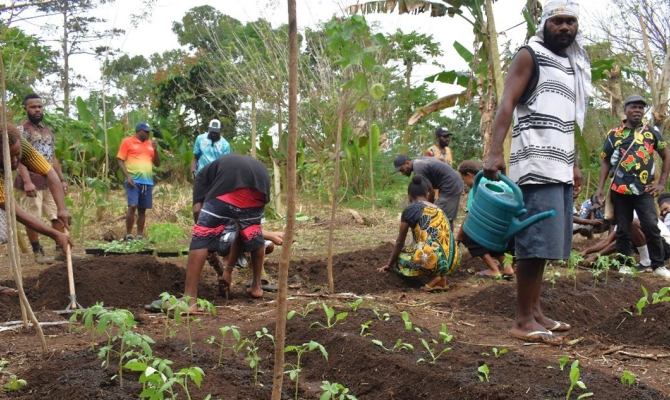
Port Vila, Vanuatu - In response to the pressing environmental challenge of deforestation and unsustainable land use in Vanuatu, the Pacific Ecosystem-based Adaptation to Climate Change (PEBACC+) project recently conducted a three-day agroforestry training aimed at empowering the Lower Tagabe River communities. This initiative is part of a broader strategy to promote sustainable livelihood alternatives that balance agricultural productivity with environmental safeguarding.
Traditional farming practices, often involving extensive land clearing, contribute to habitat loss and soil degradation. Recognising this, the PEBACC+ project, in consultation with the Vanuatu Department of Forestry, identified agroforestry as a critical solution during early project discussions, promoting an integrated farming system where farmers plant both agricultural and forestry crops on the same land. This approach maximises land use efficiency, maintains soil nutrients, prevents erosion, and provides habitats that support biodiversity.
Ms. Toufau Kalsakau, Vanuatu Department of Forestry Acting Director, highlighted the importance of this practice in her opening address. “Agroforestry is not a new concept; our ancestors have been randomly practising it for ages. All we’re doing now is confirming the practice with modern scientific knowledge and applying it more systematically.” She also acknowledged the country’s deforestation challenges and emphasised agroforestry as “the ideal tree-planting approach for small island states like Vanuatu.”
Held at the Tagabe Forestry compound from 20-22 August 2025, the training convened 33 participants, including 27 youths (14 males and 13 females) and six men. The Vanuatu Foresters’ Association (VFA), partnered with the Department of Forests and with the Secretariat of the Pacific Regional Environment Programme (SPREP) through the PEBACC+ project to facilitate the event, alongside trainees from the Vanuatu Institute of Technology (VIT).
Mr. William Bani, PEBACC+ Vanuatu Coordinator emphasised the benefits of agroforestry. He said, “Agroforestry is an ideal farming approach because when correctly applied, the soil fertility is maintained, agricultural crop yields are consistent, and biodiversity habitats are strengthened.”
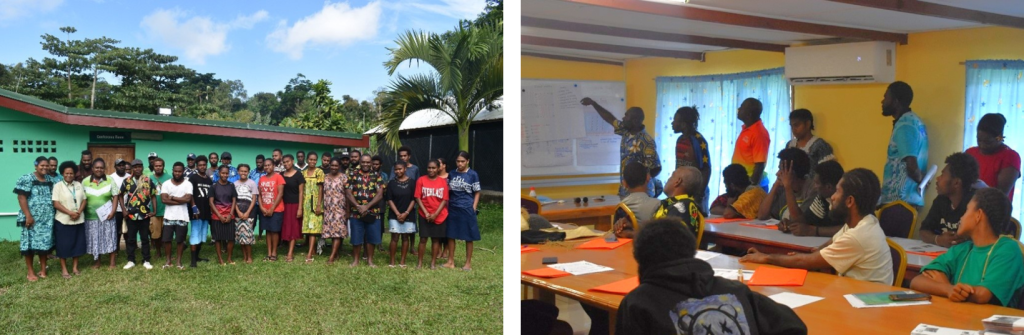
Participants engaged actively in group discussions and hands-on practical demonstrations, setting up agroforestry plots that illustrated how to integrate trees with crops effectively. The enthusiasm and willingness to apply these practices were evident in feedback from participants.
Mr. Pedro Bule shared, “I believe what I have learned in the past three days will help me with my gardening activities.”
Mr. Noellanson Ngwele expressed gratitude, saying, “I am very fortunate to have attended this workshop. I’ll share the knowledge gained with my family and friends back home.”
This agroforestry training is a tangible step toward achieving national goals by promoting sustainable land use practices that reduce deforestation pressures and support resilient community livelihoods. By encouraging integrated farming systems, the PEBACC+ project not only aims to boost agricultural productivity but also to foster environmental stewardship, ensuring that land remains fertile and ecosystems thrive for future generations.
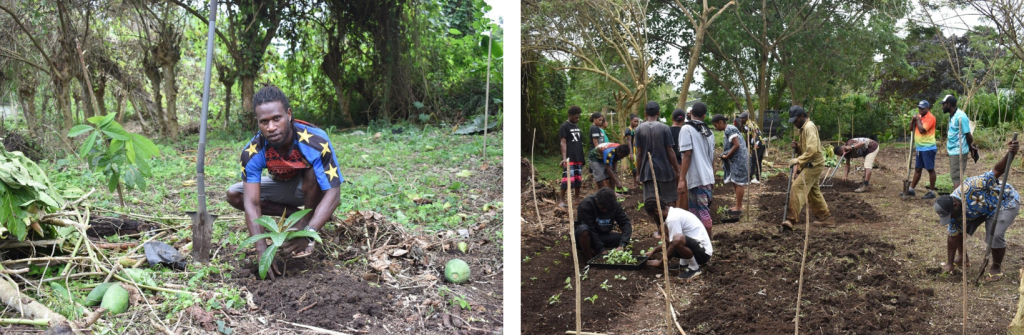
The success of this training sets the stage for similar activities planned for Lenakel, a project site, reinforcing agroforestry as a cornerstone of sustainable agricultural landuse across Vanuatu.
As PEBACC+ continues to support communities in adopting these innovative practices, the hope is to see healthier landscapes, empowered farmers, and stronger ecosystems working in harmony, demonstrating that sustainable farming and environmental conservation can go hand in hand.
PEBACC+ is a regional project implemented by SPREP and funded by the Kiwa Initiative through its donors the European Union, Agence Française de Développement (AFD), Global Affairs Canada, Australian Government Department of Foreign Affairs and Trade (DFAT) and New Zealand Ministry of Foreign Affairs and Trade (MFAT), with co-financing from French Facility for Global Environment (FFEM).
This four-year project seeks to strengthen the resilience of ecosystems, economies, and communities to the impacts of climate change in Fiji, New Caledonia, Wallis and Futuna, Solomon Islands and Vanuatu. The project will develop, sustain, and institutionalize Ecosystem-based Adaptation to climate change in these five countries and territories.
For more information, please contact: Setaita Tavanabola, Communications Officer, PEBACC+ Project, SPREP; email: setaitat@sprep.org or visit www.sprep.org/pebacc-plus