

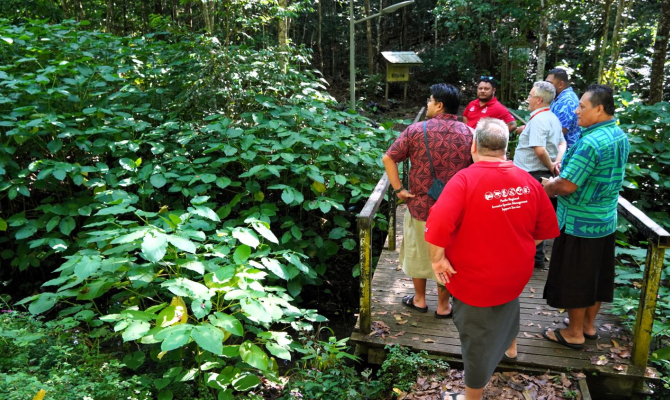
22 September 2025, Apia, Samoa: Invasive weeds disrupt native ecosystems, making them more vulnerable to the impacts of climate change and removing these invasive species, can help restore the natural balance and resilience of ecosystems, allowing them to better withstand climate related stresses.
The Samoa Ministry of Natural Resources and Environment (MNRE), in partnership with the Secretariat for the Pacific Regional Environment Programme (SPREP) led Pacific Regional Invasive Species Management Support Service (PRISMSS), is leading efforts towards enhancing biodiversity conservation, with genuine partnerships and collaboration to strengthen resilience.
Coordinated efforts between, MNRE and the PRISMSS Restoring Island Resilience (RIR) War on Weeds (WOWs) and Resilient Ecosystems Resilient Communities (RERC) programmes, have commenced to implement weed-led and site-led projects to support and enhance invasive species management in Samoa.
To further strengthen MNREs capacity to effectively control invasive weeds several resources were provided through the PRISMSS RIR project. The resources handed over included herbicides, Personal Protection Equipment (PPE), saws, GPS, backpack sprayers, first aid kits and other useful small items such as measuring jugs, nozzles and flagging tapes. This equipment will allow for PRISMSS RERC activities to be delivered by MNRE with the support of communities.
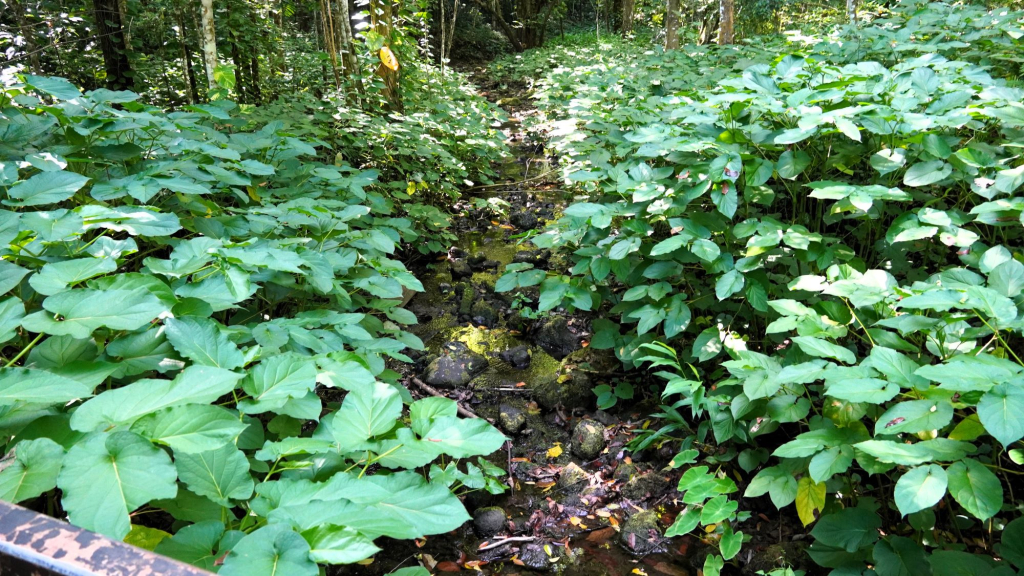
Two restoration sites have been identified for Samoa following consultations with MNRE, which are the Mt. Vaea Nature Reserve at Vailima, and the Faleata Recreational Reserve at Tuanaimato, Faleata.
A site-led project under the PRISMSS RERC programme will target Mt. Vaea Nature Reserve with a focus primarily on the management of the false kava (Piper auritum) from the Apaula stream that runs from the south to the northeastern side of the Reserve.
Their rapid growth and ability to outcompete native plants, particularly when introduced to ecosystems where it is not native, makes them one of the concerning invasive weeds in the region as the false kava can grow in dense native forests and can quickly displace other native plants and damage ecosystems. The plant is difficult to eradicate because it can continue to grow from any part of the plant.
The false kava is estimated to cover about 2ha of the reserve along the plains of the Apaula stream covering all the three management zones of the reserve, which are the Mt Vaea Nature Reserve, Robert Louis Stevenson’s Scenic Reserve, and the Vailima Botanical Garden which will provide reference points for the operation.
The Assistant Chief Executive Officer (ACEO) for the Division of Environment and Conservation, MNRE, Mr Su’emalo Tumutalie Foliga, expressed, “we are truly appreciative of these additional resources that have been provided to us through the PRISMSS RERC programme that will help us safeguard Samoa’s unique, yet fragile biodiversity.”
“We are grateful for the assistance which has been enabled through the NZMFAT and the UK International Development through SPREP-PRISMSS because through this collaboration, we are one step closer to protecting our environment and reinforces our combined commitment to sustainability and resilience through the effective management of invasive species.”
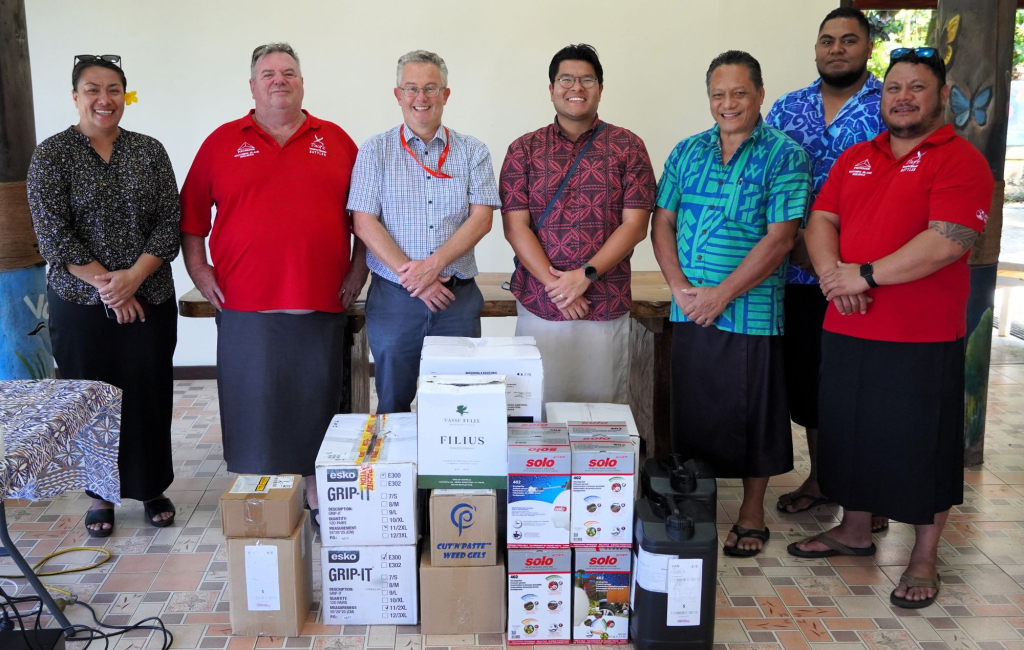
Mr Jonathan Lee, Second Secretary, New Zealand High Commission commented during the equipment handover ceremony at the Vailima Botanical Garden that, “New Zealand is proud to support the PRISMSS RIR project and equipping local teams with the right tools.”
“We are helping communities protect their biodiversity and build resilience for the future, through the PRISMSS Resilient Communities, Resilient Ecosystems (RERC) activities to be delivered by MNRE with the support of communities.”
His Excellency, Mr Daniel Garlick, British Deputy High Commissioner added that, “the UK is committed to working alongside Pacific partners to safeguard ecosystems and this equipment will empower communities to take practical action against invasive species and strengthen climate resilience.”
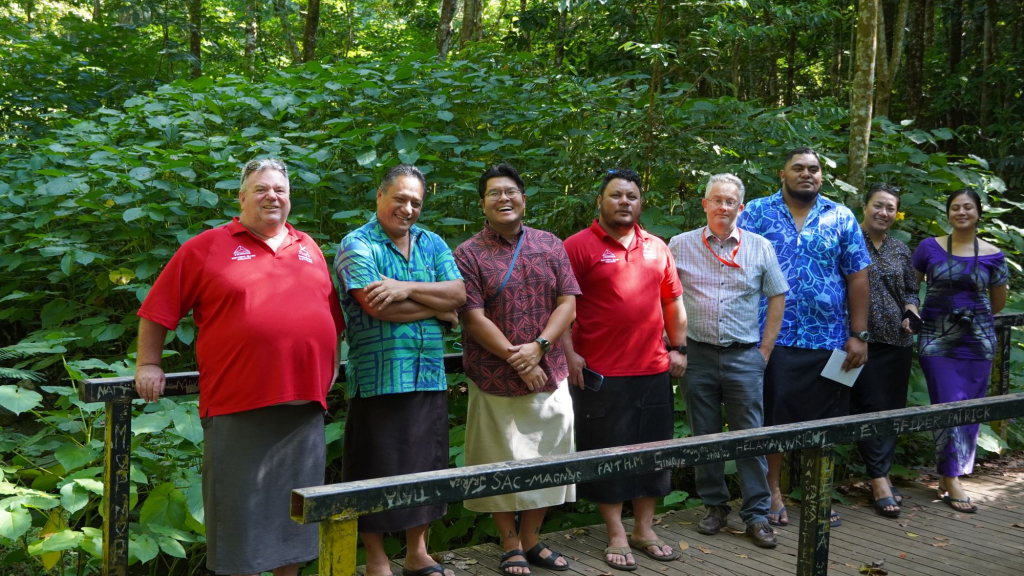
“Partnerships like PRISMSS show what’s possible when we work together to enable communities to restore ecosystems, protect biodiversity, and secure a more resilient Pacific.”
SPREP Invasive Species Adviser Mr David Moverley commented during the handover ceremony that, “the RERC programme integrates local participation in ecological restoration, ensuring that resilient ecosystems provide direct benefits to communities. By managing invasives and reintroducing native species, we create sustainable environments where both nature and people thrive.”
A refresher training, planned in early October, will be carried out with MNRE staff on safe use and application of herbicides and operational tools. This training is designed to empower MNRE’s operational team with the knowledge and confidence to manage invasive weeds responsibly, ensuring that restoration work is both safe and sustainable.
PRISMSS will continue to coordinate with MNRE and support invasive species management activities in Samoa and build capacity across the region.
--------------------------------------------------------------------------------------------------------------------------
About PRISMSS: The Pacific Regional Invasive Species Management Support Service (PRISMSS) is a coordinating mechanism designed to facilitate the scaling up of operational management of invasive species in the Pacific. PRISMSS, which is led by the Secretariat of the Pacific Regional Environment Programme (SPREP) brings together experts to provide support within the Pacific region with a focus on protection of indigenous biodiversity and ecosystem function. As a service provider, PRISMSS provides a comprehensive suite of support services in a cohesive, effective, efficient, and accessible manner to Pacific Island countries and territories.
Restoring Island Resilience (RIR): The PRISMSS - Restoring Island Resilience (RIR) is a New Zealand-PRISMSS collaboration project that aims to improve Pacific Island Countries and territories livelihoods and resilience to climate change by reducing the impact of invasive species on natural and agricultural ecosystems through the six PRISMSS programmes.
PRISMSS Powered by: New Zealand Foreign Affairs & Trade, UK International Development, GEF, United Nations Environment Programme & SPREP
PRISMSS Partners: Birdlife International, Earth Sciences New Zealand, New Zealand Department of Conservation, Island Conservation, Bioeconomy Science Institute-Manaaki Whenua Landcare Research, Pacific Community and SPREP
PRISMSS Programmes: Natural Enemies Natural Solutions (NENS), Predator Free Pacific (PFP), Protect Our Islands (POI), Protect Our Marine Areas (POMA), Resilient Ecosystems Resilient Communities (RERC), War On Weeds (WOWs)
For additional information please contact Mr Dominic Sadler, PRISMSS Manager on dominics@sprep.org or Mr Nitish Narayan, PRISMSS Communications & Liaison Officer on nitishn@sprep.org