


23 October 2025, Brisbane - In the Pacific, environmental data is at the heart of informed decision-making for sustainable development and climate resilience.
From tracking the health of our Ocean to monitoring biodiversity, weather and waste, accurate and accessible data helps Pacific Island countries understand changes in their environment and respond effectively.
Yet, the Pacific region continues to face unique challenges such as limited data infrastructure, uneven access to technology, gaps in capacity and vulnerability to climate and disaster impacts often make it difficult to collect, manage and share reliable information.
To address this challenge, through an ongoing collaboration with Australia's Terrestrial Ecosystem Research Network (TERN), the Secretariat of the Pacific Regional Environment Programme (SPREP) participated, for the first time, at the International Data Week (IDW) 2025, held in Brisbane, Australia from 13- 16 October 2025.
The global event, themed “Data for Positive Change: Empowering Communities and Advancing Research” takes place every two years and is the leading international conference on research data that brought together leading experts, policymakers, researchers and practitioners from around the world to explore how data can drive sustainable development and societal impact.

SPREP’s participation reinforced the Pacific’s commitment to ensure that the realities, challenges and priorities of small island developing states are reflected in global data conversations. By contributing to discussions on environmental information systems, climate resilience, open data and data governance, SPREP showcased the region’s efforts to strengthen the role of environmental data in protecting Pacific ecosystems and empowering island communities as well as challenges.
SPREP took part in two separate panel discussions that highlighted how data and information play a critical role in shaping effective environmental action across the Pacific.
Speaking at the panel discussion titled “Emerging technologies in the global context: challenges and opportunities for the long-term environmental data management lifecycle”, Mr Tavita Su’a, SPREP’s Pacific Environment Portal System Developer and Analyst emphasised how centralised, actionable data supports decision-making
“Through the Pacific Environment Portal, we are working to make environmental data more accessible and actionable for our island countries,” he said. “By centralising information and supporting State of Environment reporting, we help decision-makers turn raw data into meaningful policies and practical actions that strengthen resilience across the Pacific.
“Strengthening environmental data systems and ensuring the Pacific’s voice is represented in global data discussions are therefore critical steps toward building a more resilient and informed region.”
The discussion also explored long-term data lifecycle challenges, including data growth across domains, the impact of emerging technologies, the energy and financial costs of managing data and the responsibility for curating data for the common good.
On the margins of International Data Week, the Secretariat also participated in an event at the University of Queensland, organised by Dr. Alison Specht of TERN, Ecosystem Research Infrastructure.
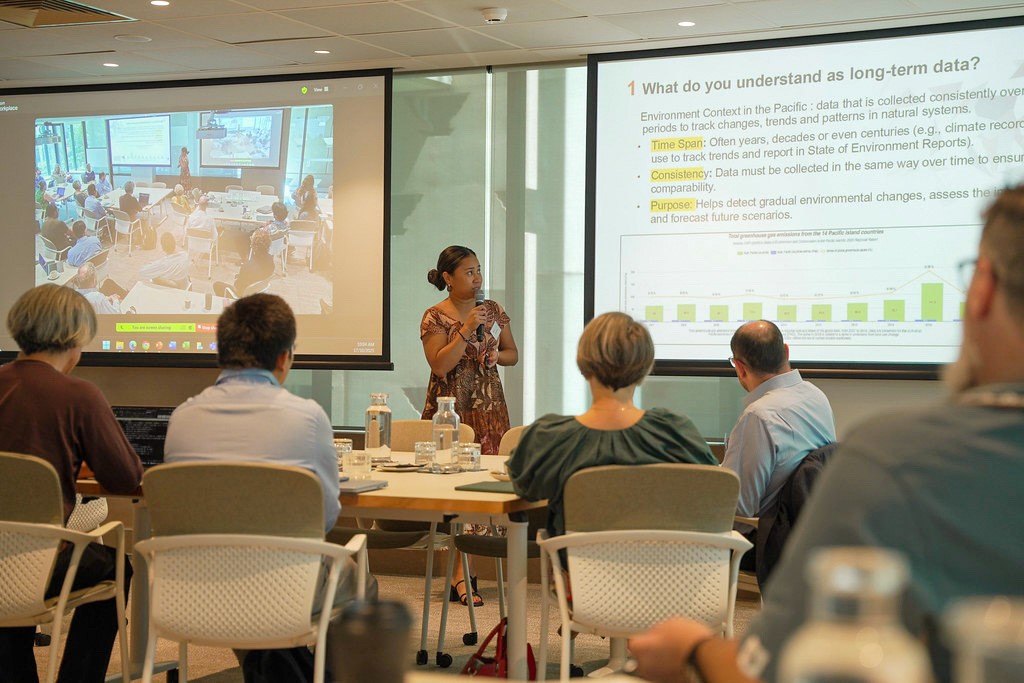
The session brought together experts from science, data infrastructure and data curation to examine how long-term data workflows from creation to reuse can be managed to support future research and predictive tools. As research increasingly relies on complex, large-scale datasets, the discussion explored the challenges and opportunities of collecting, storing, curating and reusing data across domains over time.
“Our islands generate valuable environmental data every day, yet limited infrastructure, fragmented systems and resource constraints often make it difficult to translate that data into effective policies or community solutions,” said Ms Lagi Reupena, SPREP’s Environmental Monitoring and Reporting Officer.
SPREP’s participation highlighted the importance of equitable access to data and ensuring Pacific perspectives are integrated into global research and policy frameworks. The event also provided an opportunity to strengthen partnerships with international data networks and research institutions, supporting future collaboration to enhance regional capacity and innovation in environmental data management.
“We are hopeful that in the next edition of IDW in 2027, we are able to amplify our Pacific voice and presence in this global space,” added Mr Su’a.
The Secretariat’s participation was made possible through funding support from the New Zealand Ministry of Foreign Affairs (NZMFAT) SPREP Climate Change – Policy, Operational and Advisory and Enabling Support; as well as the UNEP-GCF funded Enhancing Climate Information and Knowledge Services for resilience in 5 island countries of the Pacific Ocean (UNEP CIS-Pac5) project.
To access the Pacific Environment Portal : https://pacific-data.sprep.org/
For more information on the NZMFAT SPREP Climate Change – Policy, Operational and Advisory and Enabling Support, please contact Lagi Reupena at lagir@sprep.org
For more information regarding the UNEP CIS-Pac5 project please contact Tavita Sua at tavitas@sprep.org