

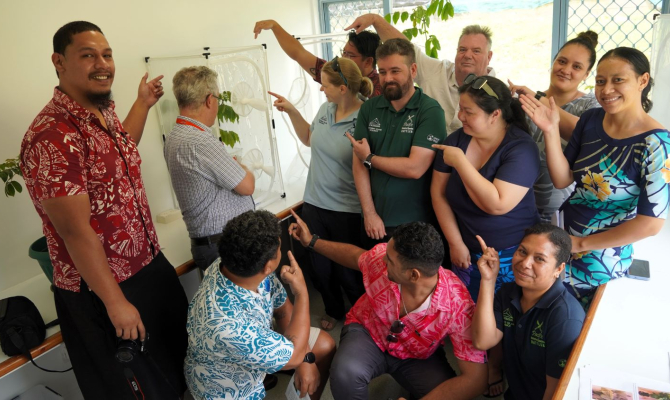
30 October 2025, Apia - Samoa has officially received its first batch of African tulip beetles (Paradibolia coerulea), marking a major milestone in the country’s efforts to combat the invasive African tulip tree (Spathodea campanulata) and the region’s efforts to use natural solutions for invasive weed control.
The African tulip tree while admired for its vibrant flowers, is a highly invasive species in many Pacific island countries. Its aggressive spread disrupts native ecosystems, contributing to biodiversity loss by outcompeting indigenous flora and altering habitats.
This issue is exacerbated by climate change, which can create favorable conditions for invasive species to thrive, further stressing vulnerable ecosystems. The combined impact of invasive species like the African tulip tree and climate change poses a significant threat to global biodiversity, highlighting the urgent need for integrated conservation and management strategies.
The African tulip tree rapidly outcompetes native vegetation by forming dense thickets that block sunlight and prevent regeneration, leading to a loss of plant diversity. Its seeds are easily dispersed by wind, allowing it to colonize vast areas quickly, while its ability to regrow from cut stems and root suckers makes it extremely difficult to control.
Beyond crowding out native flora, the tree disrupts ecosystem functions by altering soil chemistry and contributing to erosion through its shallow root systems. It also harms agriculture by invading croplands, reducing yields and destabilizing traditional farming practices.
This milestone was enabled by the SPREP-led Pacific Regional Invasive Species Management Support Service’s (PRISMSS) Natural Enemies - Natural Solutions (NENS) programme in partnership with the Samoa Ministry of Environment and Natural Resources (MNRE) and the Scientific Research Organisation of Samoa (SROS).
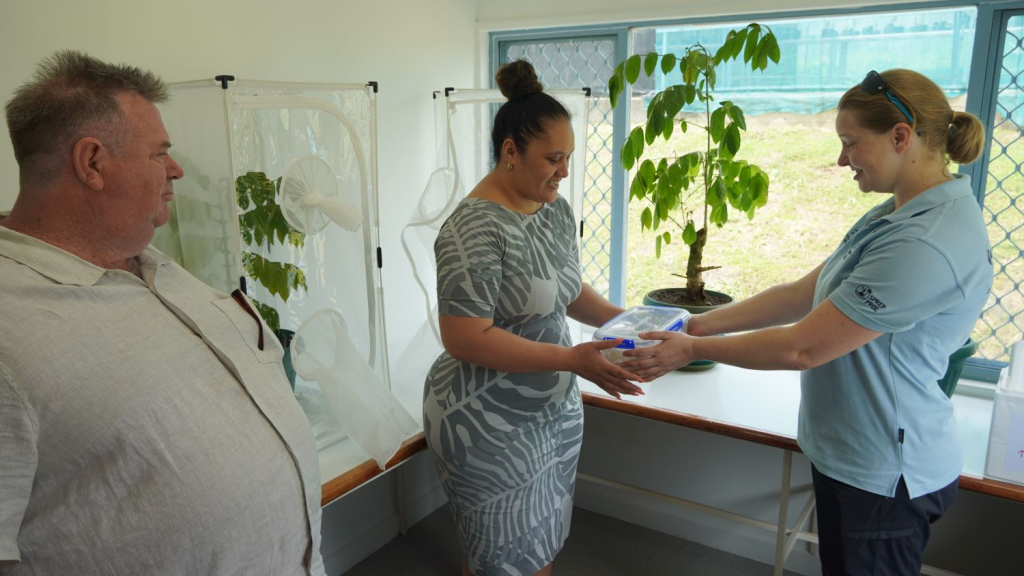
The PRISMSS NENS programme, led by technical partner, the New Zealand Bioeconomy Science Institute (BSI), delivered 150 African tulip beetles in early October. After clearance from the Ministry of Agriculture and Forestry, the beetles were transferred to the Scientific Research Organisation of Samoa (SROS). The programme activity is being implemented under the PRISMSS Restoring Island Resilience (RIR) project which is funded by the New Zealand Ministry of Foreign Affairs and Trade (NZMFAT) and the United Kingdom Foreign, Commonwealth & Development Office (UKFCDO).
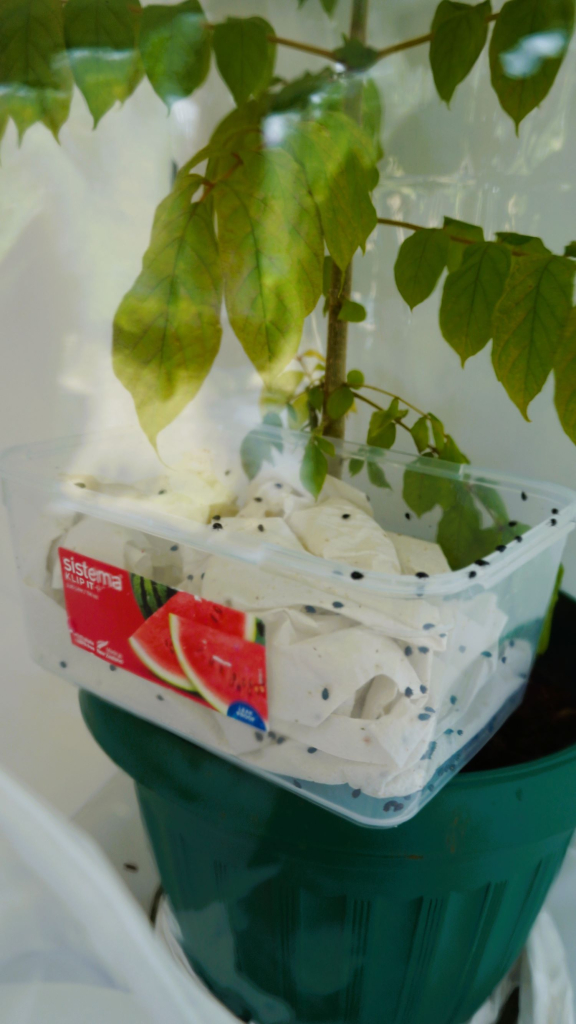
The beetles are being housed in a newly refurbished laboratory facility, supported by the PRISMSS NENS programme, designed for the mass rearing of the beetles. These refurbishments include a secure dark entry room with double-door entry system, a well-lit insect holding area with insect cages and ample workspace and a purpose-built shade house for nursery plants to support beetle rearing and research activities.
Ms. Annie Tuisuga from SROS commented during the handover ceremony that, “the arrival this week of Samoa’s first natural enemy for the African tulip tree marks an exciting step forward for biocontrol efforts, and with the newly upgraded rearing facility at SROS, we’re ready to support NENS activities, all made possible through the valued support of our donor and dedicated expert collaborators.”
"The PRISMSS NENS programme represents a compelling example of regional collaboration in action and by harnessing nature-based invasive species control methods, this initiative not only strengthens Samoa’s agricultural resilience and food security but also safeguards its unique biodiversity.”
Mr John Clemo, Senior Adviser Climate Change and Environment, New Zealand Ministry of Foreign Affairs & Trade (NZMFAT) shared that, "the PRISMSS NENS programme represents a compelling example of regional partnerships and collaboration in action.”
“By harnessing nature-based invasives control methods, this initiative not only strengthens Samoa’s agricultural resilience and food security but also safeguards its unique biodiversity.”
“We are proud to support a programme that empowers local communities, reduces reliance on chemical pesticides and contributes meaningfully to climate change mitigation particularly through sustainable, locally driven solutions.”
Mr Daniel Garlick, the Deputy British High Commissioner commented that, “invasive weeds are a major threat to ecosystems and livelihoods across the region and managing them through ecological approaches is a critical step toward building climate resilient communities.”
“The UK is proud to support such programmes which demonstrates the power of locally led innovation and regional cooperation and we stand in close partnership with Samoa in advancing sustainable, evidence-based solutions that deliver tangible benefits for both people and the environment, in alignment with the UK’s broader commitment to climate action and biodiversity protection in the Pacific."
The PRISMSS NENS programme, technical lead from BSI, Ms Lynley Hayes shared that, “the African tulip tree is one of Samoa’s most serious invasive weeds and the introduction of its natural enemy marks the beginning of a long-term biocontrol strategy.”
“These are leaf-mining beetles. The adult beetles eat holes in the African tulip leaves while their larvae mine through them.”
“The beetles have been extensively tested to ensure no other plants are at risk. This initiative not only strengthens Samoa’s capacity for invasive species management but also showcases Pacific leadership in ecological restoration.”
SPREP Invasive Species Adviser, Mr David Moverley commented that, “this is regional collaboration in action using science, partnerships, and nature to protect the Pacific from invasive weeds.”
“The NENS programme, represents a significant step toward sustainable weed management in Samoa and the wider Pacific where the African tulip tree beetles will play a substantial role in controlling the spread of the African tulip tree one of Samoa’s and the Pacific’s most widespread invasive species.”
The PRISMSS NENS programme continues to lead efforts across the Pacific in promoting nature-based solutions for invasive species management. By leveraging ecological approaches and regional collaboration, the programme plays a vital role in conserving biodiversity, enhancing ecosystem resilience, and supporting sustainable development.
Through ongoing partnerships and scientific innovation, PRISMSS remains committed to restoring island ecosystems and empowering Pacific communities to protect their natural heritage.
About PRISMSS: The Pacific Regional Invasive Species Management Support Service (PRISMSS) is a coordinating mechanism designed to facilitate the scaling up of operational management of invasive species in the Pacific. PRISMSS, which is led by the Secretariat of the Pacific Regional Environment Programme (SPREP) brings together experts to provide support within the Pacific region with a focus on protection of indigenous biodiversity and ecosystem function. As a service provider, PRISMSS provides a comprehensive suite of support services in a cohesive, effective, efficient, and accessible manner to Pacific Island countries and territories.
Restoring Island Resilience (RIR): The PRISMSS - Restoring Island Resilience (RIR) is a New Zealand-PRISMSS collaboration project that aims to improve Pacific Island Countries and territories livelihoods and resilience to climate change by reducing the impact of invasive species on natural and agricultural ecosystems through the six PRISMSS programmes.
PRISMSS Powered by: New Zealand Foreign Affairs & Trade, UK International Development, GEF, United Nations Environment Programme & SPREP.
PRISMSS Partners: New Zealand Bioeconomy Science Institute, Birdlife International, Earth Sciences New Zealand, New Zealand Department of Conservation, Island Conservation, the Pacific Community and SPREP.
PRISMSS Programmes: Natural Enemies Natural Solutions (NENS), Predator Free Pacific (PFP), Protect Our Islands (POI), Protect Our Marine Areas (POMA), Resilient Ecosystems Resilient Communities (RERC), War On Weeds (WOW).
For additional information please contact Mr Dominic Sadler, PRISMSS Manager on dominics@sprep.org or Mr Nitish Narayan, PRISMSS Communications & Liaison Officer on nitishn@sprep.org