

30 October 2025, Auckland, New Zealand - Invasive species remain a major threat to Pacific ecosystems, but regional efforts are gaining momentum through strengthened collaboration and strategic clarity. The Secretariat of the Pacific Regional Environment Programme (SPREP) led Pacific Regional Invasive Species Management Support Service (PRISMSS) convened its 11th Meeting in Auckland, New Zealand, from 22–24 October 2025 bringing together partners to strengthen coordination and programme delivery.
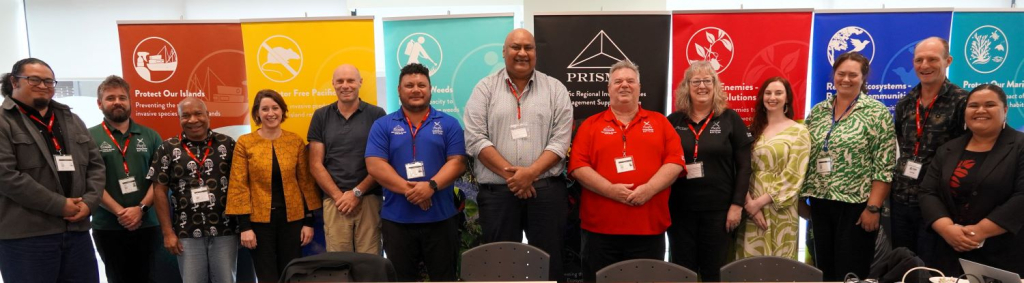
Hosted at the Earth Science New Zealand Office, the meeting brought together PRISMSS programme technical leads from the partner organisations to strengthen coordination, refine strategic frameworks and advance inclusive approaches to enhance sustainable invasive species management across the Pacific.
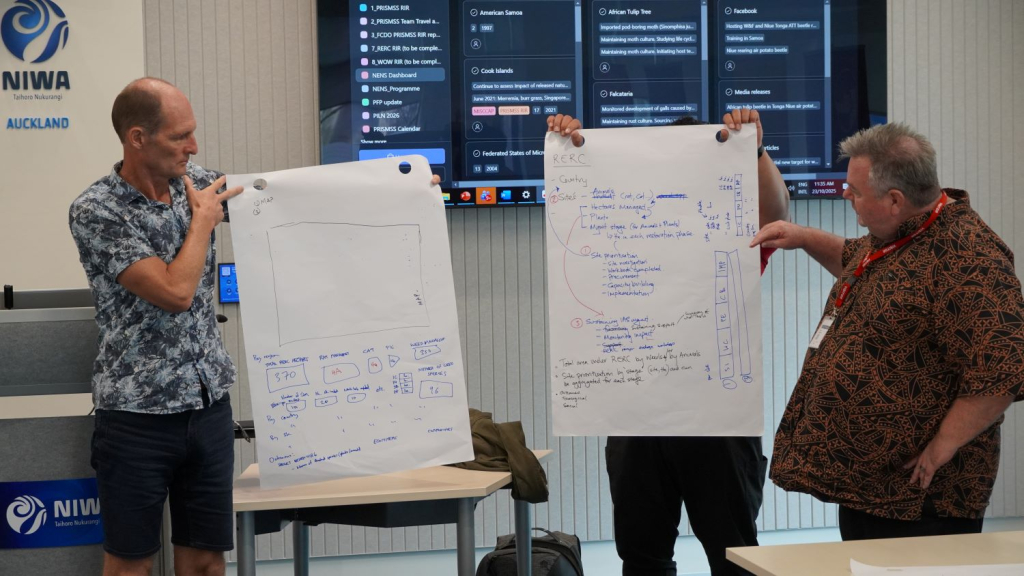
The three-day workshop marked a significant milestone in PRISMSS’s evolution, with partners discussing and finalising the PRISMSS Strategy, a key document aimed at enhancing governance, aligning partner efforts and guiding future programme delivery. The strategy will serve as an evolving reference for strategic objectives and outcomes, supported by a companion guide linking PRISMSS systems to regional frameworks.
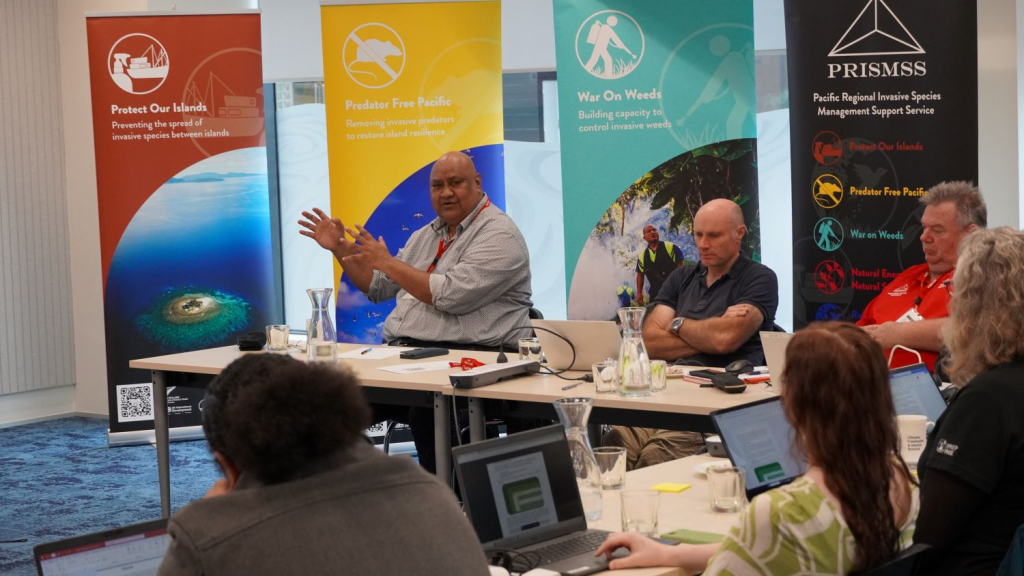
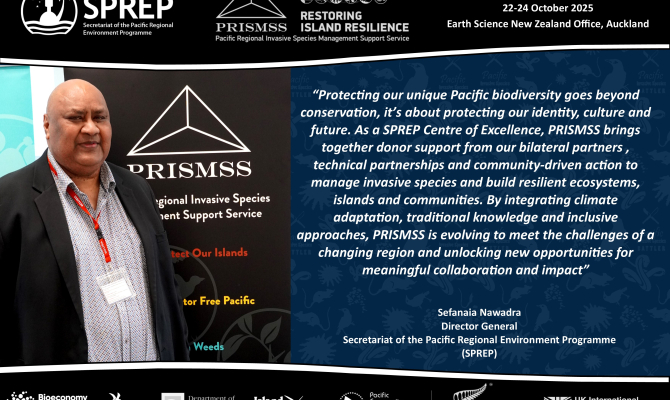
Mr Sefanaia Nawadra, Director General of SPREP encouraged the partners during the opening of the meeting and shared that, “protecting our unique Pacific biodiversity goes beyond conservation, it’s about protecting our identity, culture and future.”
“As a SPREP Centre of Excellence, PRISMSS brings together donor support from our bilateral partners, technical partnerships and community-driven action to manage invasive species and build resilient ecosystems, islands and communities.”
“By integrating climate adaptation, traditional knowledge and inclusive approaches, PRISMSS is evolving to meet the challenges of a changing region and unlocking new opportunities for meaningful collaboration and impact.”
One of the major achievements of the 11th PRISMSS Meeting was the refinement of the PRISMSS Strategy, a key document, which outlines governance structures, operational systems and funding mechanisms, is now ready to be presented for endorsement by partner organisations. It is expected to serve as a cornerstone for strategic alignment and collaborative delivery across the region.
Sustainability planning also featured prominently in the discussions. Technical leads stressed the importance of realistic costing for activity delivery to avoid overburdening in-country resources. They also highlighted the need to begin building partner and national capacity in anticipation of larger funding opportunities, such as those offered by the Green Climate Fund (GCF) and the Adaptation Fund (AF).
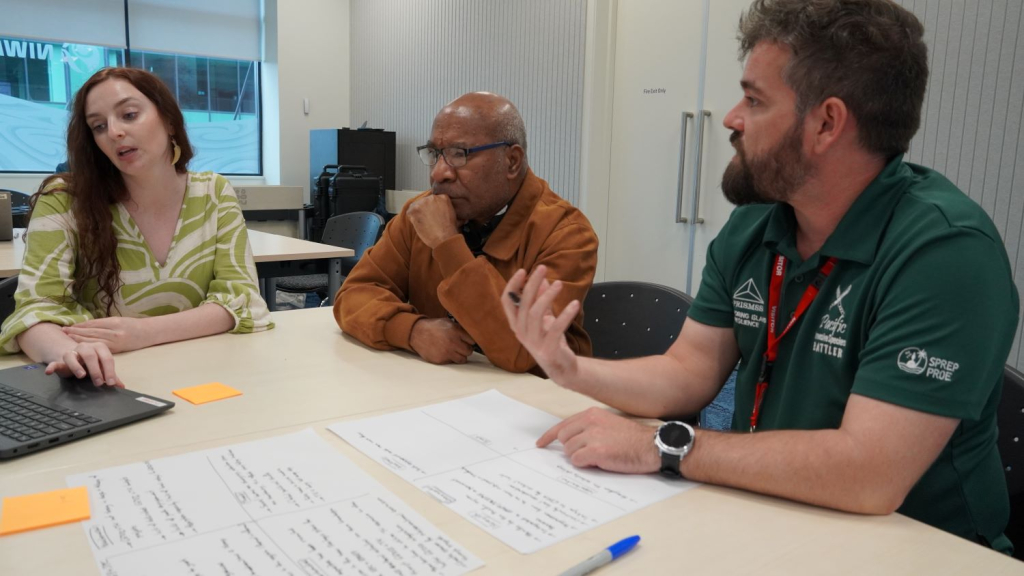
Mr Dominic Sadler, PRISMSS Manager remarked that, “PRISMSS continues to be a vital mechanism for delivering coordinated, country-driven invasive species management across the Pacific and this meeting has laid the groundwork for stronger collaboration and more inclusive, culturally grounded approaches.”
The meeting reviewed two guiding frameworks developed by PRISMSS in alignment with SPREP policies for Gender Equality, Disability, and Social Inclusion (GEDSI) and Traditional Knowledge (TK). These frameworks are designed to complement existing organisational policies and provide practical tools to support inclusive and culturally grounded project implementation. Their adoption is expected to strengthen PRISMSS’s commitment to equity and regional relevance.
Coordination improvements were another key outcome. Monthly coordination meetings under the New Zealand and United Kingdom funded PRISMSS Restoring Island Resilience project, will continue, with a renewed emphasis on concise updates and shared responsibilities. A proposal was also made to establish a shared programme coordinator based at SPREP to streamline operations and ensure consistency across programmes.
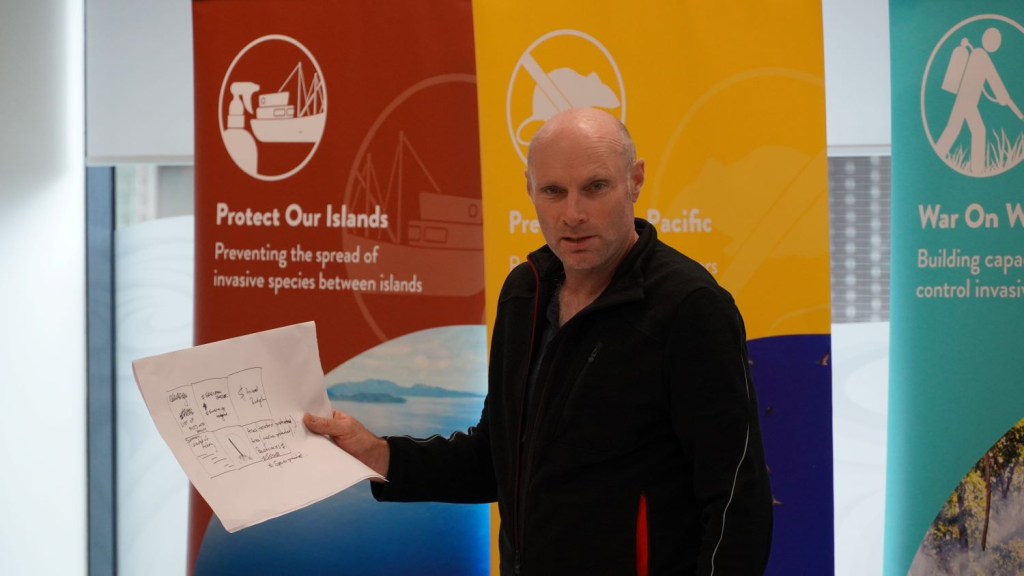
The meeting also enabled technical leads and partners to discuss ways to enhance the PRISMSS Navigator, a user-friendly online platform designed to streamline access to invasive species management support across the Pacific. Developed by PRISMSS and launched during the Fifth Pacific Invasives Learning Network (PILN) Meeting in 2023, the Navigator enhances coordination, transparency, and responsiveness for Pacific Island Countries and Territories (PICTs) seeking assistance with invasive species challenges.
By simplifying how countries engage with PRISMSS, the Navigator supports a more effective, inclusive, and regionally tailored response to one of the Pacific’s most pressing environmental threats. PRISMSS has received a total of 161 requests from countries through its Navigator platform for various programme activity implementation, of which 76 activities are currently in progress and 35 activities completed across the Pacific.
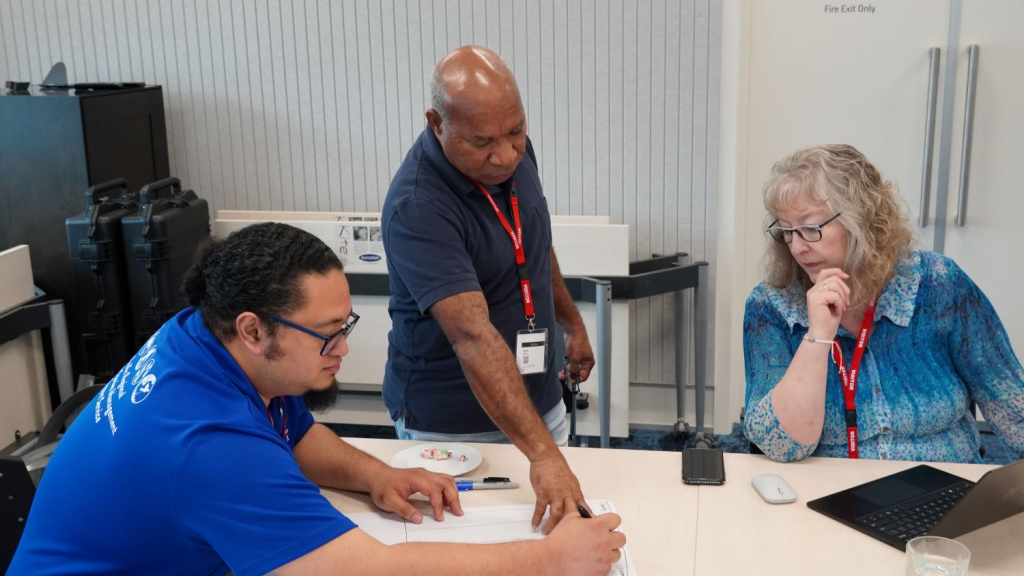
Another significant milestone was the establishment of the PRISMSS Technical Committee. This new body will enhance visibility across PRISMSS programmes and facilitate information sharing among technical leads and co-leads. The committee will meet quarterly to ensure alignment and leverage opportunities across projects and countries.
In addition to these outcomes, the meeting addressed several emerging opportunities and challenges to enhance programme delivery and implementation in the Pacific region. Coordination around upcoming events such as the Island Invasive Conference and the International Symposium on Biological Control of Weeds (ISBCW) was also discussed, with PRISMSS sponsoring regional attendance and presentations planned by various partners and Pacific participants.
PRISMSS continues to play a critical role in supporting Pacific Island Countries and Territories in managing invasive species through collaborative, inclusive, sustainable and regionally tailored approaches.
---------------------------------------------------------------------------------------------------------------------------------------------------
About PRISMSS: The Pacific Regional Invasive Species Management Support Service (PRISMSS) is a coordinating mechanism designed to facilitate the scaling up of operational management of invasive species in the Pacific. PRISMSS, which is led by the Secretariat of the Pacific Regional Environment Programme (SPREP) brings together experts to provide support within the Pacific region with a focus on protection of indigenous biodiversity and ecosystem function. As a service provider, PRISMSS provides a comprehensive suite of support services in a cohesive, effective, efficient, and accessible manner to Pacific Island countries and territories.
Restoring Island Resilience (RIR): The PRISMSS - Restoring Island Resilience (RIR) is a New Zealand-PRISMSS collaboration project that aims to improve Pacific Island Countries and territories livelihoods and resilience to climate change by reducing the impact of invasive species on natural and agricultural ecosystems through the six PRISMSS programmes.
PRISMSS Powered by: New Zealand Foreign Affairs & Trade, UK International Development, GEF, United Nations Environment Programme & SPREP.
PRISMSS Partners: New Zealand Bioeconomy Science Institute, Birdlife International, Earth Sciences New Zealand, New Zealand Department of Conservation, Island Conservation, the Pacific Community and SPREP.
PRISMSS Programmes: Natural Enemies Natural Solutions (NENS), Predator Free Pacific (PFP), Protect Our Islands (POI), Protect Our Marine Areas (POMA), Resilient Ecosystems Resilient Communities (RERC), War On Weeds (WOW).
For additional information please contact Mr Dominic Sadler, PRISMSS Manager on dominics@sprep.org or Mr Nitish Narayan, PRISMSS Communications & Liaison Officer on nitishn@sprep.org