

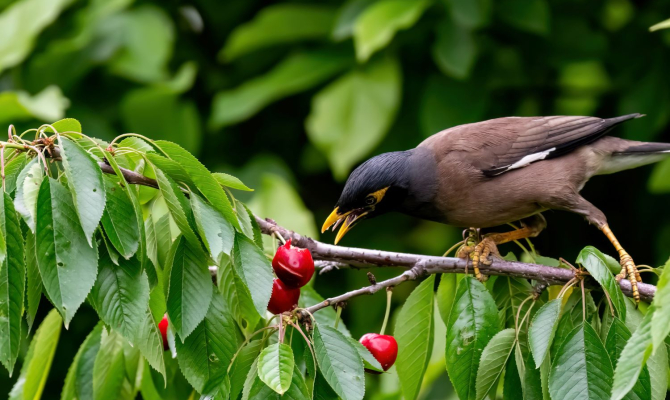
4 November 2025, Majuro, Republic of Marshal Islands - In a decisive move to protect native biodiversity and strengthen regional biosecurity, the Republic of the Marshall Islands (RMI) has successfully eradicated a breeding population of invasive common myna birds (Acridotheres tristis) from Majuro Atoll.
Led by the Ministry of Natural Resources and Commerce (MoNRC), Quarantine Division, in coordination with the Secretariat of the Pacific Regional Environment Programme (SPREP) Centre of Excellence the Pacific Regional Invasive Species Management Support Service (PRISMSS), with technical support from Island Conservation, and funding from the Global Environment Facility Regional Invasives Project (GEF6 RIP), the operation marks a significant achievement in Pacific invasive species management.
SPREP Project Manager for GEF 6 RIP, Ms Isabell Rasch-Mulitalo shared that, “the common myna bird, which recently established a foothold in RMI’s urban core, is listed among the world’s most invasive species.”
“In Majuro, it competes aggressively with native birds for nesting sites and food, disrupts local ecosystems, often roosting in large numbers near homes and are known to damage crops and property.”
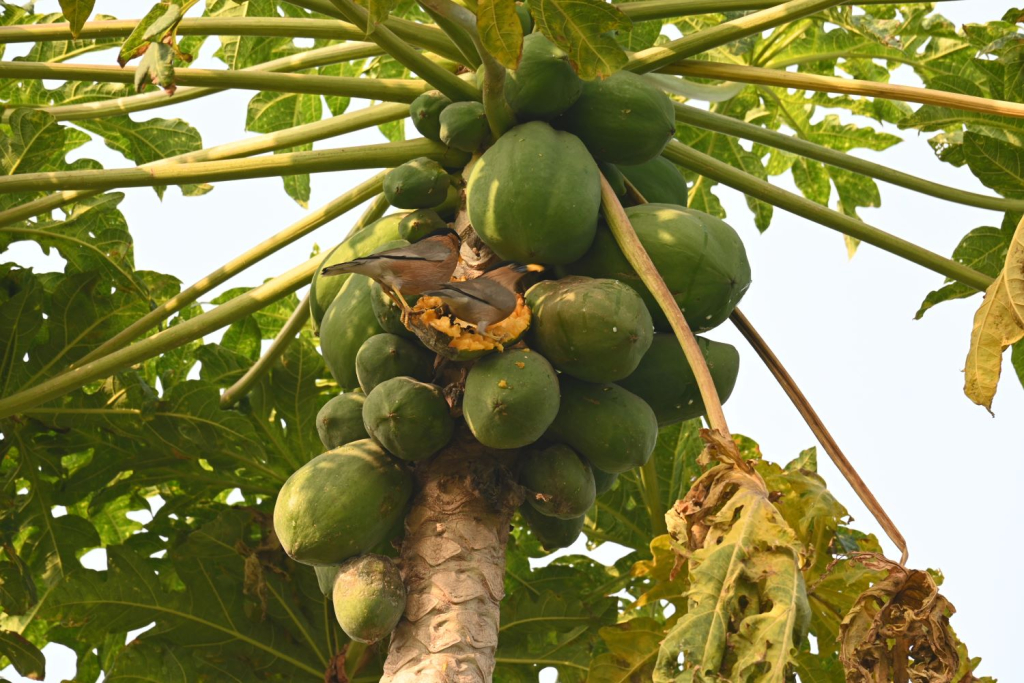
“This eradication brings real relief to both ecosystems and communities. Removing these invasive birds supports local agriculture, reduces noise and nuisance in urban areas, and helps restore ecological balance.”
“The timing of this operation was critical and by acting early, we prevented the severe impacts these birds would have caused including competing with native species for food and nesting sites, as well as damaging crops. This effort showcases the value of PRISMSS and how rapid action and strong partnerships can effectively protect island biodiversity.”
Pre-eradication surveys conducted earlier in July and August 2025 identified two active populations, one near the Atama Zedkaia Memorial Hospital in Delap and another around Marshall Islands High School in Rita. With an estimated 24–28 individuals, the birds were observed nesting in infrastructure and preparing to breed, raising alarms about potential population expansion.
Adding urgency to the operation was the unexpected discovery of a jungle myna bird (Acridotheres fuscus), a species never before recorded in RMI. Believed to be a lone individual, its presence underscored the need for swift and comprehensive action.
“Successfully removing invasive myna birds means one less problem to worry about in our ongoing efforts to manage invasive species in the Marshall Islands. Every step like this brings us closer to protecting our native biodiversity and securing healthier ecosystems for our communities”, commented Mr Byrelson Jacklick, RMI National Invasive Species Coordinator based with the Division of Quarantine, MoNRC.
Over two weeks in September, the team conducted a focused field operation to manage invasive bird populations across key sites in Majuro. Using a combination of targeted techniques and careful observation, the team worked systematically around communal roosting areas to reduce numbers and limit further spread.
Despite challenges posed by non-target species and complexities of working in busy public areas, the team’s adaptive approach achieved strong results, removing more than 30 invasive birds in total.
Activities were carefully timed to align with the birds’ breeding season and were carried out under strict safety and animal-welfare protocols to ensure safety for communities and the environment and that the target birds died humanely and without distress.
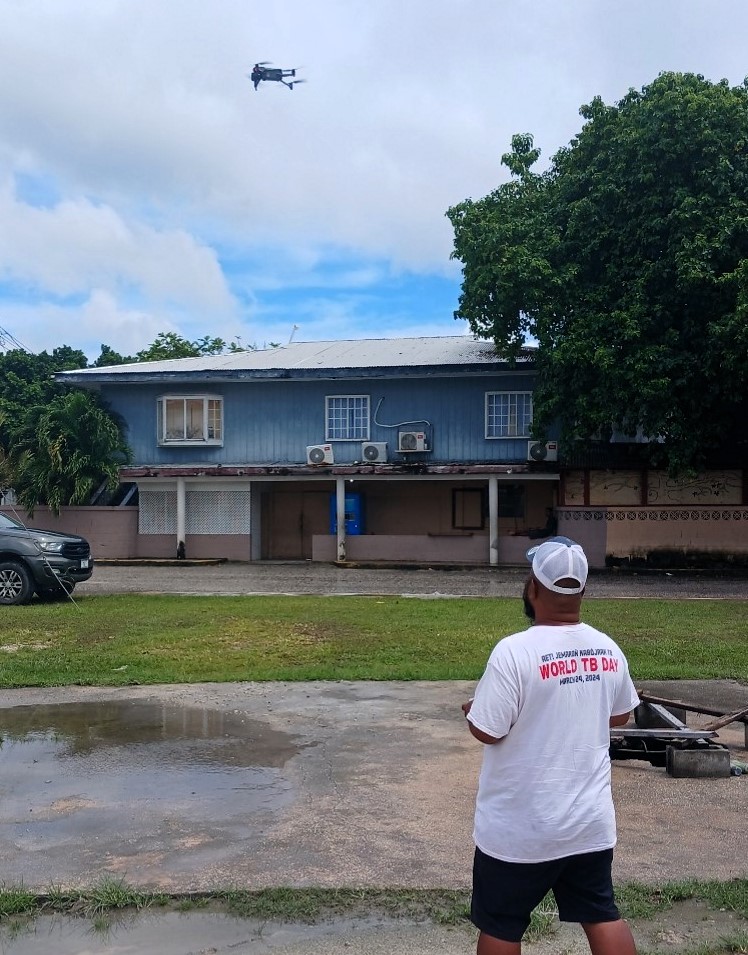
To confirm success, MoNRC and Island Conservation conducted extensive follow-up surveys across Majuro’s villages and nearby islets as part of the PRISMSS Protect Our Islands programme which includes the early detection and rapid response to new invasive species incursions. Local staff from MNRC were trained on using a DJI Mavic drone, which was later deployed to inspect suspected nest sites, revealing 28 eggs evidence of an imminent population boom that was narrowly averted. No further sightings were recorded and by October, Majuro was declared free of both Myna species.
"Our collective effort has ensured that the myna birds were removed before they could take hold. A reminder that good biosecurity and early action is the strongest defence against invasive threats," shared Mr Jesse Friedlander, Project Manager at Island Conservation.
"The success in Majuro highlights how strong partnerships between government, technical experts, and communities are essential for safeguarding island biodiversity and strengthening regional resilience."
Majuro now joins a small but growing group of Pacific locations that have successfully removed invasive myna bird populations. The operation sets a precedent for future programme activities efforts and highlights the power of coordinated locally adapted strategies.
SPREP Invasive Species Adviser Mr David Moverley reflected that, “Majuro’s success demonstrates the effectiveness of targeted, locally adapted eradication and early response strategies and by combining precision methods with community coordination, we’ve not only removed a threat but strengthened the region’s biosecurity framework.”
“The discovery of a jungle myna bird in RMI was a wake-up call but with swift, science-based action a new invasion was prevented, and the use of drone technology has shown how innovation is reshaping biodiversity conservation in the Pacific.”
As invasive species continue to threaten Pacific resilience, Majuro’s success story offers renewed hope for other island nations. A Pacific Invasive Species Battler series guide, “Manage Myna Birds in the Pacific” has also been produced to provide countries with added technical resource, on how to decide what to do if Myna birds become an issue in countries.
The GEF 6 Regional Invasives Project (RIP) is funded by the Global Environment Facility, implemented by the United Nations Environment Programme, and executed by the Secretariat of the Pacific Regional Environment Programme. The Project works primarily in the Marshall Islands, Niue, Tonga, and Tuvalu and has a regional component. Implementation of the GEF 6 RIP is supported by the Pacific Regional Invasive Species Management Support Services (PRISMSS).
For more information on the GEF 6 Regional Invasives Species Project (GEF 6 RIP), please contact the Project Manager Ms Isabell Rasch-Mulitalo, at isabellr@sprep.org
About PRISMSS: The Pacific Regional Invasive Species Management Support Service (PRISMSS) is a coordinating mechanism designed to facilitate the scaling up of operational management of invasive species in the Pacific. PRISMSS, which is led by the Secretariat of the Pacific Regional Environment Programme (SPREP) brings together experts to provide support within the Pacific region with a focus on protection of indigenous biodiversity and ecosystem function. As a service provider, PRISMSS provides a comprehensive suite of support services in a cohesive, effective, efficient, and accessible manner to Pacific Island countries and territories.
Restoring Island Resilience (RIR): The PRISMSS - Restoring Island Resilience (RIR) is a New Zealand-PRISMSS collaboration project that aims to improve Pacific Island Countries and territories livelihoods and resilience to climate change by reducing the impact of invasive species on natural and agricultural ecosystems through the six PRISMSS programmes.
PRISMSS Powered by: New Zealand Foreign Affairs & Trade, UK International Development, GEF, United Nations Environment Programme & SPREP.
PRISMSS Partners: Bioeconomy Science Institute, Birdlife International, Earth Sciences New Zealand, New Zealand Department of Conservation, Island Conservation, the Pacific Community and SPREP.
PRISMSS Programmes: Natural Enemies Natural Solutions (NENS), Predator Free Pacific (PFP), Protect Our Islands (POI), Protect Our Marine Areas (POMA), Resilient Ecosystems Resilient Communities (RERC), War On Weeds (WOW).
For additional information please contact Mr Dominic Sadler, PRISMSS Manager on dominics@sprep.org or Mr Nitish Narayan, PRISMSS Communications & Liaison Officer on nitishn@sprep.org