

13 November 2025, Belem - The role of science, through the Intergovernmental Panel of Climate Change (IPCC) reports, to inform decisions made at the Conference of the Parties to the UN Framework Convention on Climate Change (UNFCCC) must be the foundation to inform ambitious climate action at COP30.
That’s one of the key asks from Pacific countries at COP30, currently underway in Belem Brazil.
The IPCC, the United Nations body for assessing the science related to climate change, exists to provide policymakers with regular scientific assessments on climate change, its implications and potential future risks, as well as to put forward adaptation and mitigation options.
While its work touches upon all thematic areas under the microscope in the different negotiation rooms at the ongoing COP30 in Belem, no other priority area where this is more influential and relevant than the Research and Scientific Observation (RSO) track, one of the Pacific’s key thematic areas.
What is RSO?
The Convention calls on Parties to promote and cooperate in research, systematic observation and the development of data archives, including through exchange of information; supporting and developing programmes, networks and organisations; and taking into account the needs and concerns, and building the capacity, of developing countries. In addition, the Paris Agreement preamble recognises the need for an effective and progressive response to the urgent threat of climate change on the basis of the best available scientific knowledge.
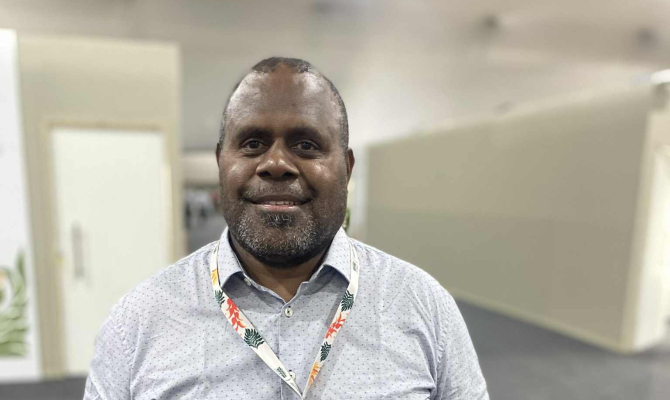
As we approach the end of the first week of COP30, the Pacific’s lead on RSO and the Director of Vanuatu Meteorology & Geohazards Department, Mr Levu Antfalo, gives us an update on RSO.
QUESTION: Thanks for making the time to have a chat. What are the key messages and key asks from the Pacific in RSO at COP30?
ANSWER: Regionally, we have our positions and I know each country has their own. Collectively we want to acknowledge the work of the IPCC reports to inform us in our negotiations. So far in the negotiations there has been a lot of push back in terms of accepting the IPCC reports, I know some developed countries have their reservations but for us, I know it’s a big Ocean and in terms of science we need to do more.
For the Pacific, we rely a lot on the IPCC reports to inform us on decisions around climate change. It is the Science from the IPCC we have used for the ICJ's opinion reinforces that states have a legal duty to adopt and maintain ambitious climate measures. So here at COP30, we’re trying to work on putting the proper language so we can move forward on the issues we want to advance at this COP.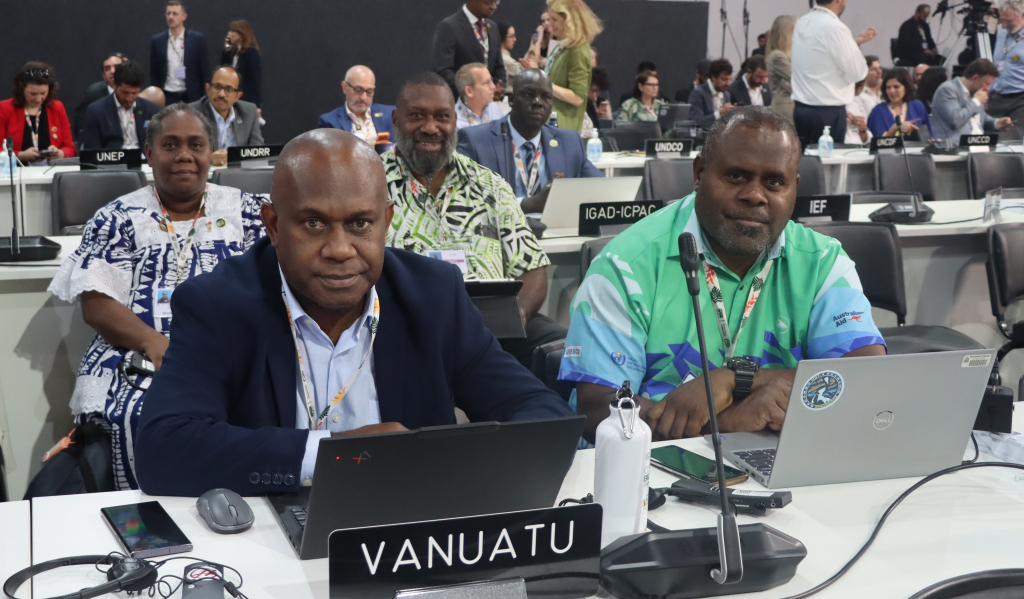
QUESTION: What does RSO work mean for the Pacific?
ANSWER: For the Pacific, the Ocean is vital. Keep in mind that it is a very big Ocean, in terms of science modeling, we need more observations to validate the science we have. I think during the last two COPs, there has been a decline in trying to address observations.
So we need to address this, one of the climate patterns in the Pacific which drives the whole global climate is ENSO (El Niño and the Southern Oscillation). In order to keep this going, we need to maintain that, increase in observations so that they can better inform the models we are using to help us address climate change.
QUESTION: How are things going at COP30? Progress or lack of progress?
ANSWER: We are trying to put the language of the ICJ inside the text here and incorporate that into COP. The challenge is trying to massage it in a way that doesn’t offend other states that are a little bit reserved about this. We are cautious of that and we are working with SPREP and our negotiators to find appropriate language to help us get a win-win situation. It’s not easy but we always know coming into this space we will always be met with challenges. But we are working hard, engaging as much as we can so we can push our issues forward.
QUESTION: How do you see the next few days playing out? And what will it take to get a good outcome for the Pacific?
ANSWER: I am hopeful, I know some of the bigger countries will push back but we will still ensure our concerns and our key asks for COP30 are expressed and that our voice is heard. We will do our best to engage, present the views of our communities back home and work hard to ensure a positive outcome for our people and the environment.
The 30th Conference of the Parties to the UN Framework Convention on Climate Change (UNFCCC) is taking place from 10-21 November 2025 in Belem, Brazil.
It is being attended by Pacific leaders and their delegations, who are advocating for the survival of Pacific communities who continue to be at the forefront of climate change impacts.
Support for our Pacific Islands at COP30 from members of the Council of Regional Organisations of the Pacific (CROP) is through the One CROP mechanism led by the Secretariat of the Pacific Regional Environment Programme.
Members of one CROP include: The Secretariat of the Pacific Regional Environment Programme (SPREP) – Lead, Pacific Islands Development Program, Pacific Islands Forum Fisheries Agency, Pacific Island Forum Secretariat, Pacific Community.
A key part of amplifying the One Pacific Voice at COP30 is the Moana Blue Pacific Pavilion and the Pacific Delegation Office. The Moana Blue Pacific Pavilion at COP30 is a Pacific partnership with the Governments of Australia and New Zealand managed by the Secretariat of the Pacific Regional Environment Programme (SPREP).
The Pacific Delegation Office at COP30 is a Pacific partnership with the New Zealand Government managed by the Secretariat of the Pacific Regional Environment Programme (SPREP).
To learn more about the Pacific at COP30 please visit: https://www.sprep.org/cop30