

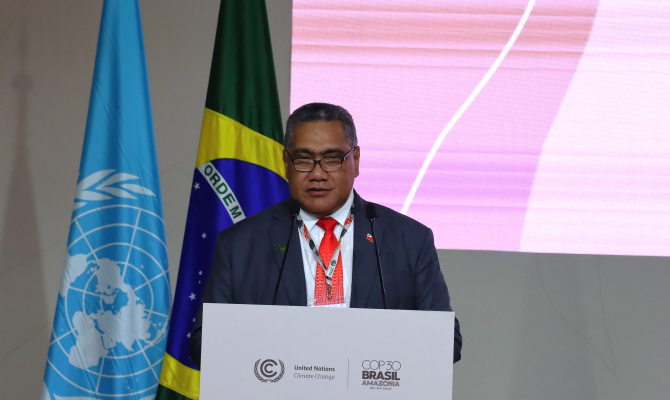
19 November 2025, Belem - The escalating climate change crisis calls for innovative, urgent and ambitious solutions and the Tonga Climate Change Trust Fund, the Pacific region's first and only existing national fund with a specific focus on climate change, is one of them.
As negotiations heat up in the final days of COP30 in Belem, the Kingdom of Tonga has spotlighted the initiative as one of the actions it has taken to protect lives and ensure a resilient future for its people.
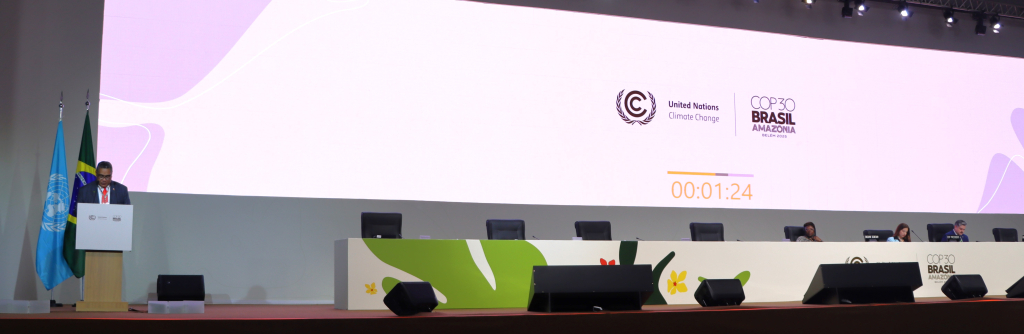
In delivering Tonga’s statement to a room of world leaders and delegates during the High Level Segment of COP30 on Tuesday, Mr. Paula Pouvalu Ma’u, Tonga’s Chief Secretary and Secretary to Cabinet said the Trust Fund aims to accelerate climate action and achieve a resilient Tonga by 2035.
“We invite donors and partners to contribute generously to accelerate implementation of climate actions,” said Mr Ma’u.
The Tonga Climate Change Trust Fund provides supplementary financial support to both pipeline and current adaptation and mitigation efforts through scaling up of community based solar electrification projects and implementing coastal protection measures. The Fund empowers the government and communities to take ownership of climate related activities implemented at both levels.
Tonga’s National Adaptation Plan also continues to implement adaptation actions aimed at building a resilient nation by 2035, another initiative the Kingdom highlighted.
At the regional level, Tonga highlighted the value of the Pacific Resilience Facility (PRF) driving Pacific-led and Pacific-driven solutions to climate change, and invited the global community to invest in it.
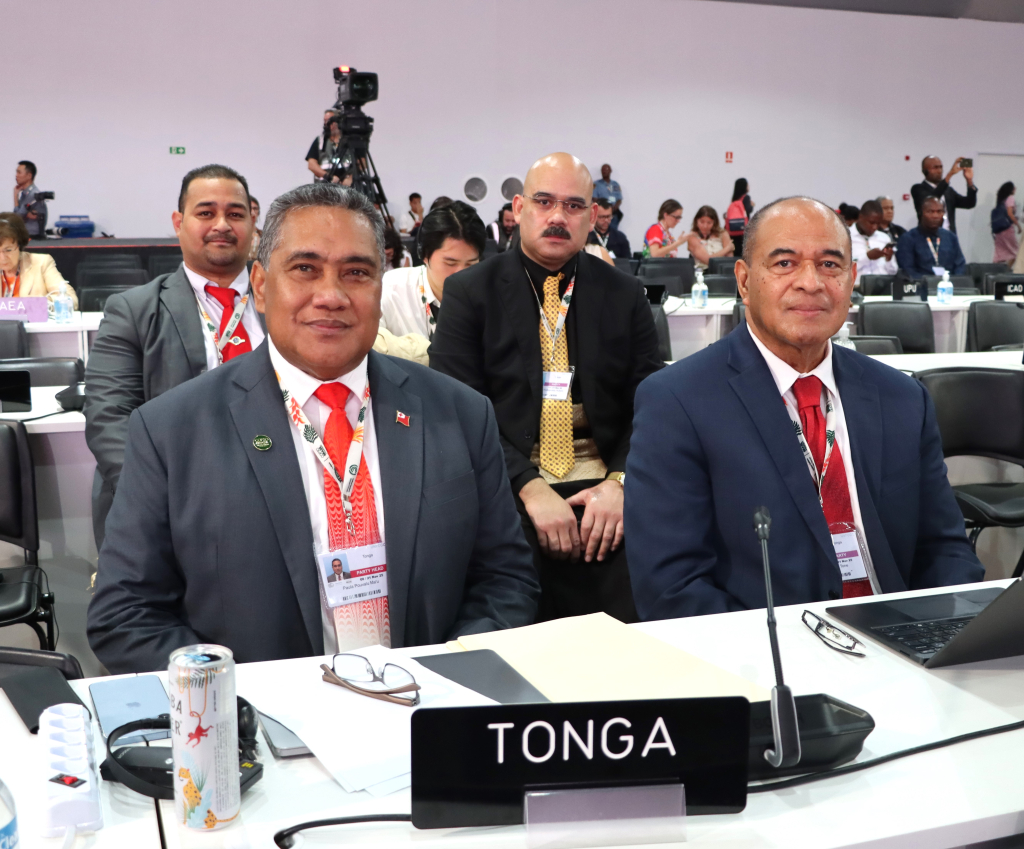
According to Mr Ma’u, these home grown and nationally-driven solutions are critical because climate change is, and will remain, the most existential threat to Tonga. He said the lived reality of the climate crisis is chilling, telling a captive COP30 audience that Tonga has seen increasing cyclone intensity, with the nation having survived three Category 5 storms in 2014, 2018 and 2020.
But that’s not all.
Sea levels are rising at 7.3mm per year, surpassing the global average, causing coastal erosion, flooding, and loss of infrastructure and habitats.
Saltwater intrusion is another threat, harming groundwater, increasing soil salinity, and reducing agricultural productivity. And then there is rising ocean temperatures that have caused widespread coral bleaching and a decline in marine biodiversity.
The 2022 Hunga-Tonga Hunga-Ha’apai eruption and tsunami caused damage equivalent to 36% of the nation’s GDP. These successive events highlight Tonga’s high vulnerability.
“For more than three decades, Tonga has sounded the alarm to the global community—an urgency reinforced by recent IPCC findings and national climate assessments,” added Mr Ma’u.
“The scientific consensus is clear: human activities have driven a significant rise in greenhouse gas concentrations, with global surface temperatures increasing 1.1°C above pre-industrial levels between 2011 and 2020. The consequences of continued emissions are severe and alarming.”
As the global community marks the 10th anniversary of the Paris Agreement, Tonga calls on all Parties—guided by common but differentiated responsibilities and respective capabilities—to fully uphold their obligations to the 1.5°C target.
“We must accelerate the phase-down of unabated coal use and phase out inefficient fossil fuel subsidies. Achieving net-zero emissions by 2050 is critical,” Mr Ma’u urged.
“Tonga reiterates the critical importance of timely and adequate climate finance to implement mitigation and adaptation measures. Securing such finance is a top priority; without it, strategic actions cannot be realized.
“We continue to call on developed countries to honor their longstanding commitments to provide predictable, scaled-up financial support to Tonga. The USD 100 billion/year goal, transitioning to USD 1.3 trillion by 2035, tests the credibility of developed countries in delivering on their promises.”
The Kingdom of Tonga welcomed the launch and first call for funding of the Barbados Implementation Modality under the Fund for Responding to Loss and Damage and reiterated its support for Australia’s bid to host COP31 as the Pacific COP.
“We hope that COP30 fosters genuine partnerships, collaboration, and ensures all voices are heard in achieving the Paris goals. The decisions and choices we made today will shape the future of our country, our generation, and those to come.”
The 30th Conference of the Parties to the UN Framework Convention on Climate Change (UNFCCC) is taking place from 10-21 November 2025 in Belem, Brazil.
It is being attended by Pacific leaders and their delegations, who are advocating for the survival of Pacific communities who continue to be at the forefront of climate change impacts.
Support for our Pacific Islands at COP30 from members of the Council of Regional Organisations of the Pacific (CROP) is through the One CROP mechanism led by the Secretariat of the Pacific Regional Environment Programme.
Members of one CROP include: The Secretariat of the Pacific Regional Environment Programme (SPREP) – Lead, Pacific Islands Development Program, Pacific Islands Forum Fisheries Agency, Pacific Island Forum Secretariat, Pacific Community.
A key part of amplifying the One Pacific Voice at COP30 is the Moana Blue Pacific Pavilion and the Pacific Delegation Office. The Moana Blue Pacific Pavilion at COP30 is a Pacific partnership with the Governments of Australia and New Zealand managed by the Secretariat of the Pacific Regional Environment Programme (SPREP).
The Pacific Delegation Office at COP30 is a Pacific partnership with the New Zealand Government managed by the Secretariat of the Pacific Regional Environment Programme (SPREP).
To learn more about the Pacific at COP30 please visit: https://www.sprep.org/cop30