

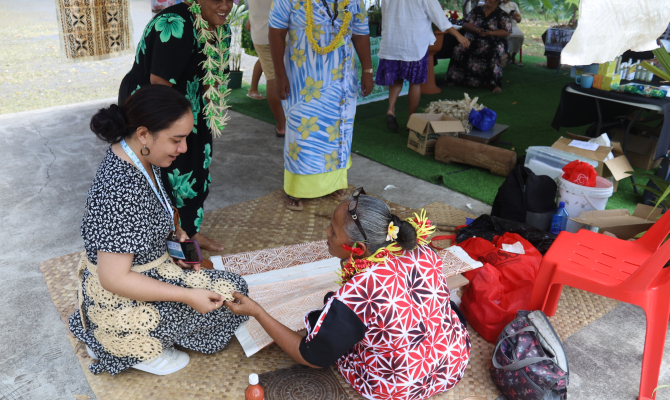
18 December 2025, Apia - More than 35 public and private sector officials from 14 Pacific Island Countries and Territories have been empowered to advance climate resilience through the “Strengthening Public and Private Collaboration to address Climate change impacts in the Pacific” training course.
Delivered in September 2025, the course was facilitated by the Project for Innovative Solutions for the Pacific Climate Change Resilience (ISPCCR), jointly delivered by the Pacific Climate Change (PCCC) hosted at SPREP, the Government of Samoa and the Japan International Cooperation Agency (JICA).
The training attended by public and private sector representatives enhanced their skills to formulate projects, build their capacity on project management, implementation, and operation of public-private collaboration initiatives to tackle climate change.
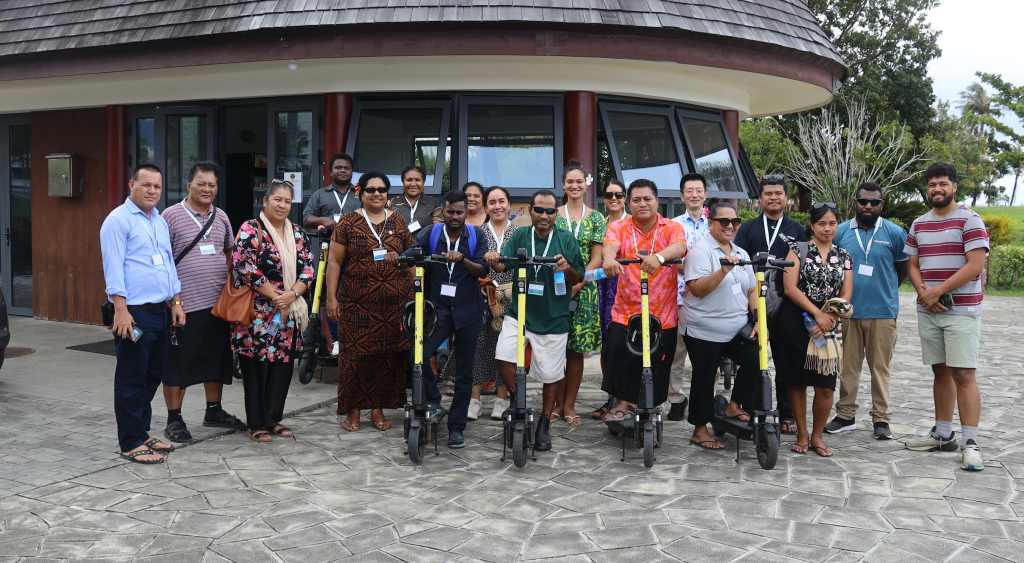
Deputy Chief Executive Officer of Samoa’s Ministry of Finance, Ms Avini Olivetti Tua-Bentin expressed her appreciation for the continuous investment to strengthen private and public collaboration to achieve the Pacific’s climate goals.
“Let us remember that while we may be small in size, our collective voice and action carry great weight,” she said. “Together, we can chart a path that demonstrates how public and private collaboration can transform challenges into opportunities for sustainable development and climate resilience.”
Mr Joshua Wore, of the Ministry of National Planning and Development Coordination, Solomon Islands, echoed similar sentiment, noting that the course was a great opportunity to build public and private sector collaboration (PPC).
Mr Arobati Teewe Brechtefeld, Kiribati Chamber of Commerce and Industry, said: “I learnt some very useful skills during this training and I am very excited to go back and apply them to real life projects.”
The Pacific faces an adaptation finance gap estimated at USD 187–359 billion annually, highlighting the urgent need for increased investment, particularly from the private sector. But it’s not just the funding gap that is the challenge. Implementing effective climate change projects are hamstrung by technical, human resource, and financial constraints, especially in vulnerable sectors like agriculture, fisheries, tourism, water, and urban resilience.
“This training programme is encouraging as we know that addressing climate change is not the responsibility of governments alone,” said SPREP Director General, Mr Sefanaia Nawadra. “It also involves Governments producing conducive policy frameworks to strengthen private sector capacity and investment in fit for purpose innovative climate resilient solutions.
“This programme is one of the pioneering capacity building efforts to foster collaboration between the public and private sectors lead by the PCCC hosted at SPREP in partnership with the Government of Samoa and JICA.
“In the Pacific we do not have a classic or well-defined definition for the private sector, as we do not have large economies in many cases. This means we must make our own definitions and arrangements on how we include the private sector in climate action.”
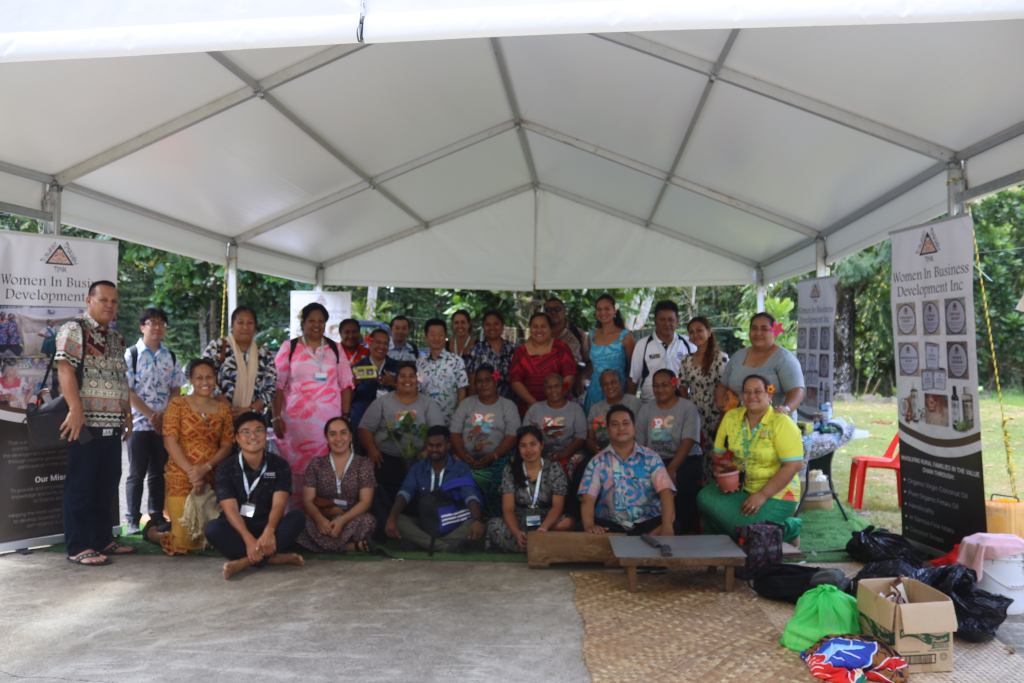
JICA Resident Representative in Samoa, Ms. Yumiko Asakuma, said enabling meaningful collaboration, innovation, and shared responsibility between the public and private sector ensures the mobilisation of resources, technology, and knowledge needed to drive sustainable and resilient solutions across the Pacific region.
“JICA is carrying out cooperation programmes across various fields, but climate change represents the most crucial area of cooperation with the Pacific region,” said Ms Asakuma.
“Following the completion of the PCCC building, JICA has been carrying out technical cooperation to strengthen the Centre’s functions. In this second phase, the PCCC’s role as an innovation hub is being reinforced. I am proud to be able to work together with PCCC, which leads climate change initiatives of SPREP, where each Pacific Island nation you are from participates as a Member country.”
The course was delivered through a blended training format, with online modules followed by in-person sessions as part of the Project for Innovative Solutions for the Pacific Climate Change Resilience (ISPCCR).
The ISPCCR aims to support and strengthen the innovation function of the PCCC to promote innovative climate change solutions for the Pacific region and contribute to the expected outcomes of the PCCC strategy and business plan.
For more information, please contact PCCC, pccc@sprep.org