


19 March 2026 - Kouaoua, New Caledonia - Like many places across New Caledonia, the Kouaoua Valley is facing a serious ecological challenge, the overpopulation of invasive deer that has caused significant damage to native vegetation, degrading customary lands, and vital water resources. And a community-led initiative is showing how local leadership and traditional authority can drive environmental action.
In 2025, more than 1,000 invasive deer were culled across 3,000 hectares by the forest edge, including the La Vallée drinking water catchment area. The initiative is part of the Pacific Ecosystem-based Adaptation to Climate Change (PEBACC+) project, implemented by the Secretariat of the Pacific Regional Environment Programme (SPREP) and funded by the Kiwa Initiative and the French Facility for Global Environment, in collaboration with local authorities, including co-funding from Agence Rurale for the invasive deer control component.
Recognizing that any lasting solution required local ownership, Province Nord, the Kouaoua municipality, and customary authorities partnered with the PEBACC+ project to secure broad community support before operations began.
“A key early challenge was securing broad community support and obtaining customary validation for deer and pig control activities. This was essential for ensuring long-term sustainability,” said François Tron, PEBACC+ Project Coordinator, SPREP.
Through consultations held in early 2025, all three customary authorities in the Kouaoua Valley endorsed the initiative. A 4,000-hectare control zone was identified, mapped, and formally validated and signed by senior community leaders. This inclusive process laid a strong cultural and social foundation for the programme.
“Invasive species management requires skilled and trusted local actors. Building from PROTEGE project, we identified, selected, and began training 12 local hunters from across the three tribes. These individuals were chosen for their hunting experience and their commitment to sustainable practices and community values,” said Mr. Tron.
Training covered weapon handling, optics, GPS navigation, radio communication, survival skills, emergency preparedness, and the introduction of thermal imaging and digital data collection. The aim was to improve efficiency and professionalise community-based wildlife management.
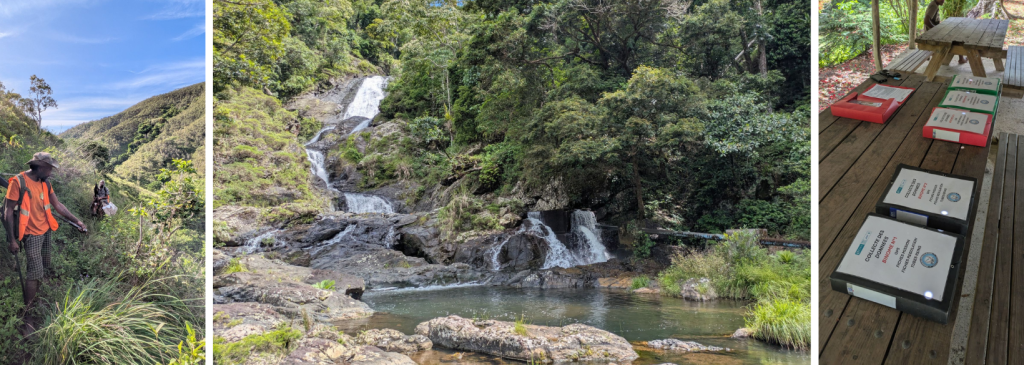
Community members expressed appreciation for the technical skills being passed on to the younger generation of hunters, and for the project’s alignment with customary values and environmental responsibilities.
“The main motivation is preserving our resources,” several local regulators explained during field operations. Years of unchecked invasive deer proliferation have left visible scars: hillsides stripped of vegetation, soil washed into rivers, and sediment and algae accumulating in waterways. Young shoots are devoured before forests can regenerate, accelerating erosion and threatening drinking water quality.
Seventeen regulation missions were carried out between April and December 2025, with every hunter spending around 80 days in the field. This resulted in more than 1,000 deer being culled and announced publicly at a community gathering, reinforcing transparency and collective accountability.
The involvement of elders and customary officials throughout the process ensured that the project respected traditional authority and strengthened community ownership.
“With PEBACC+ culling campaign now over, we are looking at data to discuss its effectiveness; this will contribute to up-scaling prospects,” said Mr. Tron.
PEBACC+ is a regional project implemented by SPREP and funded by the Kiwa Initiative through its donors the European Union, Agence Française de Développement (AFD), Global Affairs Canada, Australian Government Department of Foreign Affairs and Trade (DFAT) and New Zealand Ministry of Foreign Affairs and Trade (MFAT), with co-financing from French Facility for Global Environment (FFEM). Over the next four years, the project aims to develop, sustain, and institutionalize EbA approaches in Fiji, New Caledonia, Wallis and Futuna, Solomon Islands and Vanuatu. These efforts will strengthen the resilience of ecosystems, local economies, and communities against the impacts of climate change.
For more information, please contact: Setaita Tavanabola, PEBACC+ Communications Officer, SPREP; email: setaitat@sprep.org