

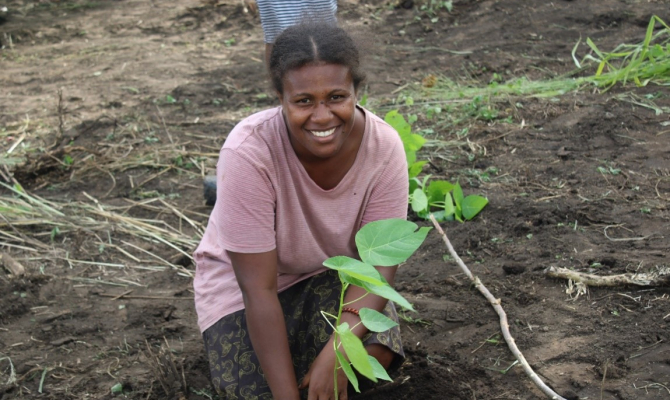
Lenakel, Vanuatu - Over five weeks, 147 people from five communities came together to learn how trees and crops can be grown side by side to make better use of land, improve harvests, and protect the natural resources their families depend on.
The Agroforestry Training programme under the Pacific Ecosystem-based Adaptation to Climate Change (PEBACC+) project, delivered across Lounelapen, Letekren, Leniai, Lounapkiko and Jerusalem, brought together farmers, youth, teachers, community members, and government agriculture and forestry officers.
For many families, land is becoming increasingly important as communities seek ways to grow more food, earn income, and adapt to changing environmental conditions. Agroforestry offers a practical solution. By combining trees with crops, farmers can improve soil health, reduce erosion, increase productivity, and make better use of small plots of land.
For local farmer Tom Kaltoi, the training offered a new way of looking at familiar challenges. He said, “This training is an eye-opener for me as it is very important to know how to improve farming systems to maximise benefits from a small piece of land, so I urge all who have attended to put into practice what they’ve learned.”
Although the approach may sound modern, trainees were deeply rooted in local traditions. “Agroforestry is not new,” said Vanuatu Forestry Association Trainer, Phyllis Kamasteia. “We’re only emphasizing what has been traditionally practiced over the years by our ancestors. The difference now is that we’re combining science with traditional knowledge and being more systematic so communities can gain greater benefits from their land.”
The training, held between April and May 2026, recognises that what happens on land directly affects what happens in the sea. While hillsides lose vegetation, soil is washed into rivers and coastal waters during heavy rain. Over time, this sediment can damage coral reefs and affect fisheries that support local livelihoods. In other words, planting trees uphill can help protect fish habitats downstream.
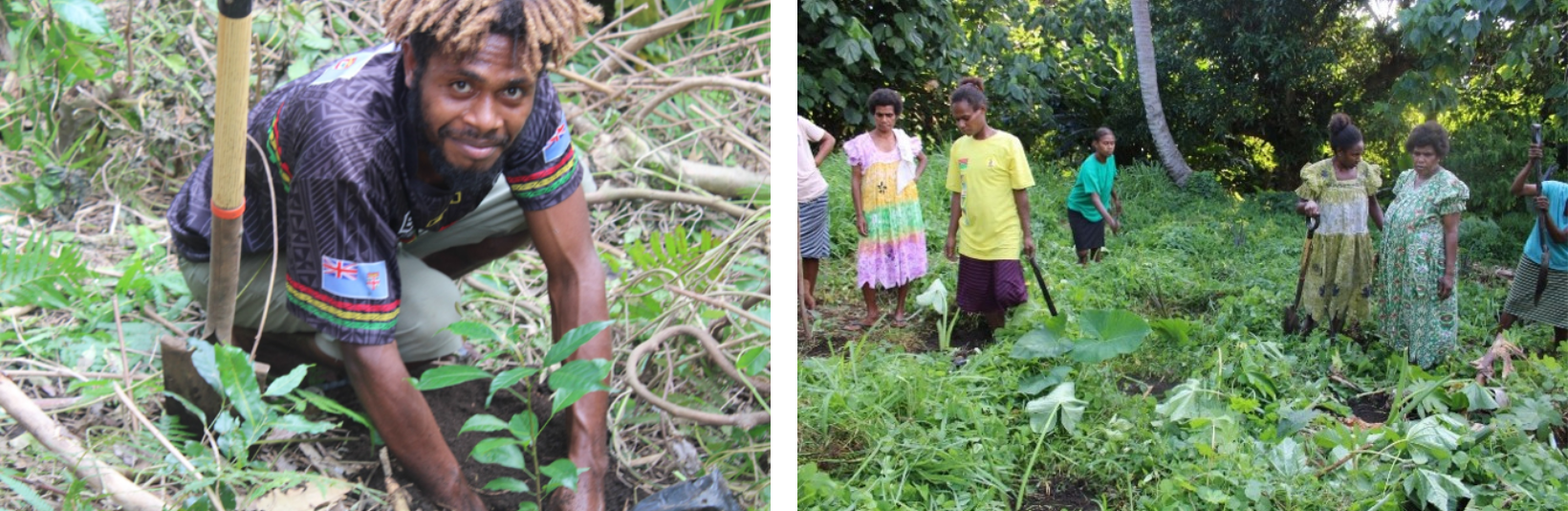
One of the most encouraging outcomes of the training was the strong participation of young people and educators. Almost 30 students voluntarily joined a practical tree-planting session, while six secondary school teachers attended the full five-day training alongside the students.
The future of sustainable land management depends on the next generation understanding the connection between healthy landscapes, food security, and community wellbeing.
William Bani, the PEBACC+ Country Coordinator with SPREP, said, “The Lenakel workshops also marked the completion of eight agroforestry trainings delivered by the Vanuatu Forestry Association, with earlier sessions held in Tagabe on Efate.
“Every tree planted and every new farming practice adopted has the potential to improve household food production, strengthen livelihoods, and protect the land and sea resources that communities rely on every day.”

PEBACC+ is a regional project implemented by SPREP and funded by the Kiwa Initiative through its donors the European Union, Agence Française de Développement (AFD), Global Affairs Canada, Australian Government Department of Foreign Affairs and Trade (DFAT) and New Zealand Ministry of Foreign Affairs and Trade (MFAT), with co-financing from French Facility for Global Environment (FFEM). This four-year project seeks to strengthen the resilience of ecosystems, economies, and communities to the impacts of climate change in Fiji, New Caledonia, Wallis and Futuna, Solomon Islands and Vanuatu.
----
For more information, please contact: Setaita Tavanabola, Communications Officer, PEBACC+ Project, SPREP; email: setaitat@sprep.org or visit www.sprep.org/pebacc-plus