


5 December 2025, Suva, Fiji – The iTaukei Land Trust Board (TLTB), in partnership with the Secretariat of the Pacific Regional Environment Programme (SPREP), convened a national stakeholder validation workshop to review the draft Natural Resource and Environmental Management Policy, a landmark initiative designed to strengthen the sustainable governance of iTaukei land, which represents approximately 91% of Fiji’s landmass.
Hosted at the Novotel Hotel in Lami, the workshop brought together 50 representatives from government ministries, statutory bodies, civil society organisations, technical specialists, development partners, and landowning units. This multi-stakeholder platform marks a critical step toward establishing an environmental policy framework that will guide land-use planning, leasing decisions, and natural resource management across Fiji's customary land.
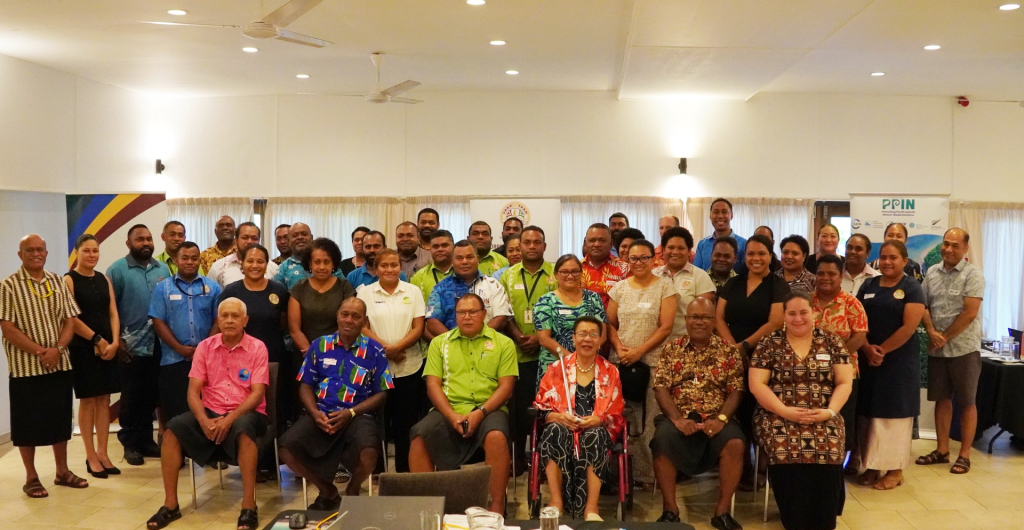
TLTB Chief Executive Officer, Mr. Solomoni Nata, welcomed participants and reaffirmed the Board’s commitment in its mandated Trusteeship role through upholding environmental responsibility, a fundamental part of iTaukei land administration for the benefit of iTaukei landowners.
“iTaukei land is not just a physical asset, it is the foundation of our identity, our heritage, and our future prosperity. As custodians, we have a duty to ensure that every decision we make supports the well-being of landowners while safeguarding the natural systems that sustain us,” Mr Nata said.
“This draft policy TLTB’s commitment in ensuring consistency across our leasing processes, strengthening environmental due diligence, and ensuring that nature-based solutions and sustainable development principles are integrated into how iTaukei land is strategically planned for, allocated, and used. Today’s discussions are vital in ensuring that the policy is robust, practical and aligned with national reforms and community aspirations.”
In his remarks, Mr. Amena Yauvoli, SPREP Biodiversity Conservation and Fiji Office Director, commended TLTB for taking decisive action to strengthen environmental safeguards within the leasing and land-administration system.
“This workshop marks an important milestone in our shared journey toward sustainable land and environmental management. We want to ensure that communities benefit from development while ecosystems remain healthy and resilient,” Mr. Yauvoli noted.
He emphasised the alignment of the draft policy with ongoing national reforms, including reviews of Fiji’s environmental, forestry, climate, and biodiversity frameworks.
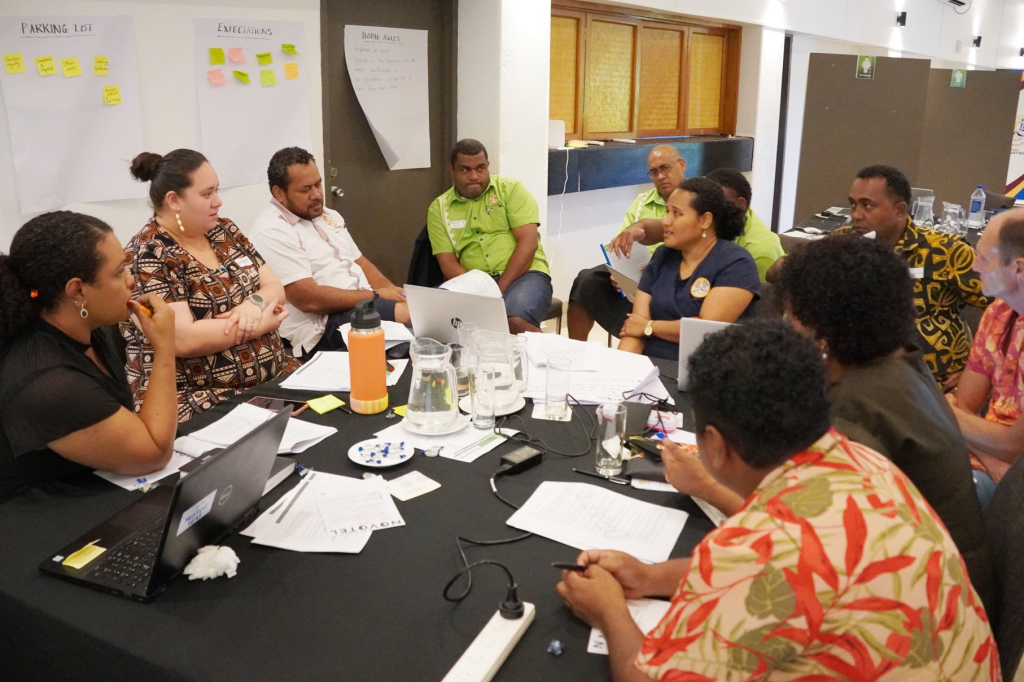
A preliminary legal review identified gaps in existing environmental safeguards within the TLTB framework and stressed the need for proactive, standardised measures. The workshop that took place yesterday, 4 December 2025, enabled participants to review provisions including riparian setbacks and coastal buffers; restoration and reforestation requirements; safeguards for agriculture, forestry, tourism, mining, sand and gravel extraction, and infrastructure development; and stronger monitoring, compliance, and inter-agency coordination mechanisms.
These measures are designed to create consistency in environmental decision-making and ensure that policy commitments translate into operational practice.
Mr. Yauvoli encouraged participants to share practical insights from their respective sectors so the final policy can guide decision-making effectively on the ground.
SPREP reaffirmed its commitment to supporting TLTB through the Promoting Pacific Islands Nature-based Solutions (PPIN) project and Pacific Ecosystem-based Adaptation to Climate Change (PEBACC+) project, ensuring the policy is fully developed, adopted, and implemented with the necessary technical guidance.
“SPREP remains ready to provide environmental services that support sustainable development and strengthen resilience across Fiji and the wider Pacific,” Mr. Yauvoli said.
For media enquiries, please contact:
Setaita Tavanabola, PEBACC+ Communications Officer, SPREP; setaitat@sprep.org
Samuela Loanakadu, Acting Senior Public Relations Officer, TLTB; sloanakadavu@tltb.com.fj
About SPREP: The Secretariat of the Pacific Regional Environment Programme (SPREP) is the main intergovernmental organisation mandated to promote cooperation in the Pacific region, to assist in the protection and enhancement of its environment, and to ensure and sustain its sustainable development for present and future generations. For more information: www.sprep.org
About PPIN: The Promoting Pacific Island Nature-based Solutions (PPIN) project, implemented by SPREP in partnership with IUCN, GGGI, and SPC under the Resilient Ecosystems for Climate Change Adaptation (RECCA) programme funded by the New Zealand Ministry of Foreign Affairs and Trade (MFAT), supports Pacific Island Countries to mainstream Nature-based Solutions (NbS) into policy, planning, and national adaptation processes.
About PEBACC+: The Pacific Ecosystem-based Adaptation to Climate Change (PEBACC+) project is a regional initiative implemented by SPREP and funded by the Kiwa Initiative through its donors, the European Union, Agence Française de Développement (AFD), Global Affairs Canada, Australian Government Department of Foreign Affairs and Trade (DFAT), and New Zealand Ministry of Foreign Affairs and Trade (MFAT), with co-financing from French Facility for Global Environment (FFEM). This four-year project seeks to strengthen the resilience of ecosystems, economies, and communities to the impacts of climate change in Fiji, New Caledonia, Wallis and Futuna, Solomon Islands and Vanuatu. The project will develop, sustain, and institutionalize EbA to climate change in these five countries and territories.