

21 August 2026, Port Vila, Vanuatu – Eratap and Teouma villages, are the main suppliers of fresh market produce to Vanuatu’s capital, Port Vila. Extreme climate-related events are becoming more frequent and severe, putting these important agricultural regions at risk and threatening food security for the nation.
At the Building Our Loss and Damage (BOLD) Response Project Community Consultation in Eratap, community members shared that climate change is increasingly affecting their daily lives and livelihoods.
They noted that extreme climate-related events are damaging crops and arable lands, disrupting planting and harvesting seasons, making it harder for the region to maintain reliable food production.
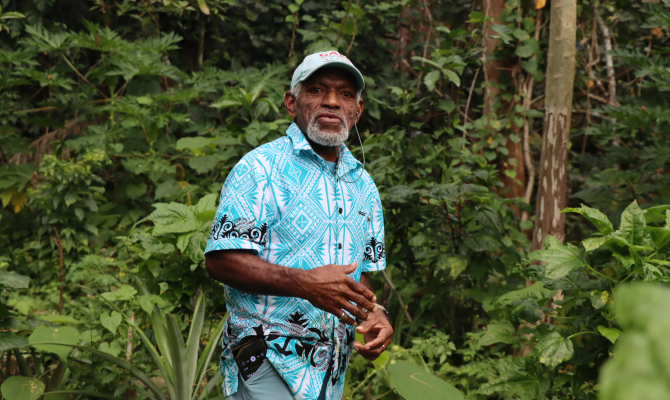
“Long periods of severe heat and drought have a devastating impact on our crops and lands. At the end of 2025 our gardens were full of healthy crops, but the severe heat has caused many to die. Our taro varieties can survive the heat, however, our manioc, a staple food used in our traditional cooking often cannot”, said Mr John Markal from Eratap.
Participants also reflected on food shortages due to recent cyclone events, where a selling ban of produce at the markets was put in place to ensure adequate food supply for families themselves. However, this also impacted livelihoods and generation of income for communities.
An El Niño event was declared in June 2026 by the World Meteorological Organisation’s (WMO) Pacific Regional Climate Centre. For nations in the eastern and central Pacific this means an increased likelihood of below-normal rainfall and potential drought conditions. These dry conditions may be a contributing factor to reduced crop production and added stress on food security and livelihoods.
Participants also noted that recovery is becoming more difficult as events happen more frequently and closer together, leaving little time for communities to restore their gardens, replace lost crops, and return to normal production levels before the next event occurs.
A site visit to Teouma Beach put into perspective the impacts of flooding events on the Teouma River Basin, where the riverbanks were heavily eroded. The community noted that a large number of gardens are situated along the river given accessibility to water and good soil. However, during flooding events, entire gardens are wiped out forcing families to start again or relocate to safer areas which can be further away from optimum selling points, putting added stress and increasing the cost of living.
Participants also noted that a significant portion of Teouma Beach, once used as gardens and farming grounds, has been lost to extreme weather events, sea- level rise and coastal inundation, placing further putting a strain on livelihoods.
Faced with growing population, significant need to ensure food security and limitations to adaptation options, communities in these areas are now experiencing climate induced loss and damage due to water resource issues and extreme events.
Eratap Chief, Mr Kenneth Alban during a site visit to his gardens in upland Eratap shared about his food production practices for climate resilience.
“Growing two or more crops in the gardens can reduce the risk to climate events. During drought or cyclones, mixed cropping can reduce losing everything at once. If one crop is damaged or dies, another may survive and continue to provide food and income”, he said.
He also emphasised the importance of building knowledge in climate change impact and ways to effectively respond to the changes.
“This consultation has been a good opportunity for our community to learn about climate change. We are continuing to see the impacts and it’s important for us to know how to respond to the changes and build our knowledge on the issue so we may share with our other community members”.
A significant portion of the Vanuatu population rely on subsistence agriculture for food security and livelihoods, making the agriculture sector highly exposed to both climate change and natural hazards.
BOLD Project Manager, Mr Malaki Iakopo noted the importance of the work of BOLD to strengthen the agriculture sector and food security in Vanuatu.
“Following the BOLD Response Project Vanuatu Inception Meeting in February 2026, the agriculture sector has emerged as the highest priority sector for scientific assessment and implementation.”
“We are committed to locally led approaches and implementation that recognise traditional knowledge, customary governance and community priorities”, said Mr Iakopo.
The Eratap community consultation is the first of several community engagement activities for Vanuatu under the BOLD Response Project.
The Building our Loss and Damage (BOLD) Response Project is a five-year project running from 2025 to December 2029 and is funded by the Federal Republic of Germany through its Federal Foreign Office, under the International Climate Initiative (IKI).
BOLD is implemented by a consortium led by the Secretariat of the Pacific Regional Environment Programme (SPREP) and Climate Analytics, across five Pacific Island countries Fiji, the Republic of the Marshall Islands, Samoa, Tuvalu, and Vanuatu.
The Eratap BOLD Response Project Community Consultation in Vanuatu took place from 17-18 August 2026. The consultation was organised and facilitated by the Vanuatu Department of Climate Change with technical support from SPREP and Climate Analytics.
For more information contact, sprep@sprep.org