

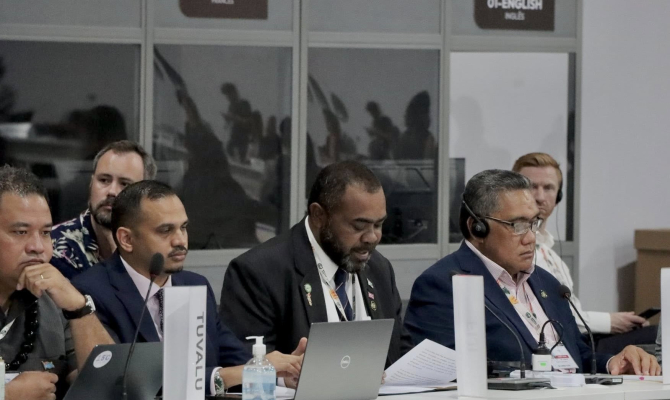
16 November 2025, Belem - Pacific countries have reiterated the urgent need for scaled-up, predictable, and simplified climate finance to address the impact of the climate crisis.
The call was made during the COP30 High-level Intervention for the Ministerial Roundtable held on the margins of the ongoing 30th Conference of the Parties to the UN Framework Convention on Climate Change (UNFCCC) from 10-21 November 2025 in Belem, Brazil.
“We must ensure that we establish streamlined access to all the climate funds through harmonised modalities,” said Hon. Maina Talia, Tuvalu’s Minister for Home Affairs, Climate Change, and Environment.
“This includes establishing dedicated SIDS Adaptation Windows within the GCF and Adaptation Fund. These practical measures should translate to fast-tracked adaptation finance for countries already facing irreversible climate impacts like my country Tuvalu.”
Tuvalu is the current Chair of the Pacific Small Island Developing States (PSIDS) and Minister Maina is amongst Pacific leaders at COP30 advocating for the survival of Pacific communities who continue to be at the forefront of climate change impacts. Critical to the ability of Pacific communities to respond to the impacts of climate change is climate finance, often a difficult conversation at COP.
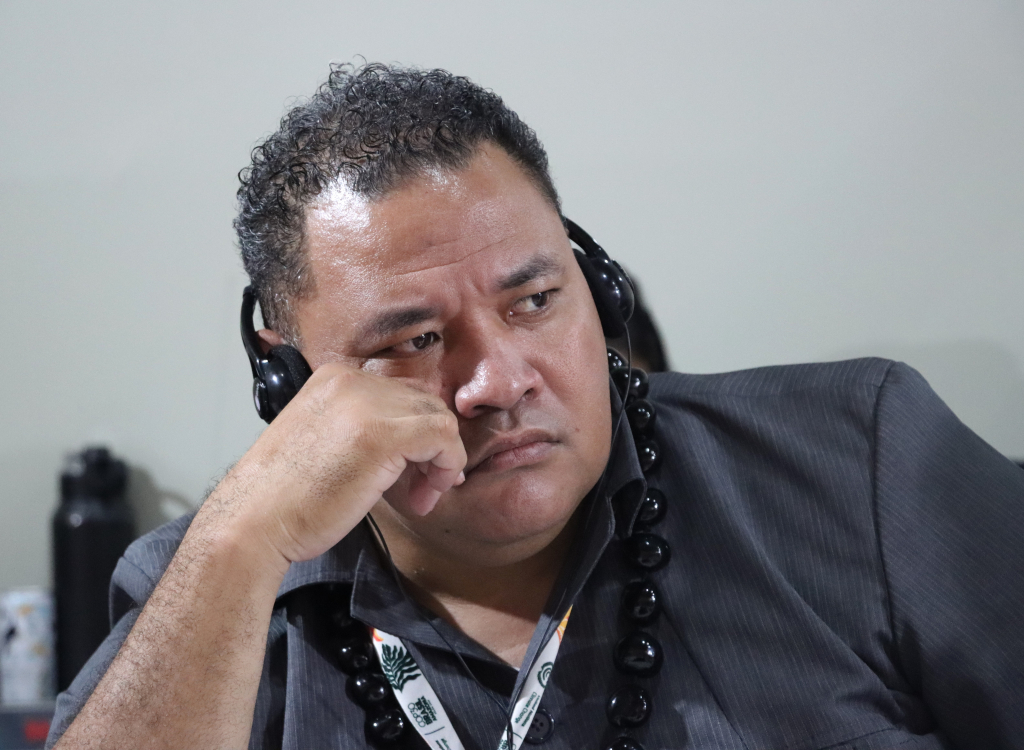
Minister Maina recalled that COP30 marks a decade into the Paris Agreement. He said Articles 9.1 and 9.3 of the Paris Agreement, which deals with covering provision of resources, support and the mobilisation of climate finance, are not optional signposts. “They are legal obligations, and whether they are honoured in the next few years will determine the survival of our islands, our economies, and our cultures,” added Hon. Maina.
“We made similar calls when we negotiated the New Collective Quantified Goal, where we urged the developed country Parties to move from broad pledges to real, time-bound commitments and actions. The next 2 to 5 years are critical. We cannot afford another lost cycle.”
Fiji’s Minister for Environment and Climate Change and Pacific’s Political champion for Climate Finance, Hon. Mosese Bulitavu, echoed the call, noting that Pacific countries speak as one voice grounded in the daily realities of rising seas, intensifying storms, and eroding livelihoods.
“The recent Advisory Opinion of the International Court of Justice reaffirms this as a matter of legal duty and shared responsibility. Failure to deliver predictable and adequate finance is not just an economic shortfall, it is a breach of trust and equity at the heart of this process,” said Hon. Bulitavu.
“COP30 must seize the political momentum of the Baku-to-Belém Roadmap and ensure that adaptation receives predictable, grant-based, and accessible finance capable of addressing the persistent funding gap and delivering resilience for the most vulnerable.”
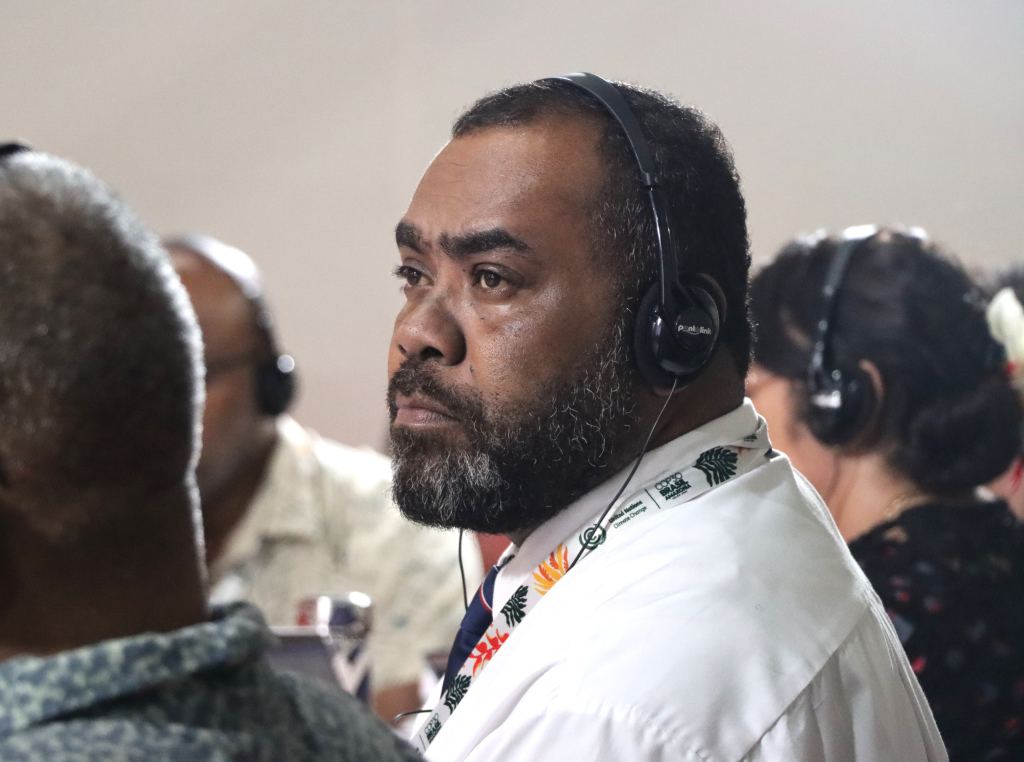
Hon. Bulitavu said the multilateral development banks must align with Article 2.1(c), not by shifting burdens to the private sector, but by de-risking investments and expanding concessionality for those with limited fiscal space, particularly cognisant of the climate resilience development component.
“The Pacific’s message is clear: climate finance is not charity, it is climate justice in action. The success of COP30 will be measured by whether the world moves from promises to practice, from rhetoric to responsibility.”
The Kingdom of Tonga’s Head of Delegation, Mr. Paula Pouvalu Ma‘u, highlighted the persistent challenges SIDS face in accessing resources despite being on the frontlines of climate impacts.
“Tonga supports our region’s calls for ongoing reform efforts across the multilateral climate funds, noting that despite progress - persistent access barriers still remain,” said Mr Ma’u.
“These include lengthy and unclear accreditation procedures, as well as insufficient recognition of due diligence already undertaken by other multilateral funds and development banks. We call for deeper harmonisation and coherence between all actors serving the multilateral channels of climate finance.”
The sentiments from the Pacific were echoed by other nations deeply affected by climate impacts, many of whom described access to financial resources as “a matter of survival.”
UN General Assembly President Annalena Baerbock said in her opening remarks that COP30 should mark the beginning of implementing up to $1.3 trillion in annual climate finance – disbursements that “reach those most in need, quickly, transparently and fairly.”
She stressed that climate action and social justice are “inseparable,” noting: “Climate insecurity fuels hunger and poverty, poverty drives migration and conflict; and conflict, in turn, deepens poverty and deters investment.”
UN Climate Change Executive Secretary, Simon Stiell described finance as the “lifeblood of climate action, adding: “When finance flows, ambition grows.”
The 30th Conference of the Parties to the UN Framework Convention on Climate Change (UNFCCC) is taking place from 10-21 November 2025 in Belem, Brazil.
It is being attended by Pacific leaders and their delegations, who are advocating for the survival of Pacific communities who continue to be at the forefront of climate change impacts.
Support for our Pacific Islands at COP30 from members of the Council of Regional Organisations of the Pacific (CROP) is through the One CROP mechanism led by the Secretariat of the Pacific Regional Environment Programme.
Members of one CROP include: The Secretariat of the Pacific Regional Environment Programme (SPREP) – Lead, Pacific Islands Development Program, Pacific Islands Forum Fisheries Agency, Pacific Island Forum Secretariat, Pacific Community.
A key part of amplifying the One Pacific Voice at COP30 is the Moana Blue Pacific Pavilion and the Pacific Delegation Office. The Moana Blue Pacific Pavilion at COP30 is a Pacific partnership with the Governments of Australia and New Zealand managed by the Secretariat of the Pacific Regional Environment Programme (SPREP).
The Pacific Delegation Office at COP30 is a Pacific partnership with the New Zealand Government managed by the Secretariat of the Pacific Regional Environment Programme (SPREP).
To learn more about the Pacific at COP30 please visit: https://www.sprep.org/cop30