

November 12, 2025 – A bilingual (French and English) Kiwa Initiative awareness campaign targeting Pacific communities and practitioners is helping to strengthen understanding of how working with nature can enhance resilience to climate change.
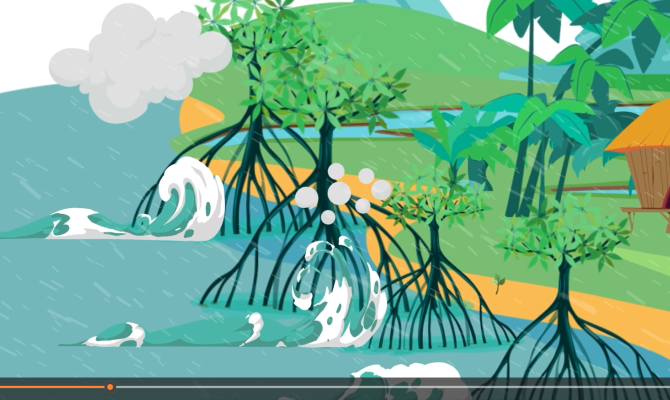
Led by the Secretariat of the Pacific Regional Environment Programme (SPREP) and the Pacific Community (SPC) as part of the Kiwa Initiative’s knowledge-sharing efforts, a three month campaign will showcase the growing use of Nature-based Solutions (NbS) and the practical tools available to support the protection, management and restoration of ecosystems to strengthen resilience to challenges such as coastal erosion, food and water insecurity, or biodiversity loss.
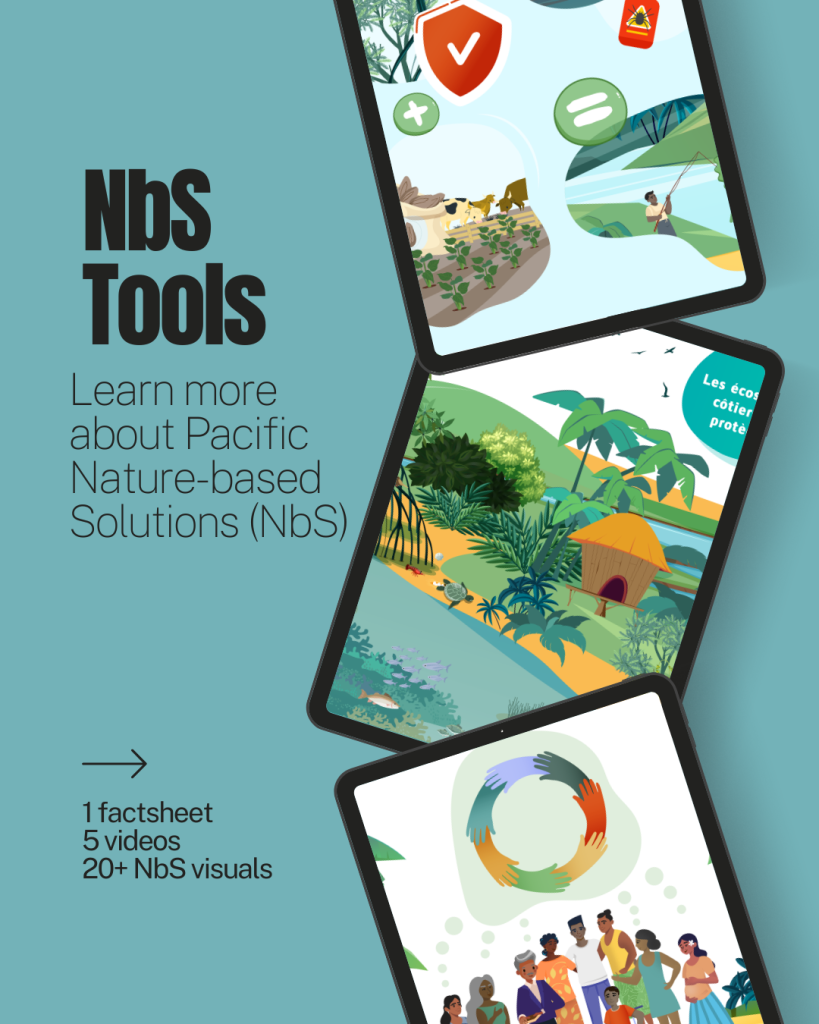
Several resources have been developed:
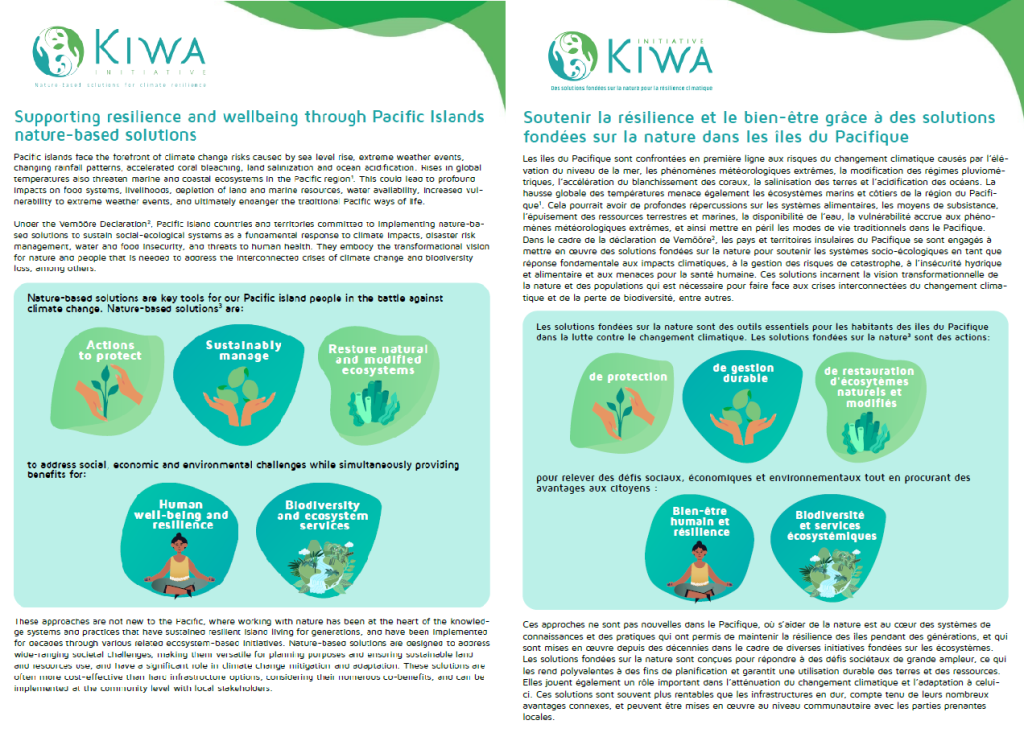
- Factsheet titled: ‘Supporting resilience and wellbeing through Pacific Islands nature-based solutions’.
- Five short videos explaining NbS in simple, visual terms. The videos explore NbS in areas such as human rights, invasive species, coastal protection, freshwater, and fisheries: demonstrating how Pacific-led solutions are protecting both people and nature.
- A series of 20 visuals on Ecosystem-based approach, traditional knowledge, different types of NbS, the place of the communities and people into an environmental project, coastal ecosystems and fisheries, forest restoration, invasive species management, and more.
While Pacific communities have long used nature to sustain livelihoods, this campaign renews focus on combining traditional knowledge with science to strengthen climate adaptation. It aims to increase community awareness and understanding of NbS, through accessible and practical information, while helping governments meet climate adaptation and biodiversity goals.
Since 2020, over 41 Kiwa-supported NbS projects have strengthened livelihoods, promoted gender equity, restored, conserved or protected ecosystems across more than 300 sites in 17 Pacific Island countries and territories, reaching over 220,000 beneficiaries.
“This awareness campaign will help communities and practitioners recognise where applying Nature-based Solutions in their daily lives and work can reduce the impacts of climate change. By showcasing practical, Pacific-centred examples, it bridges the gap between science, policy, and community action: making climate resilience both relatable and achievable,” says Dr Rebecca Stirnemann, SPC’s Kiwa Project Development Coordinator.
The campaign also comes at a defining moment for the Kiwa Initiative, as it celebrates its fifth anniversary in 2025. Since 2020, the Initiative has brought together regional organisations, governments, and local partners to design and implement projects that use NbS as an entry point for climate adaptation. The experience has generated valuable lessons, from scaling up Ecosystem-based approaches to strengthening the inclusion of women and marginalised groups in project design.
“Over the past five years, thanks to all the partners and local communities involved, the Kiwa Initiative has built solid, practical experience in implementing Nature-based Solutions for climate adaptation. The next phase will build on these seedbeds of solutions, strengthening regional capacities to scale up and ensure lasting impact” says Ms Aurélie Ahmim-Richard, Regional Policy Officer on Biodiversity and Climate, AFD Pacific regional office in New Caledonia.
Following the successful five-years of the Kiwa Initiative, deepening technical support and expanding the reach of NbS across the Pacific will be one of the key objectives moving forward. As well as continuing to build on the close cooperation between the Kiwa community with projects leaders and implementing partners to ensure that the region remains a global leader in implementing Nature-based climate action.
“The Kiwa Initiative’s collaborative approach has demonstrated the power of regional collaboration, bringing together regional partners to help drive inclusive and effective Nature-based Solutions,” says Ms Angelica Salele-Sefo. “This strong partnership has positioned the Pacific as leaders in NbS, and through the continued support of the Kiwa Initiative, it will strengthen our shared commitment and expand the reach of regional climate resilience for Pacific communities.”
From November 2025 to January 2026, we invite everyone to follow and explore the new resources that will be available on SPREP, SPC, and the Kiwa Initiative websites as well as on their social media channels.
About the Kiwa Initiative - The Kiwa Initiative - Nature-based Solutions (NbS) for Climate Resilience aims to build the resilience of Pacific Island ecosystems, communities, and economies to climate change through NbS by protecting, sustainably managing and restoring biodiversity. It is based on simplified access to funding for climate change adaptation and biodiversity conservation actions for local and national governments, civil society, and regional organizations in Pacific Island Countries and Territories. The Initiative is funded by the European Union, Agence française de développement (AFD), Global Affairs Canada (GAC), Australia's Department of Foreign Affairs and Trade (DFAT) and New Zealand's Ministry of Foreign Affairs and Trade (MFAT). It has established partnerships with the Pacific Community (SPC), the Secretariat of the Pacific Regional Environment Programme (SPREP), and the Oceania Regional Office of the International Union for Conservation of Nature (IUCN - ORO). For more information: The Kiwa Initiative - Climate Resilience in the Pacific Islands thanks to Nature-based Solutions (NbS)
For more information on the Kiwa Initiative or on the resources developed, please contact:
• Margot Bantegny, Communication Officer, Kiwa Initiative – bantegnym.ext@afd.fr
• Rebecca Stirnemann, Kiwa Project Development Coordinator, SPC – rebeccas@spc.int
• Angelica Salele-Sefo, Kiwa Project Development Coordinator, SPREP – angelicas@sprep.org