

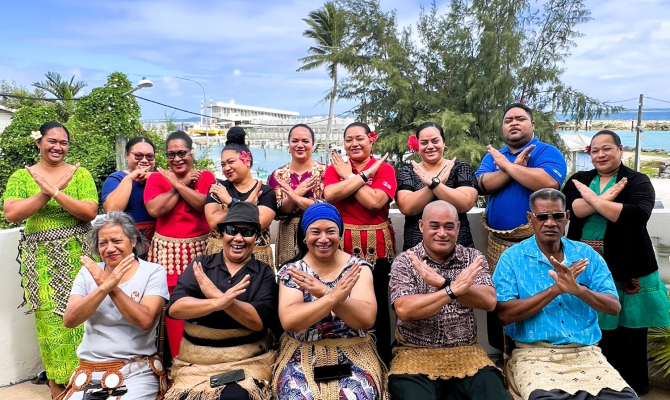
The Kingdom of Tonga has made significant progress in safeguarding its unique biodiversity through a series of transformative initiatives. At the policy level, Tonga now has a robust national strategy, the National Invasive Species Strategy and Action Plan (NISSAP) which provides a clear framework for managing invasive species across its islands and more recently an endorsed Early Detection and Rapid Response Plan (EDRRP) for Tongatapu, ensuring that efforts are systematic, proactive, and sustainable.
On the ground, restoration efforts have delivered impressive results where several islets are now free of invasive rats, creating safe havens for native flora and fauna and paving the way for species reintroductions. These victories mark a turning point in reversing ecological degradation and restoring balance to fragile island ecosystems.
The Tonga Department of Environment has led the journey to protect its unique biodiversity with assistance from the Global Environment Facility’s Regional Invasive Species Project (GEF 6 RIP) and the Secretariat of the Pacific Regional Environment Programme (SPREP) through the Pacific Regional Invasive Species Management Support Service (PRISMSS) to enhance the management of invasive species.
These initiatives were more than projects they were a movement to restore ecosystems, empower communities and build resilience against invasive species which pose one of the greatest threats to not only Tonga but to the entire Pacific biodiversity.
As part of the GEF 6 RIP closeout, a workshop for Tonga was held in Nukualofa in December, where representatives from various departments, ministries and NGOs gathered to reflect on the project implementation challenges, opportunities and way forward to ensuring that initiatives implemented can be sustained to manage invasive species.
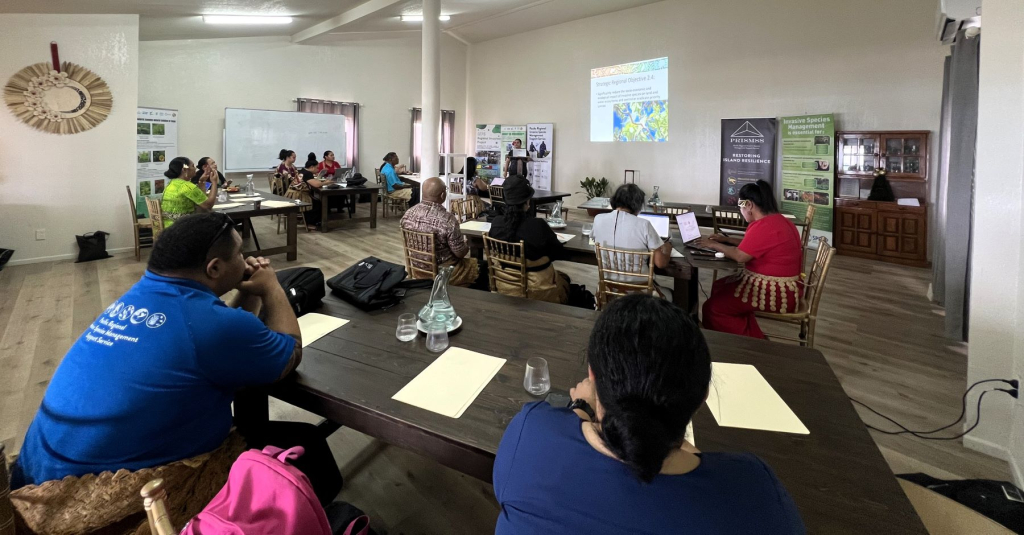
While delivery the opening address, Ms Lupe Matoto, Director of Environment shared that, "through GEF 6 RIP and PRISMSS, we have strengthened national and regional capacities to protect our biodiversity from rodent eradication on islets to managing ecological sites like Mount Talau and Eua National Park, these achievements reflect the power of collaboration and evidence-based action.”
"This project has delivered tangible benefits for our environment and communities whether through biocontrol releases or restoring vital ecosystems and it shows what we can achieve when we work together to safeguard biodiversity in the Pacific."
"Our collective efforts under the GEF 6 project demonstrate a shared commitment to reducing the impact of invasive species and these results are not just milestones, they are a foundation for continued collaboration and resilience in protecting our natural heritage."
SPREP GEF 6 RIP Project Manager, Ms Isabell Rasch-Mulitalo commented that, “this closing workshop showcased Tonga’s key achievements under the project and highlighted the enabling factors that contributed to these successes, providing a foundation to build upon for future planned initiatives.”
“It also facilitated stakeholder mapping for engagement, emphasising the importance of broader participation across national agencies and communities.”
“Through the GEF 6 RIP and PRISMSS Tonga has further strengthened institutional frameworks, ensuring its NISSAP implementation was supported by multi-agency collaboration.”
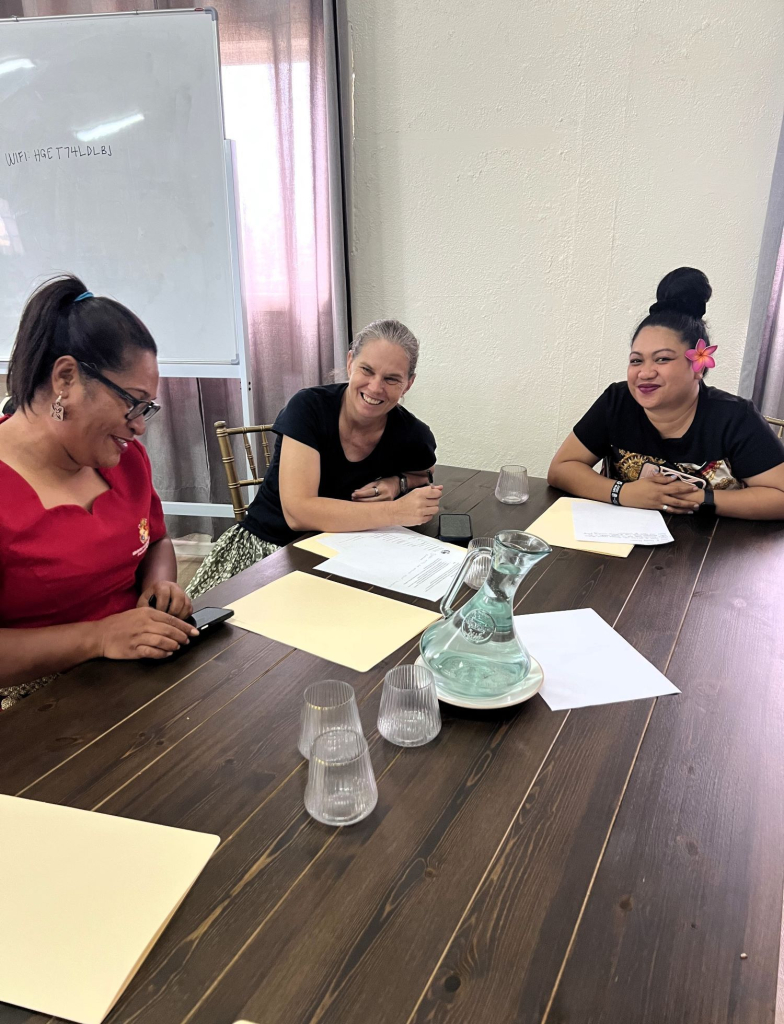
The closing workshop enabled stakeholders attending the meeting from Tonga to identify implementation challenges, propose practical solutions to address them and share lessons learned over the project implementation phase.
“Operating across multiple islands brought considerable logistical challenges, while technical gaps emphasised the need for sustained capacity building. We are grateful for the strong local leadership and inclusive community engagement that enabled us to deliver meaningful results under the GEF-6 RIP,” remarked a participant.
“For us regional collaboration proved essential, with both the GEF-6 RIP and PRISMSS programme activities enhancing knowledge exchange and operational efficiency. These efforts have laid a strong foundation for sustainable invasive species management in Tonga,” shared another participant.
Community engagement has been another cornerstone of success for the GEF-6 RIP, through targeted training programmes, local communities and youth have been empowered to take ownership of conservation, embedding environmental stewardship into Tonga’s cultural identity. This grassroots involvement ensures that restoration is not just a scientific endeavor but a shared national mission.
Innovation has also played a critical role by leveraging geo-spatial planning and phased approaches in rainforest restoration projects, Tonga has set new benchmarks for efficiency and impact. These methods allow for precise resource allocation and measurable progress, making restoration both practical and scalable.
SPREP Invasive Species Adviser, Mr David Moverley reflected that, “Tonga’s experience offers valuable lessons for other island nations seeking to protect biodiversity and reaffirms that restoring key sites such as Mt Talau, Toloa, and Eua creates strongholds for native species and provides a foundation for broader ecological recovery.”
“Equally important is the principle of community empowerment as conservation thrives when local communities lead the charge, bringing traditional knowledge and cultural values into modern environmental strategies.”
“PRISMSS has amplified Tonga’s success by providing technical expertise for eradication and restoration projects and facilitating knowledge exchange through regional workshops and capacity-building programmes.
Planning for continuity is essential and by aligning efforts with initiatives like the GEF-8 and the New Zealand Ministry of Foreign Affairs and Trade (NZMFAT) and United Kingdom International Development funded PRISMSS Restoring Island Resilience (RIR) project, Tonga has secured long-term support to sustain its progress.
The GEF 6 Regional Invasives Project (RIP) is funded by the Global Environment Facility, implemented by the United Nations Environment Programme, and executed by the Secretariat of the Pacific Regional Environment Programme. The Project works primarily in the Marshall Islands, Niue, Tonga, and Tuvalu and has a regional component. Implementation of the GEF 6 RIP is supported by the Pacific Regional Invasive Species Management Support Services (PRISMSS). For more information on the GEF6 RIP, please contact the Project Manager Ms Isabell Rasch-Mulitalo, at isabellr@sprep.org
About PRISMSS: The Pacific Regional Invasive Species Management Support Service (PRISMSS) is a coordinating mechanism designed to facilitate the scaling up of operational management of invasive species in the Pacific. PRISMSS, which is led by the Secretariat of the Pacific Regional Environment Programme (SPREP) brings together experts to provide support within the Pacific region with a focus on protection of indigenous biodiversity and ecosystem function. As a service provider, PRISMSS provides a comprehensive suite of support services in a cohesive, effective, efficient, and accessible manner to Pacific Island countries and territories.
Restoring Island Resilience (RIR): The PRISMSS - Restoring Island Resilience (RIR) is a New Zealand-PRISMSS collaboration project that aims to improve Pacific Island Countries and territories livelihoods and resilience to climate change by reducing the impact of invasive species on natural and agricultural ecosystems through the six PRISMSS programmes.
PRISMSS Powered by: New Zealand Foreign Affairs & Trade, United Kingdom International Development, GEF, United Nations Environment Programme and SPREP.
PRISMSS Partners: Bioeconomy Science Institute, Birdlife International, Earth Sciences New Zealand, New Zealand Department of Conservation, Island Conservation, the Pacific Community and SPREP.
PRISMSS Programmes: Predator Free Pacific (PFP), Protect Our Islands (POI), War On Weeds (WOWs), Natural Enemies Natural Solutions (NENS), Resilient Ecosystems Resilient Communities (RERC) and Protect Our Marine Areas (POMA).
For additional information please contact Mr Dominic Sadler, PRISMSS Manager on dominics@sprep.org or Mr Nitish Narayan, PRISMSS Communications & Liaison Officer on nitishn@sprep.org