


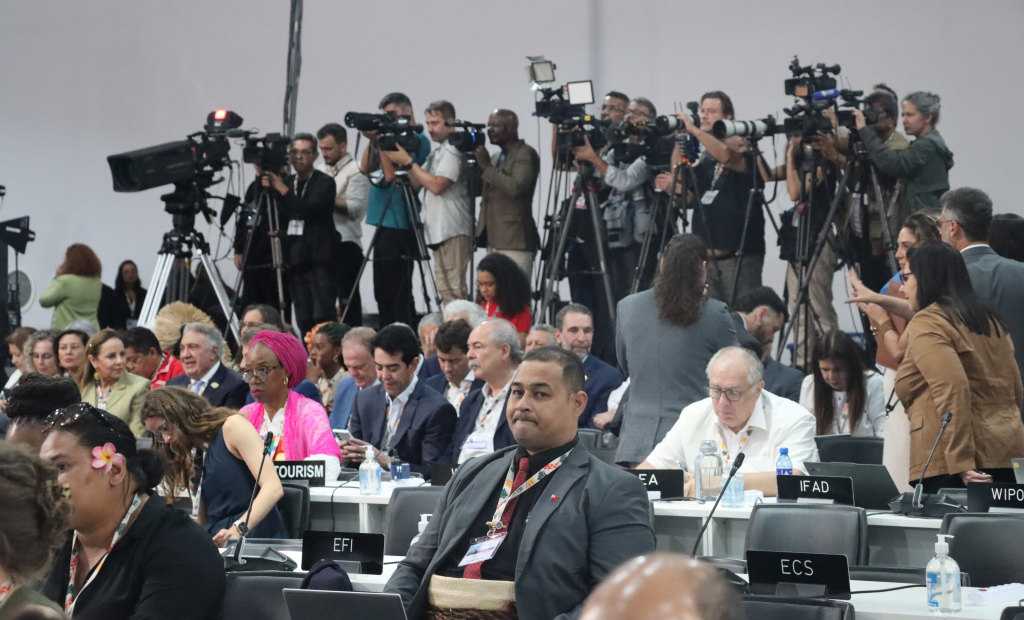
11 November 2025, Belem - COP30 negotiations are underway in the different rooms of the Hangar Convention Center.
In the city of Belém at the outer edges of the Amazon rainforest in Brazil, Pacific leaders, climate change negotiators and delegates from more than 190 countries have settled into their work. There is a lot at stake.
The COP30 Presidency is hoping delegates will agree on indicators to measure adaptation and a roadmap to quadruple the new collective quantified goal on climate finance. Also on the agenda is the latest round of national climate plans, known as Nationally Determined Contributions (NDCs).
For Pacific countries, ensuring the 1.5 to stay alive is the guardrail of their work.
But there is another key issue that Pacific delegations will take as a “win” from COP30.
It involves a decision on who will host the next round of the Conference of the Parties to the UN Framework Convention on Climate Change (UNFCCC) in 2026.
In 2022, Australia submitted a bid to co-host COP31 with the Pacific. Turkey also submitted a bid.
With the backing of Pacific countries, Australia hopes that COP31 would show the Pacific region’s unique challenges and solutions to the world, and to accelerate global climate action, the net zero transformation, and investment in climate solutions.
But the decision has taken a long time. And even in Belem where an announcement will have to be made by the UNFCCC at the end of next week, no one can be sure.
Pacific countries will continue to push and advocate for Australia to host COP31.
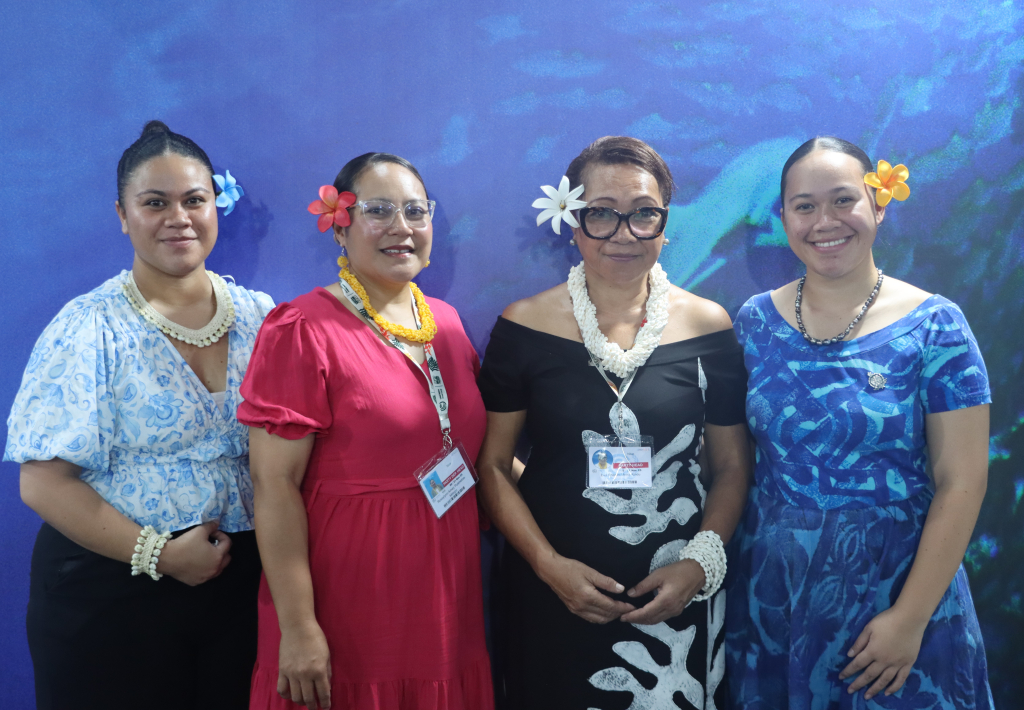
Niue’s Minister of Natural Resources, Hon. Mona Ainu’u, who is the Pacific’s Political champion for Ocean, said: “I’m very glad that Australia put up their hand. I’m extremely grateful that Australia is highlighting the fact that this is important to the Pacific as well.
“Having a COP in Australia will be a huge milestone, and I’m really optimistic it will come.”
It’s important for the world to come to the Pacific, Minister Ainu’u said.
“When you have people who greatly depend on the environment, positive outcomes from forums like the COP is a must, it’s a choice we have to make as an international family. Families take care of each other,” she added.
Minister Mona is a prominent and respected voice in the COP space, having actively engaged in the process for several years, and believes that the role of the multilateral process in addressing the impacts of the climate crisis is critical.
“The outcomes the Pacific countries are fighting for at this COP are about our survival, we need it, our children need it,” she said. “Our parents and our ancestors entrusted us with our lands and expected us to take care of them forever. So it’s upon us, custodians, to ensure our environment, our Ocean is protected.”
In Belem, Minister Ainu’u said she wants to return to Niue at the end of the conference with tangible outcomes.
“At COP30, I’m hearing there is a big push for implementation of a lot of pledges and promises made over the years,” she said. “The global community needs to deliver on theses pledges and promises. We did not create this crisis and as a Niuean, I want my one rock to still be standing when my child is at my age, and I want her to enjoy what I have enjoyed.”
Minister Mona’s sentiments on the importance of Australia hosting next year’s COP are echoed by Fiji’s Minister for Environment and Climate Change, Honourable Mosese Bulitavu, who said: “For us in the Pacific, having COP come to our part of the world is very important. We want them to see why climate finance is so important, why we need 1.5, why we need green and blue solutions, why COP matters to our Pacific region.”
The deadlock between Australia and Turkey on who will host the next COP will have to be sorted out by the end of next week, or hosting will default to the German city of Bonn, the headquarters of the UN Framework Convention on Climate Change.
The 30th Conference of the Parties to the UN Framework Convention on Climate Change (UNFCCC) is taking place from 10-21 November 2025 in Belem, Brazil.
It is being attended by Pacific leaders and their delegations, who are advocating for the survival of Pacific communities who continue to be at the forefront of climate change impacts.
Support for our Pacific Islands at COP30 from members of the Council of Regional Organisations of the Pacific (CROP) is through the One CROP mechanism led by the Secretariat of the Pacific Regional Environment Programme.
Members of one CROP include: The Secretariat of the Pacific Regional Environment Programme (SPREP) – Lead, Pacific Islands Development Program, Pacific Islands Forum Fisheries Agency, Pacific Island Forum Secretariat, Pacific Community.
A key part of amplifying the One Pacific Voice at COP30 is the Moana Blue Pacific Pavilion and the Pacific Delegation Office. The Moana Blue Pacific Pavilion at COP30 is a Pacific partnership with the Governments of Australia and New Zealand managed by the Secretariat of the Pacific Regional Environment Programme (SPREP).
The Pacific Delegation Office at COP30 is a Pacific partnership with the New Zealand Government managed by the Secretariat of the Pacific Regional Environment Programme (SPREP).
To learn more about the Pacific at COP30 please visit: https://www.sprep.org/cop30
Main photo credit: Photo by IISD/ENB | Mike Muzurakis