

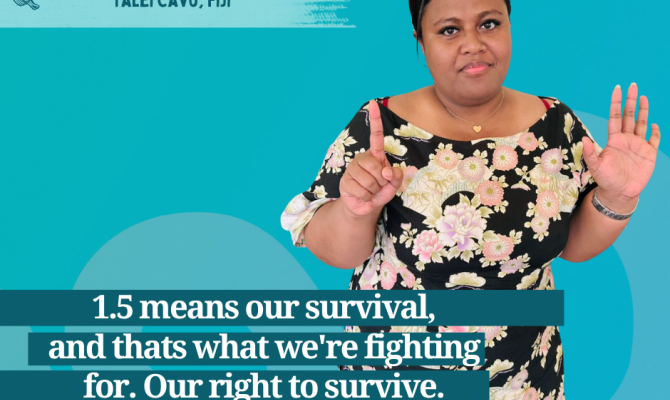
6 November 2025, Belem Brazil – Thirty-three years after the Brazilian Earth Summit set the climate change negotiations train in motion, Pacific leaders, climate change negotiators and government officials are returning to Brazil for the thirtieth Conference of the Parties to the UN Framework Convention on Climate Change (UNFCCC COP30).
COP30, to be held in Belem, Brazil, from 10-21 November 2025, will mark 10 years after the Paris Climate agreement was signed, in which countries pledged to try to restrict the rise in global temperatures to 1.5C.
On the eve of the Belem climate change negotiations, and as Pacific delegations make their way to Brazil, UN Secretary-General, Mr António Guterres, reminded that going above 1.5C has devastating consequences for the world, especially for Pacific communities at the forefront of climate change impacts.
Calling for action during an interview with The Guardian, he said it is absolutely indispensable for the world to change course, to keep 1.5 to Stay Alive.
“Let’s recognise our failure,” he said. “The truth is that we have failed to avoid an overshooting above 1.5C in the next few years. It is absolutely indispensable to change course in order to make sure that the overshoot is as short as possible and as low in intensity as possible to avoid tipping points like the Amazon.
In Belem, Pacific delegations will be engaging in two weeks of crucial negotiations on tackling the climate crisis with urgency and ambition, to ensure the goal of 1.5 to stay alive.
The Secretariat of the Pacific Regional Environment Programme (SPREP), as Chair of the One-CROP (Council of Regional Organisations of the Pacific), has the mandate as coordinator of Pacific climate change action to lead work on enhancing Pacific engagement at COP30.
“1.5 is still within reach. COP30 takes place at a critical time where there are so many competing global issues,” said Ms Tagaloa Cooper, SPREP Director of Climate Change Resilience.
“The signs and the daily lived reality we see in the Pacific are alarming, but we cannot give up – achieving a 1.5 world is still achieveable but we must act fast. At course correction is imperative to ensure a resilient Pacific where our people can thrive.”
In the lead up to COP30, SPREP with support from Climate Analytics and One-CROP hosted the Pacific Small Island Developing States (PSIDS) pre-COP30 meeting. The meeting allowed the Pacific to finalise priority thematic areas and agreed regional positions ahead of Belem.
“Our One Pacific Voice will be heard in Belem and aside from our clarion call on “1.5 to stay alive”, we have critical key messages agreed to from our Apia meeting,” said Ms Cooper.
“The Pacific will call for strengthened mitigation action through a COP30 package that keeps the 1.5 C target within reach by delivering genuine response to closing the NDC ambition gap.”
“We will also maintain that developed countries must ensure simplified access to additional, predictable, scaled-up, grants-based finance to support enhanced mitigation and adaptation implementation in SIDS.”
“We will also continue to remind the world that the Special Circumstances of SIDS are enshrined in the Paris Agreement and must be protected.”
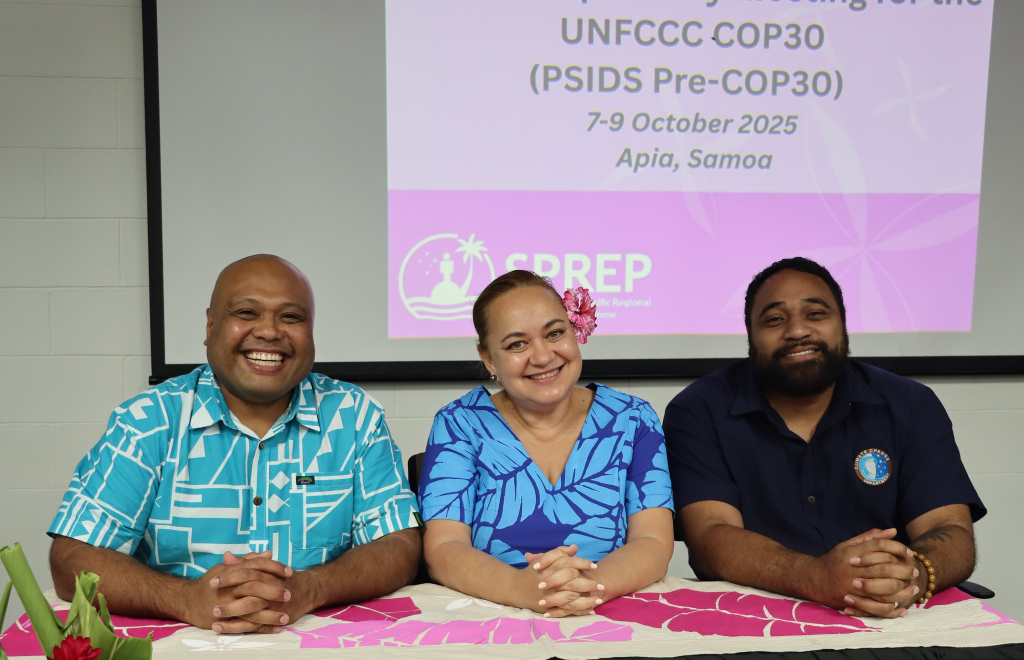
SPREP and One-CROP will work collaboratively with Tuvalu as the Chair of PSIDS and Palau as the Chair of the Alliance of Small Island States (AOSIS) to support the Pacific’s collective aims in the global climate discussions.
“The key message for our Pacific countries heading to COP30 is one that we all know and that is 1.5 to stay alive is very critical,” said Director of Tuvalu’s Climate Change Department, Mr Jamie Ovia.
“At the moment, it’s still alive but barely alive. So we're going to push that really hard, as well as aligning NDCs, trying to ask countries to push their new NDCs to align better to the 1.5 message.”
The UN Climate Change Executive Secretary, Mr Simon Stiell, said COP30 presents another opportunity for “clear stepping stones towards net zero emissions.”
COP30 will bring together world leaders, scientists, non-governmental organizations, and civil society to discuss priority actions to tackle climate change. The meeting will focus on the efforts needed to limit the global temperature increase to 1.5°C, the presentation of new national action plans (NDCs) and the progress on the finance pledges made at COP29.
The 30th Conference of the Parties to the UN Framework Convention on Climate Change (UNFCCC) is taking place from 10-21 November 2025 in Belem, Brazil.
It is being attended by Pacific leaders and their delegations, who are advocating for the survival of Pacific communities who continue to be at the forefront of climate change impacts.
Support for our Pacific Islands at COP30 from members of the Council of Regional Organisations of the Pacific (CROP) is through the One CROP mechanism led by the Secretariat of the Pacific Regional Environment Programme.
Members of one CROP include: The Secretariat of the Pacific Regional Environment Programme (SPREP) – Lead, Pacific Islands Development Program, Pacific Islands Forum Fisheries Agency, Pacific Island Forum Secretariat, Pacific Community.
A key part of amplifying the One Pacific Voice at COP30 is the Moana Blue Pacific Pavilion and the Pacific Delegation Office. The Moana Blue Pacific Pavilion at COP30 is a Pacific partnership with the Governments of Australia and New Zealand managed by the Secretariat of the Pacific Regional Environment Programme (SPREP).
The Pacific Delegation Office at COP30 is a Pacific partnership with the New Zealand Government managed by the Secretariat of the Pacific Regional Environment Programme (SPREP).
To learn more about the Pacific at COP30 please visit: https://www.sprep.org/cop30