


Ouvéa, Loyalty Islands, New Caledonia – As Pacific shorelines face the increasing threat of rising sea levels and associated coastal erosion and submersion risks, the community of Ouvéa is launching a grassroots defense. Moving away from traditional ‘hard’ infrastructure like concrete or boulders sea walls, the island has embraced Nature-based Solutions (NbS) to protect its coastline and empower its people.
Through the Pacific Ecosystem-based Adaptation to Climate Change (PEBACC+) project, local volunteers have begun a series of three intensive training sessions to build and manage eight low-cost plant nurseries. These facilities, costing approximately USD 1000 each, are designed to be simple, affordable, and easily replicated by communities.
The initiative is focused on giving the communities the tools to grow their own coastal protection. Under the expert guidance of Jean Jacques Villegente with Eriaxis Tree Nursery, and coordinated by Estelle Wamo of the Iaai Initiative Office, the project has seen an outpouring of enthusiasm with over 200 participants in training sessions across customary districts, particularly from women and children, under benevolent supervision and direct contribution from customary authorities and elders.
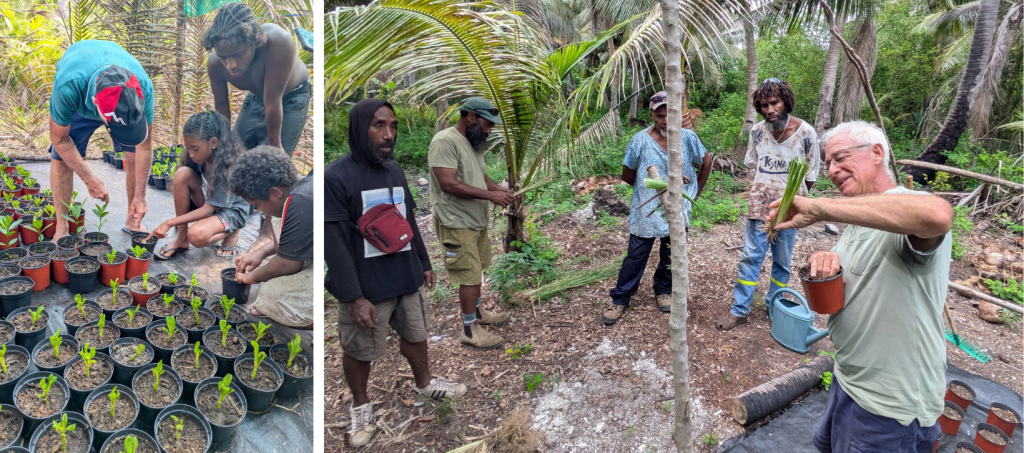
"The heart of this project is our young people and our women, who have shown up with incredible energy at every session,” said Estelle Wamo. “Seeing a child plant a cutting that will one day grow into a massive coastal barrier is powerful. It connects our traditional respect for the environment with a modern way to protect our future."
The nurseries will produce native plants like Scaevola taccada, known locally as Hu or Hum, and Sporobolus virginicus grass, which are both good at binding sand to reduce coastline erosion during storms. Planting for the first wave of cuttings is set for March 2026, with a second generation of seed-grown plants ready for the 2027 season.
“The objective is to make the population autonomous by equitably giving the local population, through their local associations, the tools and knowledge to run their own nurseries, and restore vegetation by themselves in their own backyard by the beach,” said Mr. Tillewa Maurice, Mayor of Ouvéa. Over 40 local tribal associations have already expressed interest in getting involved in the PEBACC+ project and efforts, ensuring that once the seedlings are ready, there will be plenty of hands ready to plant them along the seaside.
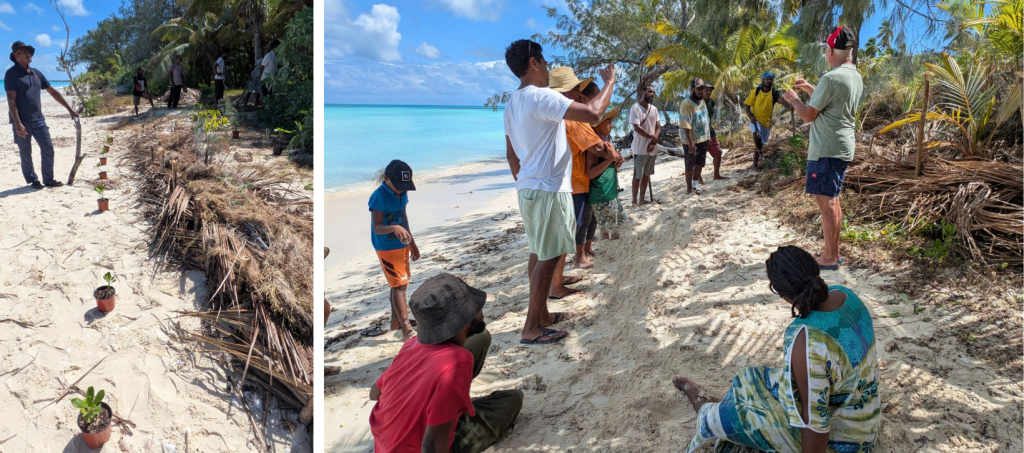
"What we are witnessing in Ouvéa is a powerful shift in how we approach climate adaptation. By embracing NbS, Ouvéa population is choosing a path that is both sustainable and culturally grounded,” said Francois Tron, PEBACC+ Coordinator, SPREP. “This project is also about restoring the natural relationship between the people and their environment, which is particularly important as, over the past few decades, the coastal vegetation has been largely cleared with evolving representations of what a “beautiful” seaside looks like, evolving fire practices & availability of new vegetation maintenance tools.
“Our goal through PEBACC+ is to prove that when you provide communities with the right tools and weave in ancestral and modern knowledge and wisdom, they become the most effective guardians and rehabilitators of their own ecosystems. Ouvéa’s success is a model that is very likely to influence many low-lying Pacific islands," said Tron.
The PEBACC+ project field demonstration activities in Ouvéa are a collaborative effort supported by the Province of the Loyalty Islands, the Municipality of Ouvéa and the Customary Council, led by the Syndicat d’Initiative Iaai with active engagement of a very large proportion of the whole island population. On a regional scale, the project is co-financed by the Kiwa Initiative and the French Facility for Global Environment (FFEM) and implemented by the Secretariat of the Pacific Regional Environment Programme (SPREP).
For more information, contact: Setaita Tavanabola, Communications Officer, PEBACC+, SPREP; email: setaitat@sprep.org