

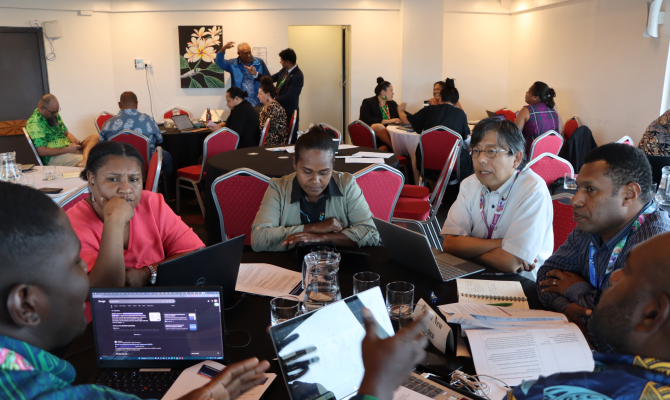
23 July 2025, Suva, Fiji – In recent years, Pacific islands have seen a significant rise in waste generation, particularly from electronic waste, plastic imports, end of life vehicles and marine litter. Without extensive systems to manage these waste streams, there will be serious consequences for public health, coastal and marine ecosystems, and tourism-dependent economies, which are important for the livelihoods of Pacific Island communities.
The Jaipur 2035 Declaration on 3R and Circular Economy 2025 – 2035, calls for a systemic transition toward resource efficiency, waste reduction and the adoption of circular economy principles. The declaration is further being socialised at the Small Island Developing States (SIDS) Capacity Building Training Programme on the Implementation of the Jaipur Declaration on 3R and Circular Economy from 23-25 July 2025, in Suva, Fiji.
Co-organised by the United Nations Centre for Regional Development (UNCRD) – Division for Sustainable Development Goals, Secretariat of the Pacific Regional Environment Programme (SPREP) and the Government of Fiji, the training programme brings together Pacific government representatives, regional organisations, NGO’s, academia, and private sector to strengthen institutional and technical capacity of SIDS to implement the Jaipur 2035 Declaration.
UNCRD Environment Programme Coordinator, Mr Choudry Mohanty highlighted the importance of building capacity of the region in implementing the Declaration.

“From plastic waste in the oceans to management of solid waste, and at the same time the diversification of waste streams, the Pacific region faces significant challenges. The Jaipur Declaration aligns with the Sustainable Development Goals (SDG’s), the Paris Agreement and the Kunmig-Montreal Global Biodiversity Framework and provides a pathway for Asia Pacific countries in advancing zero waste societies”.
The Circular model is not new to the region, it follows traditional ways of life in the Pacific where the 3R – reduce, reuse, recycle principles were traditionally practiced through minimal waste generation, efficient use of resources and sustainable living. With increasing global pressures and several more waste streams and current waste management practices require the sustainability of a Circular Economy.
This was echoed by Dr. Sivendra Michael, Permanent Secretary for the Fiji Ministry of Environment and Climate Change.
“The 3R principles and the Circular Economy are not just abstract concepts, but practical, actionable solutions that can, and will, transform the way we approach waste, consumption, and resource management in the Pacific. The Jaipur Declaration provides a strong foundation for us to move forward, and we, the Small Island Developing States of the Pacific, are uniquely positioned to embrace this vision”, Dr Michael said.
The Jaipur 2035 Declaration emphasises innovation and the creation of green jobs and the integration of sustainable consumption and production into policy, planning and sustainable development. It also sets out ambitious targets in the implementation of the 3R’s, phasing out pollutants and scaling up best practices to pave a way towards zero waste communities.
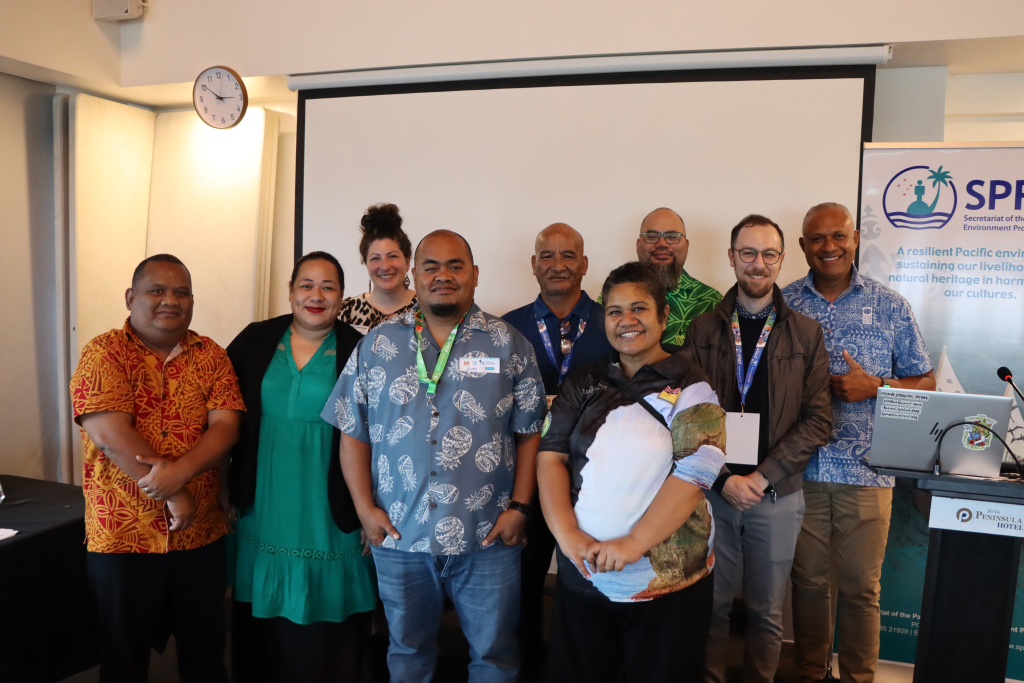
Held in conjunction with the Consultation on the Cleaner Pacific 2036 - Pacific Regional Waste and Pollution Management Strategy, the training programme providing a platform for transitioning into dialogue on tackling capacity challenges in the areas of the 3Rs and the Circular Economy, particularly in the context of implementing the Jaipur 2035 Declaration.
“This training programme comes at a crucial time for the Pacific Islands, following two days of discussions on waste management priorities for the new Cleaner Pacific Strategy. Participants have the opportunity to further highlight their successes and challenges in waste management practices on the ground, and how these practices can contribute to realising circular economies”, said SPREP Solid Waste Management Adviser, Ms Susana Telakau.
The SIDS Capacity Building Training Programme on the Implementation of the Jaipur Declaration on 3R and Circular Economy is the first regional dialogue since the adoption of the Declaration in April 2025 and provides an opportunity for the Pacific region to embrace Circular Economy principles and integrated waste management systems, strengthen regional capacity and tap into available financing opportunities. Through these the Pacific can move towards a more sustainable, resilient and inclusive development pathway.
For more information, contact SPREP Solid Waste Management Adviser, Ms Susana Telakau susanat@sprep.org