

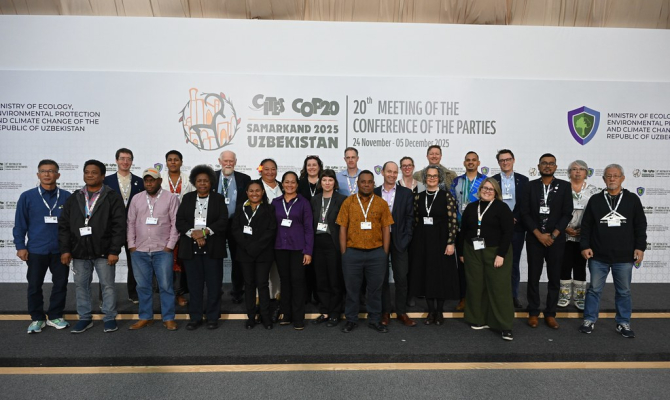
17 December 2025, Uzbekistan - Pacific delegations have returned home after the Twentieth Meeting of the Conference of the Parties to the Convention on International Trade in Endangered Species of Wild Fauna and Flora (CITES COP20) which concluded with outcomes that advance the protection of species such as sharks, rays, sea cucumbers from unsustainable exploitation through international trade.
Held in Samarkand, Uzbekistan from 23 November – 5 December 2025, Pacific delegates actively engaged in two weeks of negotiations, where parties worked through 114 agenda items, adopted 353 decisions, and reviewed 50 listing proposals, protecting 77 new species.
The CITES COP is the global forum where governments set the rules about international wildlife trade. It is the largest and most influential meeting of its kind, where member countries meet to discuss and negotiate international wildlife trade regulations to ensure it does not threaten the survival of species.
During the closing ceremony, CITES Secretary-General, Ms Ivonne Higuero, said the decisions made in Uzbekistan will shape the future of CITES.
“Amendments to the Appendices—the backbone of this Convention—ensure that international trade remains sustainable and does not threaten species survival,” she said.
“The diversity of listings speaks volumes: from endemic geckos and iguanas to sloths, deep-water sharks, sea cucumbers, saiga antelope, dorcas gazelle, and numerous bird species. This breadth underscores the truly global scope of our work.
“Beyond listings, this COP adopted a suite of decisions that will guide scientific and technical work for the next three years, setting priorities for the Animals and Plants Committees, Parties, and the Secretariat. These decisions ensure that CITES remains grounded in sound science and adaptive management, providing a clear roadmap for continued progress.”
The Pacific was well represented at the COP, with 30 delegates from 9 CITES Parties in Oceania, Australia, Cook Islands (observer), Fiji, New Zealand, Palau, Papua New Guinea, Samoa, Solomon Islands, Tonga and Vanuatu.
With six members, Oceania was also well represented in intersessional Plants, Animals, and Standing Committees.
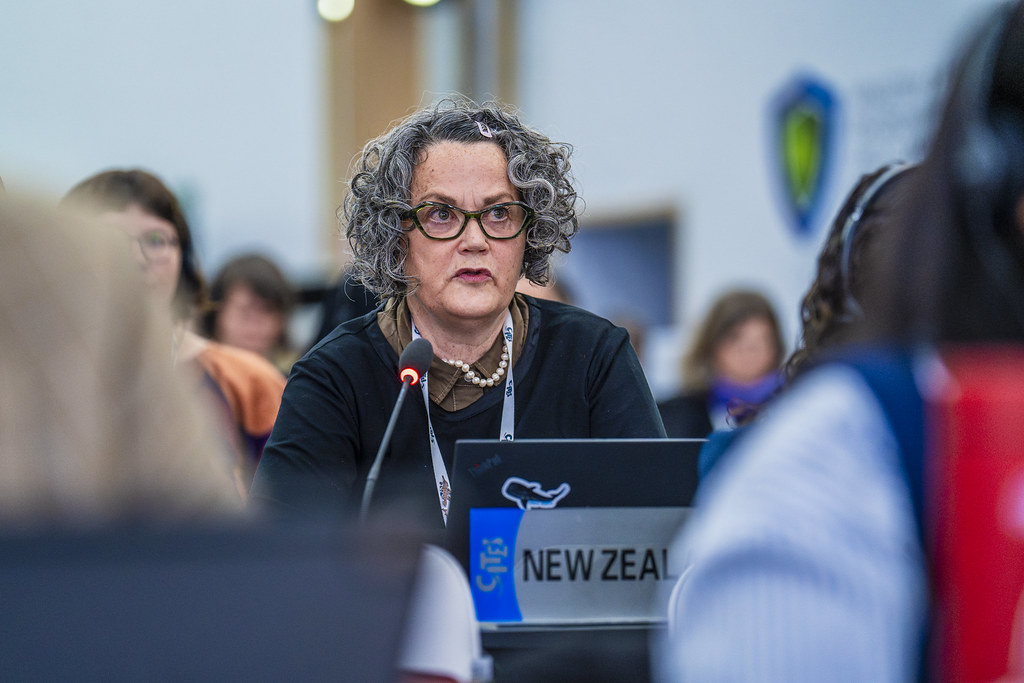
At COP20, Ms Sarah Bagnall, Advisor with the New Zealand CITES Management Authority and Oceania Standing Committee Representative, chaired the budget working group, and facilitated a remarkable agreement on a 6.98% rise in the budget of the CITES Secretariat for the 2025-2028 intersessional period. Ms Mary Madonna Palik, of Papua New Guinea, represented the region on the COP20 Credentials Committee.
The Oceania delegation bid farewell to long-standing Vice-Chair of the Animals and Chair of CITES shark working groups, Mr Hugh Robertson, of New Zealand, who is due his well-earned retirement.
Some key questions of relevance to Pacific Parties to CITES were negotiated by 3500 delegates of 157 credentialed Parties, plus many observer States and expert institutions, at the three-yearly conference.
Amongst them are: can CITES Parties trade in species that are endemic to other nations without consulting the governments of their country of origin on such trades, how far do CITES authorities need to trace back the chain of custody of such specimens to certify such trades as legal under global wildlife trade law, and what measures need to be taken to ensure trade in captive bred specimens of endemic CITES-listed species benefits their conservation in the wild?
Other decisions of relevance to Oceania concerned proposals to change the listing status of key regional species in the Appendices to the CITES Convention.
Delegates agreed to regulate trade in gulper sharks (Centrophoridae spp.), school sharks (Mustelus spp.) and the sea cucumber species Holothuria lessoni (Golden sandfish). The CoP also agreed to strengthen trade regulations for Oceanic whitetip shark (Carcharhinus longimanus), Rays (Mobulidae spp.), whale shark (Rhincodon typus), guitarfishes (Glaucostegus spp.) and wedgefishes (Rhinidae spp.).
The agreed listing of whitetip shark in Appendix I is notable, as it is the first commercially traded shark species for which all future commercial trade will be prohibited. Proposals to regulate trade in all eels (Anguilla spp.) and species of the sea cucumber genus Actinopyga spp. did not find the required majorities and were rejected.
Overall, 50 listing proposals were considered and 353 decisions were taken at the meeting. As well-known for CITES CoPs, many of these decisions were decided by vote when consensus could not be reached.
Negotiations on some matters, including those related to international trade in specimens of endemic species, could not be entirely resolved at the conference and were delegated to intersessional Committees and working groups meeting in the next three years. Due to constructive engagements on all sides and a record of 45 rounds of voting, CoP20 concluded without night sessions and slightly ahead of time.

Looking ahead, Pacific delegates and national governments, jointly with SPREP and others, will work on implementing the immense workload already agreed by the CoP20 in the next three years.
This includes the regulation of trade in specimens of CITES-listed species not native to the region, but nevertheless available to users in local markets.
Seasonal highlights relate to international trade in two of the gifts of the three wise men to Jesus, as narrated in the book of Matthew (chapter 2, 1-11): CoP20 agreed to a CITES listing of Commiphora wightii – one of the tree species whose aromatic resin is harvested to produce Myrrh, and to decisions on international trade in Boswellia spp. – whose resins are harvested to produce Frankincense. Both of these are harvested in Northern Africa, the middle East and the Indian subcontinent, but are regularly used for incense, spiritual and well-being products across Oceania.
The increased relevance of such medicinal and aromatic plant products in international wildlife trade reflects in the theme of the upcoming world wildlife day, as noted by CoP20, which is to be celebrated on 3 March 2026: Medicinal and Aromatic Plants: Conserving Health, Heritage and Livelihoods.
SPREP is looking forward to invite to the region to participate in events to mark the occasion and to raise awareness of the conservation challenges related to this group of species in Oceania.
PHOTOS: Danny Skilton, IISD/ENB, CITES Secretariat