

16 December 2025, Baniata - The Pacific BioScapes Programme, funded by the European Union (EU) and implemented by the Secretariat of the Pacific Regional Environment Programme (SPREP), has launched a series of regional and national training workshops focused on Pacific sea turtle conservation, monitoring, and surveying.
Timed to align with turtle nesting and hatching seasons, the field-based capacity-building initiative began this November in the Solomon Islands, led by Ika Bula Consultants.
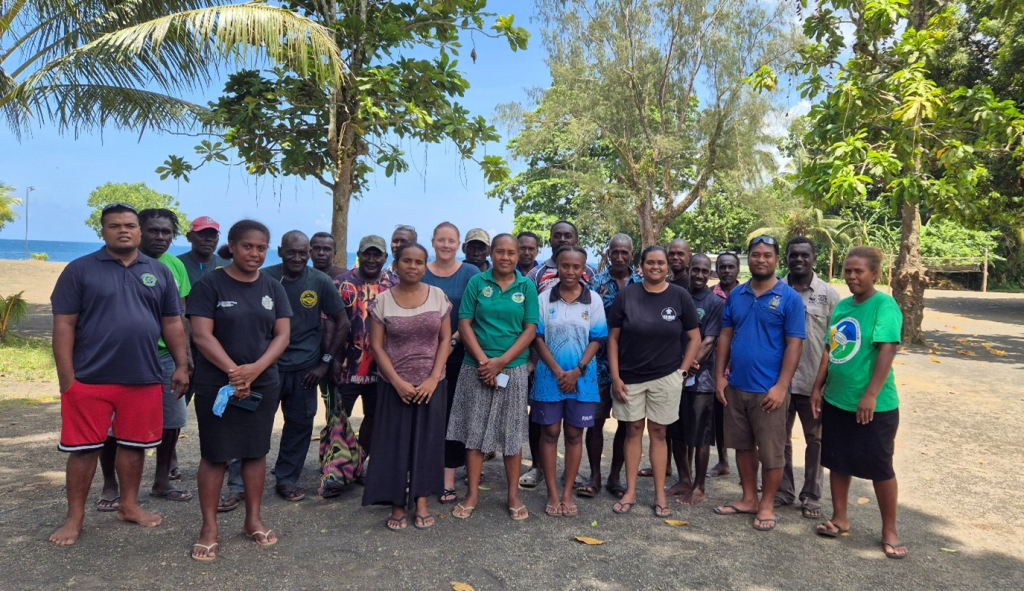
The six-day training, from 6-11 November, 2025, held in Baniata on Rendova Island (Western Province), an important nesting site for critically endangered leatherback turtles, brought together representatives from government agencies, including the Ministry of Environment, Climate Change, Disaster and Meteorology, and the Ministry of Fisheries and Marine Resources, as well as non-government organisations such as The Nature Conservancy (TNC), the Worldwide Fund for Nature (WWF), and the Tetepare Descendants’ Association (TDA). The training also included community representatives: TNC’s women turtle rangers from Isabel Province, turtle rangers from the Arnavon Community Marine Conservation Area (ACMCA) in Isabel and Choiseul Provinces, and TDA rangers based in Western Province.
Mr Amenatave Yauvoli, Director of Biodiversity Conservation at SPREP, emphasised the importance of the training.
"Over the week, participants explored various monitoring methods and discussed ways to improve data collection and reporting," he said. "This facilitated peer-to-peer learning and supported local knowledge sharing on effective conservation practices".
Mr Yauvoli highlighted how the recent extinction analysis conducted by SPREP sadly found that the population trajectory of all species of turtles in the Pacific is worse than expected. "Overharvesting is unfortunately having a significant impact on our marine turtles. These training sessions helped teams build confidence in identifying turtle species, recording data, and using tools effectively in low-light conditions to better understand turtle population trends".
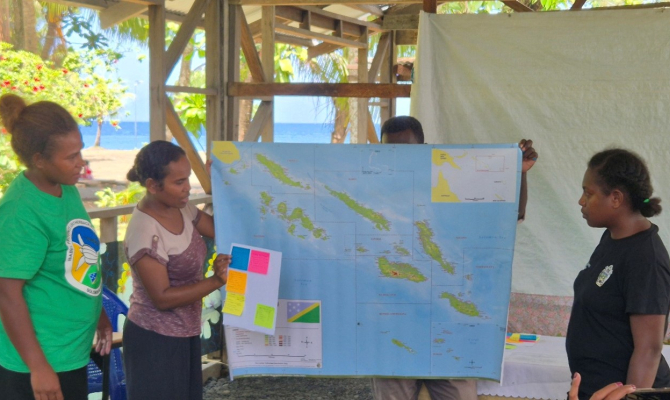
The training combined classroom sessions with hands-on field activities. Participants took part in mapping exercises to identify nesting and feeding habitats, the threats to sea turtles, and document known protected areas. These activities helped ground participants in the ecological context of their work.
Field sessions began with demonstrations of monitoring equipment and the use of field guide, preparing participants for night-time beach surveys to observe nesting turtles. In a regional milestone, leatherback turtles were sampled for genetic characterization for the first time in Baniata, advancing efforts to understand population connectivity and guide conservation strategies. Daytime surveys also included visits to nearby nesting beaches on Tetepare Island, where participants recorded nesting activity of both green and leatherback turtles.
A key highlight of this training was the introduction of the now upgraded centralized Pacific-wide database, Turtle Research and Monitoring Database System (TREDs). Participants used the new offline-compatible app to enter data directly in the field, an important step forward for remote communities with limited connectivity.
The Solomon Islands national training was concluded in Honiara with an additional two days of workshop facilitated by SPREP, which included a Priority Action Workshop and a technical TREDs training workshop.
The Pacific Bioscapes Programme aims to contribute to the sustainable development of Pacific Small Island Developing States through the implementation of regional activities and 30 national activities taking place across a diversity of ecosystems in the Cook Islands, Fiji, Kiribati, Republic of the Marshall Islands, Federated States of Micronesia, Palau, Papua New Guinea, Samoa, Solomon Islands, Tonga and Vanuatu.