

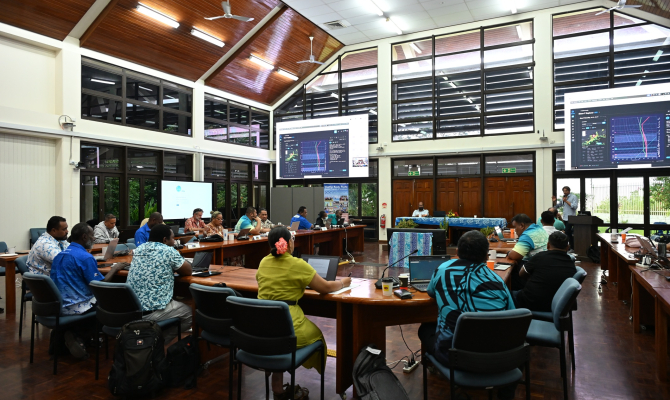
Artificial intelligence (AI) is changing how the world forecasts the weather. Earlier this month in Honiara, the heads and staff of Pacific weather services met for two days to ask a simple question: what can it do for us?
A two-day workshop held on 3-4 June, 2026 helped Pacific weather services understand new tools available that can cut through the confusion, overwhelm and hype surrounding AI learning to make the work of Pacific National Meteorological and Hydrological Services (NMHSs – or hydromet services) faster, easier and more useful, while keeping their data safe.
"Our Pacific weather services do extraordinary work with limited resources. The value of this workshop is that it puts powerful new tools within reach and, just as importantly, it gives our directors the confidence to ask the right questions about how those tools are used,” said Mr 'Ofa Fa'anunu, WRP Programme Manager of the Secretariat of the Pacific Regional Environment Programme (SPREP).
“AI should serve the Pacific, not the other way around. It can’t replace our experienced forecasters that know the local land, seasons and community. It can, however, support our small Met teams and this training helped bridge this gap between AI and our Pacific Met teams."
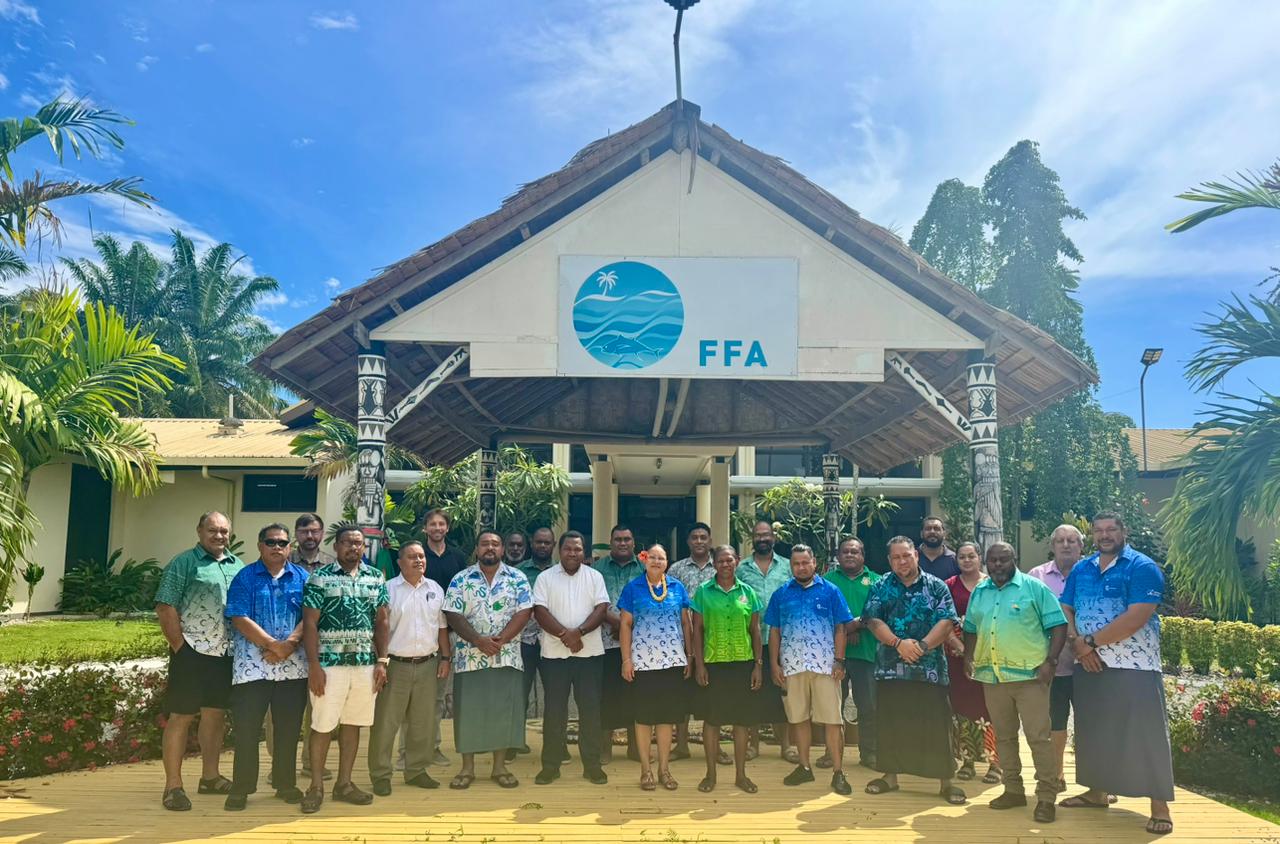
The hands-on session was an introductory session tailored Pacific Met and Weather Services. Participants were taught how to tools that can read huge amounts of data in seconds, sharpen short-range forecasts, and help fill gaps where there are few observations, a real problem in a region as large and data-poor as the Pacific. AI can help support earlier warnings, faster decisions, and better information for the fishers, farmers and families who rely on these.
"We recognise the benefits and capability of AI technology in meteorological services,” said Mr Alick Haruhiru, Director of Solomon Islands Meteorological Service. “But we also need to be sure that any tool or emerging technology we adopt, protects our data and keeps us in control of it. Our people, community, and stakeholders place trust on us and we must maintain that. Getting that right is what will let us embrace AI with confidence rather than caution."
A theme that stood out over the two days was the safe and responsible use of data. Data sovereignty is a key issue when it comes to weather and climate information. Participants learnt about the safeguards in place to ensure secure systems to protect sensitive information when using AI.
Having completed the two-day training, participants can now grow their new skills to use these tools safely, helping to apply new and innovative approaches across their work.
The two-day workshop was co-facilitated by Tomorrow.io, Varysian and SPREP through its Weather Ready Pacific (WRP) Programme to strengthen forecasting and early warning systems across Pacific island countries and territories.
About Tomorrow.io
Tomorrow.io is a weather intelligence and resilience technology company based in Boston, USA. Founded in 2016, it combines meteorology, artificial intelligence (AI), and satellite technology to deliver highly localized weather forecasts and decision-support tools for governments, meteorological services, humanitarian agencies, and businesses worldwide.
Through its AI-powered platform and global capacity-building initiatives, including the AI Meteorological Services Workshop held in Honiara, Solomon Islands, on 4-5 June 2026, Tomorrow.io is supporting meteorological services to strengthen forecasting, early warning systems, and climate resilience through innovative weather technologies.
About Varysian
Varysian is a technology and analytics company that works closely with Tomorrow.io to advance the use of AI-driven weather intelligence and data solutions. Through its collaboration, Varysian supports the application of advanced forecasting tools and climate risk analytics, helping organisations and governments improve decision-making, resilience planning, and response to weather and climate-related events.
About Weather Ready Pacific
The WRP Programme is a Pacific-led, Pacific-owned decadal Programme of Investment endorsed by Pacific Leaders. Implemented by the Secretariat of the Pacific Regional Environment Programme (SPREP), WRP aims to reduce the human and economic costs of severe weather, water, and ocean events across Pacific Island communities by strengthening National Meteorological and Hydrological Services and their partnerships with National Disaster Management Offices. Since 2023, WRP is designated the primary regional vehicle for delivering the United Nations Secretary-General's Early Warnings for All (EW4All) initiative in the Pacific. The programme is supported by the Governments of Australia, New Zealand, and the United Kingdom.